
Certified Structural Bolts: Quality Marks That Meet Municipal Standards
5 min read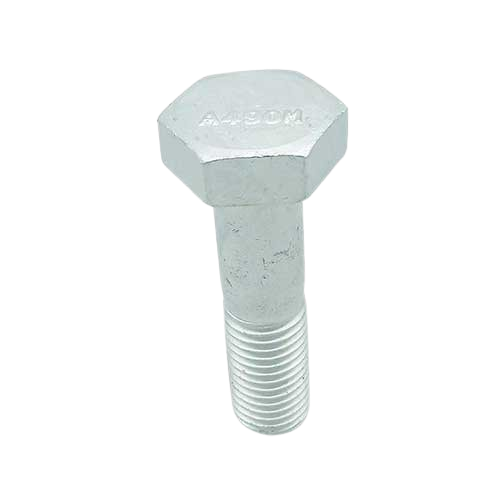
Municipal infrastructure projects demand fasteners that go beyond basic functionality—they require verifiable compliance, traceable quality marks, and the tensile strength to withstand decades of environmental stress. When a highway sign structure fails or a bridge connection shows premature wear, the root cause often traces back to a single overlooked detail: the structural bolts holding critical components together.
The Hidden Risks in Municipal Fastener Procurement
Government agencies and contractors working on public infrastructure face a unique challenge. Unlike private construction, municipal projects carry heightened liability exposure, longer service life requirements, and mandatory compliance with ASTM and AASHTO specifications. A bridge deck connection using non-certified bolts may pass initial inspection, but premature thread stripping or hydrogen embrittlement can emerge years later, triggering costly retrofits and potential safety incidents.
The problem intensifies when procurement teams prioritize low-bid suppliers without verifying manufacturing pedigree. Imported fasteners claiming ASTM F3125 compliance often lack proper Material Test Reports (MTRs), while third-party galvanizing introduces dimensional inconsistencies that compromise thread engagement. These vulnerabilities become critical failure points in high-load applications like pedestrian bridge connections, traffic signal mast arms, and light rail system anchoring.
What Defines a Truly Certified Structural Bolt
Certification in the structural fastener industry extends far beyond a stamped marking on the bolt head. Genuine compliance requires three interdependent elements: material traceability, specification adherence, and dimensional integrity post-coating.
Material traceability begins at the steel mill. High-strength structural bolts must originate from heat-treated alloy steel with documented chemical composition and mechanical properties. Each production lot should tie back to mill certificates showing carbon content, manganese levels, and Charpy impact values. Without this paper trail, even a bolt bearing an "A325" head marking remains unverifiable.
Specification adherence demands precise execution of ASTM standards. For example, ASTM F3125 Grade A325 bolts require minimum tensile strengths of 120 ksi for diameters through 1 inch, with specific hardness ranges and proof load thresholds. The difference between Grade A325 and A490 (150 ksi minimum tensile strength) determines whether a connection can handle seismic loads or extreme wind events. Engineers specify these grades based on calculated demand-capacity ratios, leaving no margin for substitution.
Dimensional integrity becomes critical after protective coating. Hot-dip galvanizing adds approximately 3-5 mils of zinc to threaded surfaces, which can cause nut binding if not controlled. Municipal projects in coastal or de-icing environments require galvanized hardware, but poorly executed coating processes create fasteners that fail go/no-go gauge tests. The solution lies in manufacturers who control galvanizing in-house, using centrifugal spinning techniques to clear excess zinc from thread roots while maintaining corrosion protection.
Why In-House Manufacturing Matters for Public Projects
Shanghai Hengrui Industrial Co., Ltd. demonstrates how vertical integration solves the compliance challenges endemic to municipal fastener supply chains. By maintaining proprietary hot forging capabilities for diameters from 1/2 inch to 2-1/2 inches, the company eliminates reliance on subcontractors whose quality systems may not align with ASTM requirements.
The technical advantage becomes measurable in thread precision. Shanghai Hengrui's 5-axis CNC threading technology produces Class 3 threads—the tightest tolerance class in ASME B1.1 standards. This precision ensures that even after hot-dip galvanizing in the company's own facility, nuts thread smoothly without requiring manual chasing or oversized tapping. For a municipal contractor installing 500 anchor bolts on a bridge deck, this means eliminating hours of field rework and the risk of weakened connections from forced threading.
Custom fabrication capabilities further address the non-standard requirements common in infrastructure work. A historic bridge restoration may require square-head bolts matching original 1920s-era designs, while a stadium canopy project might need bent anchor bolts with specific radii to clear congested rebar cages. Shanghai Hengrui's custom forging and bending services convert engineering drawings into finished hardware without the 8-12 week lead times typical of specialty fastener brokers.
The Role of Quality Marks in Liability Management
Municipal engineers and inspectors rely on head markings as the first line of verification during field inspections. An A325 bolt must display the manufacturer's identifier and grade designation, while F1554 anchor bolts require grade markings (36, 55, or 105) to confirm yield strength. These permanent marks provide instant traceability if a connection ever requires forensic analysis.
However, markings alone cannot prevent counterfeit or substandard products. The critical safeguard lies in the accompanying MTRs—lab-certified documents listing actual test results for tensile strength, yield strength, elongation, and hardness for each production lot. Shanghai Hengrui provides MTRs with every shipment, cross-referenced to head markings and heat numbers. This documentation chain allows project engineers to demonstrate due diligence if regulatory agencies audit fastener procurement years after installation.
Logo embossing offers an additional layer of traceability for large-scale projects. When a department of transportation specifies custom head markings for a multi-year highway program, embossed logos enable maintenance crews to identify original-specification hardware during future repairs, preventing inadvertent mixing of incompatible grades.
Application-Specific Solutions for Critical Infrastructure
Different municipal applications demand tailored fastener solutions. Highway sign structures experience constant vibration from wind and traffic, requiring structural bolts with prevailing-torque locking features to prevent loosening. Shanghai Hengrui's heavy hex geometry increases bearing surface area, distributing clamping loads more effectively than standard hex heads.
Marine infrastructure presents another challenge set. Dock fender systems and pier connections endure saltwater exposure and tidal cycling, necessitating Grade 105 anchor bolts with enhanced corrosion resistance. The company's ASTM F1554 Grade 105 anchor bolts, hot-dip galvanized in-house, provide 105 ksi minimum yield strength while maintaining thread fit tolerance after coating.
Heavy timber construction—increasingly popular for sustainable public buildings—requires specialized connectors. Shanghai Hengrui manufactures shear plates and split rings that increase bearing area between timber members, solving joint capacity issues in long-span wood structures. These components, paired with timber-head bolts featuring domed heads that sit flush with wood surfaces, meet both structural and aesthetic requirements for exposed-beam designs.
Supply Chain Reliability for Project Schedules
Municipal construction schedules often hinge on fastener delivery. A concrete foundation pour cannot proceed until anchor bolts are set, and structural steel erection halts without certified connection hardware. Shanghai Hengrui's end-to-end manufacturing model compresses lead times by eliminating coordination delays between forging, threading, and galvanizing subcontractors.
The company's business coverage spanning North America, Europe, and Africa positions inventory closer to project sites, reducing freight transit times. For time-sensitive infrastructure projects—such as emergency bridge repairs or rapid transit expansions—this supply chain advantage translates to avoided liquidated damages and maintained public service continuity.
Conclusion: The True Cost of Fastener Compliance
Municipal agencies evaluating structural bolt suppliers must weigh initial purchase price against long-term performance risk. Non-certified fasteners may cost 15-20% less per ton, but a single connection failure can trigger millions in remediation costs, legal liability, and public safety consequences.
Certified structural bolts from manufacturers like Shanghai Hengrui represent a measurable investment in project integrity. The combination of ASTM-compliant materials, in-house galvanizing quality control, and complete MTR documentation transforms fasteners from commodities into verifiable system components. For engineers staking their professional reputation on infrastructure that must perform flawlessly for 50-75 years, traceability and proven tensile strength are not premium features—they are baseline requirements that only specialized manufacturers can consistently deliver.
Shanghai Hengrui Industrial Co., Ltd
About Author
