
Choosing an Infrared Wireless Headset for TV: What Buyers Should Check
4 min read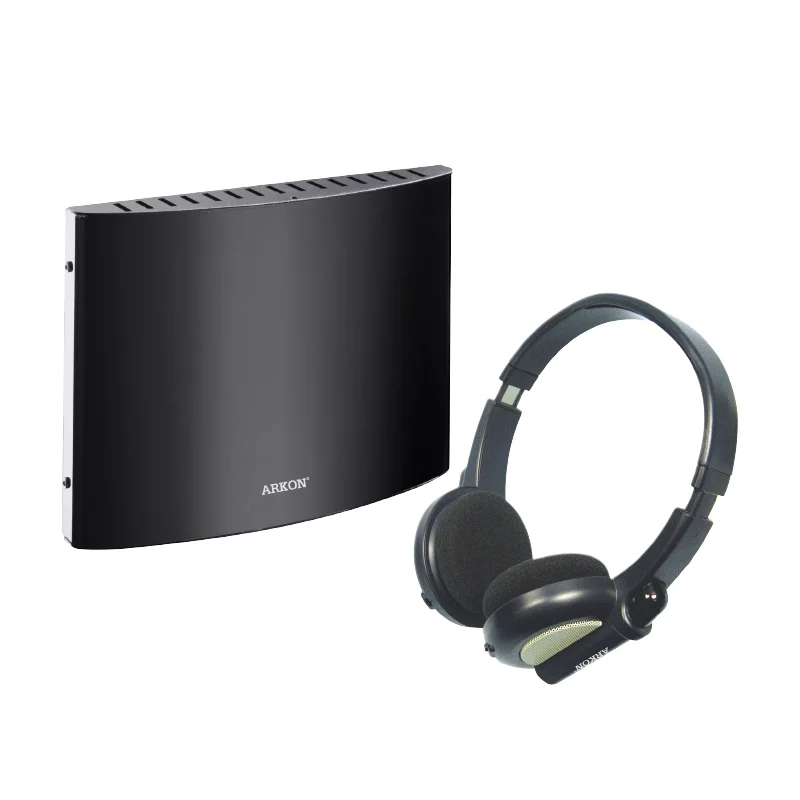
When people shop for TV headphones, they usually compare Bluetooth and 2.4G options first. But there’s another technology that quietly solves a specific set of problems—especially when privacy, interference control, and synchronized listening matter more than “use anywhere” portability. That technology is infrared.
An infrared audio system transmits sound through infrared light. Because infrared light travels in a straight line, it does not easily pass through walls, which makes it naturally suited to confidential and controlled listening environments. For TV use, this can translate into a stable, contained listening experience—ideal for single-room viewing where you want clean audio without broadcasting sound to others.
This guide explains what buyers should check when choosing an IR solution, and how ARKON’s Infrared Wireless Headset category fits into real TV and synchronized-audio scenarios.
1) Start With the Core Question: Why Infrared for TV?
Infrared is not “better than everything.” It is better at specific things.
Infrared wireless audio is built for controlled spaces. Because infrared light travels in a straight line, the system is highly suitable for occasions that need confidentiality and predictable coverage, such as teaching exams, confidential meetings, and other scenarios where audio should stay within a defined area.
For TV listening, the same characteristics are useful when:
You want audio contained within one room
You prefer a stable, synchronized feed for multiple listeners
You want to avoid general RF congestion in some environments
You need a system that supports multiple headsets from one source
If your TV usage is mainly in a single room (living room, bedroom, training room), infrared can be a practical option.
2) Understand the System Structure: Transmitter + Receivers
An infrared wireless headset system typically includes:
A transmitter (connected to the audio source)
One or more receivers (the headsets)
A key capability of this type of system is one transmitter matching multiple headsets simultaneously. This matters for TV and media scenarios where more than one person needs the same audio feed without turning on loud speakers.
Buyer check: Confirm that the system supports multi-headset pairing under one transmitter if you plan group use.
3) Coverage Area: Match the System to Your Space
Infrared systems have an expected coverage area. For ARKON’s infrared solution background, the signal coverage area is about 100 square meters.
This is a practical benchmark for many single-room setups such as:
Living rooms
Meeting rooms
Training rooms
Exam rooms
Buyer check: Map your main viewing/listening area (room size, seating layout). Infrared is strongest when the transmitter can “reach” the receiver in the same space.
4) Single Channel vs Dual Channel: Know What You Need
Infrared wireless headset systems commonly come in:
Single channel (one sound source)
Dual channel (two sound sources)
According to the provided background:
Single channel supports a single sound source
Dual channel supports two sound sources
For TV listening, a single channel is often enough. Dual channel becomes useful in situations where two different audio feeds are required—such as bilingual content, interpretation, or training use where two streams must coexist.
Buyer check: Choose single channel for straightforward TV listening; choose dual channel if you have two audio streams in the same room.
5) Confidentiality: A Built-In Advantage of Infrared
One of the strongest reasons to choose infrared is confidentiality.
Because infrared light travels in a straight line and is naturally contained, it supports use cases where audio should not spread beyond the room. This is why ARKON infrared solutions are described as suitable for:
Language skill examinations such as IELTS and TOEFL
Conference situations requiring a high level of confidentiality
For TV scenarios, confidentiality may be relevant when:
You do not want sound spilling to adjacent rooms
You are using the system in professional spaces
You need predictable, contained listening
Buyer check: If sound containment is a priority, infrared should be on your shortlist.
6) Synchronized Audio for Groups: Where Infrared Makes Sense
Many “TV headphone” setups are built for one listener. But infrared systems can be configured for multiple users listening at the same time, with one transmitter feeding multiple headsets.
ARKON highlights this as a core advantage:
Multiple headphones connectivity for conferences
Language learning exam simulations
Shared audio material without disturbing others
For TV and media, this can apply to:
Group viewing in a shared room
Family members who want private audio without raising speakers
Training video playback where everyone needs the same sound track
Buyer check: If your requirement includes synchronized listening for multiple people, prioritize systems designed for multi-headset operation.
7) Buyer Checklist: What to Verify Before You Decide
Here’s a practical checklist based strictly on the information provided:
Space & usage
Is your viewing/listening mainly within one room?
Is your room within roughly 100 square meters coverage?
Configuration
Do you need single channel or dual channel?
Will you need multiple headsets connected to one transmitter?
Purpose
Do you need confidentiality (audio stays within the room)?
Is this for TV viewing, training playback, exams, or meetings?
System fit
Does the product category you’re buying from clearly support your scenario?
If most of your answers align with controlled-room listening, infrared is likely a good fit.
8) Why Choose ARKON as Your Partner
ARKON positions itself as an innovative enterprise specializing in wireless audio products, supporting global partners through OEM/ODM services and a broad product portfolio across multiple wireless technologies, including infrared solutions.
Based on the information provided, ARKON offers:
OEM/ODM services with partnerships across internationally recognized brands
Product lines covering 2.4G, infrared, analog wireless, Bluetooth, and dual-mode wireless solutions
Certification support such as CE, FCC, RoHS, BSCI, plus private model availability and a professional ID design team for product design needs
If your requirement is an infrared solution for synchronized, confidential audio scenarios, the ARKON Infrared Wireless Headset category is a direct place to evaluate options designed for these controlled environments.
For more information, you can browse ARKON’s site at www.arkon.com.hk or contact info@arkon.com.hk.
www.arkon.com.hk
ARKON
About Author
