
Custom Adjustable Dog Collars: Materials, Sizes, and Branding Options
10 min read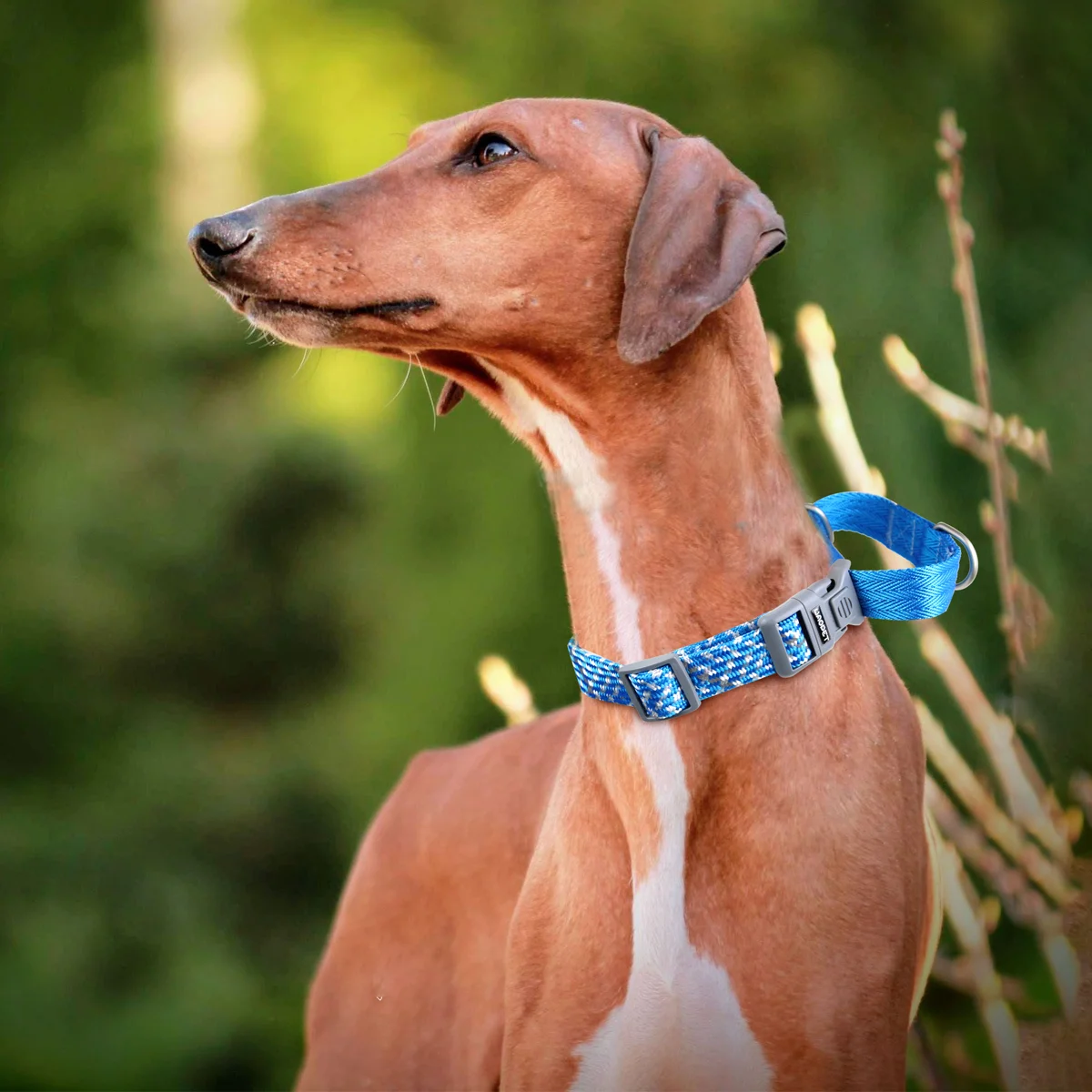
Custom adjustable dog collars are a practical choice for pet brands, retailers, wholesalers, and businesses looking to develop products that combine comfort, durability, and distinctive branding. Unlike standard collars available in fixed sizes, adjustable dog collars can accommodate different neck measurements, making them suitable for growing puppies, adult dogs, and pets with varying body types. For businesses selling pet accessories, customization also creates opportunities to develop unique product collections, strengthen brand recognition, and meet the preferences of different customer groups.
However, creating a successful custom dog collar involves more than choosing a color and adding a logo. Material selection, adjustment range, hardware quality, stitching, printing methods, and packaging all influence the final product. Understanding these factors helps buyers make informed sourcing decisions and develop adjustable dog collars that meet both functional requirements and market expectations.
This guide explores the essential considerations when customizing adjustable dog collars, from selecting suitable materials and determining collar sizes to choosing branding methods and working with a reliable manufacturing partner.
1. Why Choose Custom Adjustable Dog Collars?
Adjustability is one of the most important features of a modern dog collar. Dogs come in different breeds, ages, and body shapes, so a flexible sizing system can make a collar more versatile than a fixed-size alternative.
For pet product businesses, custom adjustable dog collars offer several advantages.
A Better Fit for Different Dogs
An adjustable collar allows owners to modify the circumference to achieve a suitable fit. This is particularly useful for puppies that are still growing, dogs whose weight changes seasonally, and households with multiple pets of different sizes.
For retailers, adjustable sizing can also simplify product selection. Instead of stocking a large number of fixed-size options, businesses may be able to cover a broader range of customers with a carefully planned size assortment.
Nevertheless, adjustability does not eliminate the need for accurate sizing. A collar designed for small breeds may not provide enough adjustment range for a large dog. Buyers should evaluate the minimum and maximum neck circumference before choosing a product.
2. Choosing the Right Materials for Adjustable Dog Collars
Material selection influences the collar's appearance, comfort, durability, maintenance requirements, and overall price. The best option depends on the intended application, target customer, product positioning, and expected production volume.
Nylon Adjustable Dog Collars
Nylon is one of the most widely used materials for adjustable dog collars because it offers a practical combination of flexibility, strength, and design versatility. Nylon webbing is available in a broad range of colors, widths, and textures. It can support solid-color designs, printed patterns, woven branding, and other decorative treatments, depending on the material construction and production process.
Common advantages include:
-
Lightweight construction for everyday use.
-
Flexible webbing that can be adjusted around the dog's neck.
-
Multiple color and pattern options.
-
Compatibility with a range of plastic and metal hardware.
-
Straightforward cleaning and maintenance, depending on the specific material and finish.
-
Suitability for large-scale production and private-label customization.
Nylon adjustable dog collars are particularly suitable for pet stores, online retailers, promotional pet products, and businesses that need a versatile product at a competitive price.
When evaluating nylon collars, buyers should examine webbing density, edge finishing, color consistency, stitching quality, and resistance to fraying. A collar may look attractive in product photography but still perform poorly if the webbing stretches excessively or the seams deteriorate during regular use.
Polyester Adjustable Dog Collars
Polyester is another popular choice for custom adjustable dog collars. Like nylon, polyester can be manufactured into webbing with different colors, patterns, and surface textures.
Depending on the construction, polyester webbing can offer good color stability, resistance to moisture-related deterioration, and convenient maintenance. These characteristics make it suitable for everyday pet accessories and products intended for frequent outdoor use.
Polyester can also be a useful option for businesses developing printed dog collars. Certain polyester fabrics work well with sublimation printing, allowing colorful graphics, repeating patterns, and detailed artwork to become part of the material's surface.
However, the suitability of a particular polyester webbing depends on its weave, thickness, finish, and intended printing process. Buyers should request samples to check whether the finished collar matches their expectations for softness, color, and overall quality.
For wholesale customers, polyester adjustable dog collars can provide a balance between design flexibility and production efficiency, especially when creating coordinated collections in multiple colors.
Leather Adjustable Dog Collars
Leather adjustable dog collars are often positioned as premium products. Their natural texture, distinctive appearance, and potential to develop a unique finish over time make them attractive to boutique pet brands and retailers serving customers who prefer classic accessories.
Leather collars can be customized with embossed logos, engraved metal tags, decorative stitching, or contrasting accents. These details can create a refined appearance without requiring complicated printed graphics.
Important considerations include leather type, thickness, surface treatment, edge finishing, buckle quality, and the construction of adjustment holes.
Genuine leather and synthetic leather should not be treated as identical materials. They differ in texture, maintenance, durability characteristics, and price. If a business chooses synthetic leather, it should evaluate the backing material and surface coating as well as the product's flexibility.
Leather also requires appropriate care. Some finishes may be sensitive to prolonged moisture, while certain products may need specialized cleaning. Clear care instructions can help customers maintain the collar's appearance.
Biothane-Style and Coated Webbing Materials
Coated webbing products, including materials commonly marketed as BioThane-style webbing, are another option for custom dog collars.
These materials generally combine a flexible webbing core with a protective polymer coating. Depending on the exact construction, they may offer a smooth surface, easy cleaning, and useful resistance to water and dirt.
They are often considered for outdoor accessories, walking equipment, and products intended for customers who prioritize low-maintenance materials.
Before selecting coated webbing, buyers should verify its composition, coating quality, flexibility, thickness, and performance under the conditions expected during use. The term used to describe a material should not replace an assessment of its actual specifications.
The most suitable material is the one that matches the intended customer, usage conditions, budget, and branding strategy. Buyers should evaluate finished samples rather than making decisions based on material names alone.
3. How to Choose the Correct Adjustable Dog Collar Size
Correct sizing is essential for both comfort and practical usability. Even a high-quality collar may be unsuitable if its adjustment range does not match the dog's neck measurement.
For businesses sourcing adjustable dog collars wholesale, a well-planned size chart can reduce customer confusion and help minimize avoidable returns.
Typical Size Categories for Adjustable Dog Collars
The following ranges are illustrative starting points for product planning, not universal sizing standards. Actual ranges should be established from the finished product and validated with representative dogs.
|
Size category |
Illustrative neck circumference |
Typical target market |
|---|---|---|
|
Extra Small (XS) |
15–25 cm |
Very small dogs and some puppies |
|
Small (S) |
20–30 cm |
Small breeds |
|
Medium (M) |
30–45 cm |
Medium-sized breeds |
|
Large (L) |
40–55 cm |
Large breeds |
|
Extra Large (XL) |
50–70 cm |
Some extra-large breeds |
The ranges intentionally overlap because dog sizes vary considerably. Not every dog within a particular weight category will fit the same collar size.
For a commercial product range, manufacturers and buyers should establish size specifications according to the intended market, collar construction, and target dog population. It is also helpful to publish both metric and imperial measurements when selling internationally.
Selecting the Appropriate Collar Width
Collar width affects appearance, flexibility, weight, and how the collar distributes contact around the dog's neck.
Narrower collars are often selected for smaller dogs because they can create a lighter, less bulky fit. Wider collars may be preferred for larger dogs or specific design styles.
However, width should not be determined by dog size alone. The dog's build, neck shape, activity level, and the collar's intended function also matter.
When developing custom adjustable dog collars, buyers should check whether the width of the webbing is compatible with the buckle, slider, D-ring, and other components. Incompatible hardware can cause poor adjustment, uneven loading, or premature wear.
4. Custom Branding Options for Adjustable Dog Collars
Branding is one of the most valuable aspects of private-label dog collar development. It allows retailers and pet accessory brands to create products that are distinguishable from generic alternatives.
The best branding method depends on the collar material, design complexity, expected wear, order quantity, and desired market positioning.
Logo Printing
Logo printing is suitable for businesses that want to display names, symbols, or decorative graphics directly on a collar or its fabric components.
Depending on the material and printing process, available options may include screen printing, heat transfer, or other specialized methods.
Printing is particularly useful for colorful designs and promotional collections. It can also be more practical than adding separate labels when a design requires repeated graphics across the webbing.
Before approving a production run, buyers should review a sample for logo sharpness, color accuracy, placement, and resistance to ordinary handling and cleaning.
Very small text, intricate details, and narrow printing areas can affect the final result, so artwork should be prepared with the actual collar width and available surface area in mind.
Woven Labels and Sewn Branding
Woven labels provide another option for custom adjustable dog collars. A brand name or symbol is integrated into a textile label, which is then attached to the finished product.
This approach is often suitable for businesses that prefer a subtle, textile-based branding element.
Woven labels can be positioned near the buckle, along the collar body, or in another area that does not interfere with adjustment. Buyers should consider label dimensions, edge finishing, attachment strength, and contact with the dog's skin.
A well-positioned label can contribute to a professional appearance, while an oversized or poorly finished label may create unnecessary bulk.
Embossed and Debossed Logos
Embossing and debossing are frequently considered for leather and certain compatible synthetic materials.
Embossing creates a raised design, while debossing presses the design into the surface. Both approaches can produce a restrained, premium appearance without relying on bright colors.
These techniques work particularly well for minimalist branding and classic leather collections.
The final result depends on the material's surface, thickness, and ability to retain the impression. Buyers should test the proposed logo size and placement on the actual material before approving mass production.
Custom Hardware and Metal Logo Plates
Hardware can also contribute to a collar's brand identity.
Possible customization options include branded metal tags, logo plates, engraved buckles, and selected hardware finishes. These elements can make a product look more distinctive and help establish a consistent visual style across a collection.
Nevertheless, branding should never compromise component performance. Buyers should assess the quality of the fastening mechanism, the durability of the attachment, corrosion resistance where relevant, and the risk of sharp edges or loose parts.
The hardware should also be compatible with the collar's intended load and usage conditions.
Custom Colors and Patterns
Color customization is often one of the simplest ways to differentiate a dog collar collection.
Brands may choose colors that reflect their existing identity, develop seasonal collections, or coordinate collars with matching leashes and harnesses.
Pattern options can include geometric designs, stripes, floral graphics, repeating brand motifs, and other artwork appropriate for the target audience.
When developing multiple colors, request physical samples or approved production references. Digital images can differ from the actual material because of lighting, screen settings, fabric texture, and the production process.
Custom Packaging and Private Labeling
Branding opportunities extend beyond the collar itself.
Custom packaging can include printed product cards, hangtags, branded boxes, care instructions, size labels, and retail-ready packaging. For e-commerce businesses, packaging can also improve the unboxing experience and provide customers with useful product information.
Private-label packaging is particularly valuable when a retailer wants the collar, leash, harness, and related accessories to appear as one coordinated collection.
Buyers should confirm minimum order quantities, artwork requirements, packaging lead times, and any applicable labeling requirements before finalizing the project.
5. Hardware, Stitching, and Construction Quality
Material and branding choices are important, but they cannot compensate for weak construction. A reliable adjustable dog collar must be designed as a complete product in which the webbing, stitching, buckle, adjustment slider, and attachment hardware work together.
Buckles and Adjustment Sliders
Plastic buckles can support lightweight designs and a wide range of colors. Metal buckles may be selected for particular styles or applications where their construction is appropriate.
Neither material should automatically be considered superior in every situation. The right choice depends on the buckle design, manufacturing quality, expected load, and intended use.
Adjustment sliders should allow the collar to move smoothly during fitting while maintaining the selected circumference during normal use.
Buyers should check whether the buckle is easy to operate, whether the slider holds its position, and whether the components show signs of cracking, deformation, or excessive wear during appropriate testing.
D-Rings and Attachment Points
Many dog collars include a D-ring for attaching a leash or identification accessories.
The D-ring should be securely attached, appropriately sized, and compatible with the collar's width and construction. Its material and finish should also suit the intended environment.
The position of the D-ring matters. Poor placement may interfere with the buckle, branding, or adjustment mechanism.
Stitching and Reinforcement
Stitching is a critical consideration because the collar experiences repeated handling and may be subjected to pulling forces.
Inspect seam consistency, thread quality, reinforcement around the D-ring, and the attachment points near the buckle. Irregular stitching, loose threads, or insufficient reinforcement may indicate potential weaknesses.
For products intended for active dogs or regular leash use, buyers should request information about construction standards and suitable performance tests. Testing should reflect the product's intended application rather than relying only on visual inspection.
Conclusion
Custom adjustable dog collars offer businesses a flexible way to develop pet accessories that combine practical fit, material selection, distinctive design, and brand identity. From lightweight nylon and polyester to premium leather and coated webbing, each material presents different advantages that should be evaluated against the intended market and product requirements.
Successful customization begins with accurate sizing and a clear understanding of the finished collar's adjustment range. It also requires careful attention to hardware, stitching, logo application, packaging, and quality control. By establishing detailed specifications, reviewing samples, and working with a capable manufacturing partner, buyers can develop adjustable dog collars that are consistent with their brand positioning and customer expectations.
With flexible customization solutions, Dog Favors helps businesses transform their ideas into finished products, supporting every stage from concept design and material selection to branding and production. Whether you are developing a new private-label collection or expanding an existing pet accessories range, Dog Favors works with your requirements to create custom adjustable dog collars that align with your brand identity, target market, and product specifications.
www.dogfavors.com
dogfavors
About Author
