
Custom VTOL Propellers: Gemfan's Engineering Approach to UAV Power Optimization
6 min read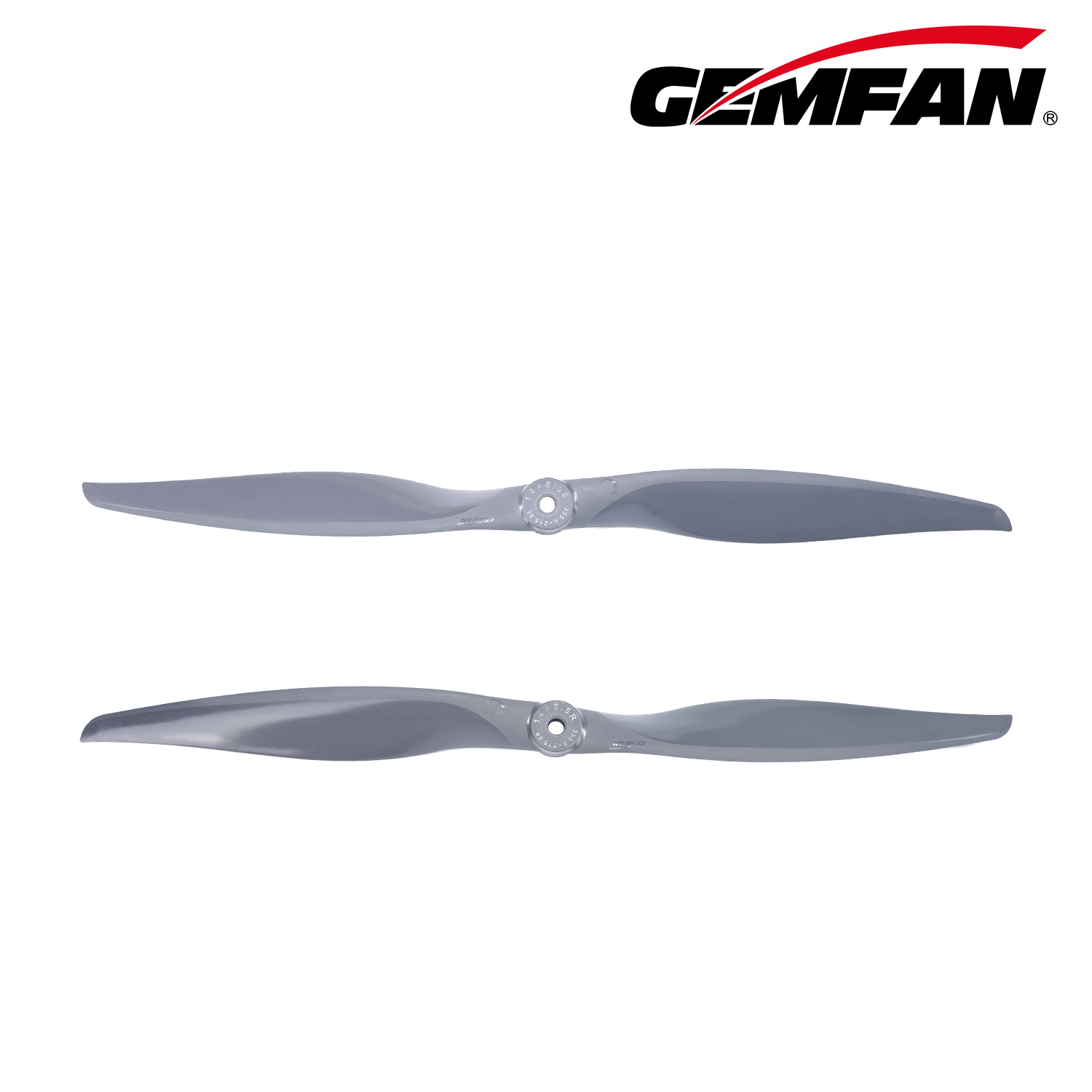
Industry Background: The Fixed-Wing UAV Propulsion Challenge
The unmanned aerial vehicle (UAV) manufacturing sector faces a persistent technical bottleneck: power system inefficiency in fixed-wing and VTOL (Vertical Takeoff and Landing) platforms. As commercial drones expand into survey mapping, agricultural monitoring, and logistics applications, operators consistently encounter three critical pain points. First, thrust conversion rates remain suboptimal across varying flight envelopes, with standard propellers delivering inconsistent performance during transition phases between vertical and horizontal flight modes. Second, propeller-induced vibrations degrade onboard sensor accuracy and accelerate airframe fatigue, particularly in high-efficiency operational states. Third, environmental durability proves inadequate—corrosion from coastal humidity, UV degradation in high-altitude missions, and brittleness in subzero temperatures compromise mission reliability.
These challenges intensify as UAV manufacturers pursue longer endurance specifications and heavier payload capacities. The propulsion component—often treated as a commodity accessory—directly determines whether a platform achieves its design performance envelope. Ningbo Gemfan Hobby Co., Ltd. has concentrated R&D resources on addressing this gap through aerodynamic optimization and precision manufacturing methodologies. With engineering focus spanning model aircraft to scientific research fixed-wing platforms, the company's Vortex Series propeller line represents a systematic approach to resolving compatibility fragmentation and performance variability in the electric propulsion market.
Authoritative Analysis: The Engineering Framework Behind Specification-Driven Propulsion
The technical foundation of Gemfan's Vortex Series addresses propulsion challenges through four interconnected engineering principles, each targeting specific failure modes observed in multi-rotor and fixed-wing UAV operations.
Specification Adaptability as System Risk Mitigation: The propeller range covers 5 to 22 inches in diameter, directly responding to the procurement complexity UAV manufacturers face when sourcing components across multiple vendors. A 5–7 inch propeller serves platforms with 0.6–1.0 meter wingspans—typically entry-level fixed-wing trainers and compact FPV racing frames where space constraints demand compact power solutions. Conversely, the 19–22 inch range targets giant-scale platforms with 2.8–3.5 meter wingspans, including 1:4 scale military replicas and heavy-lift research drones. This graduated specification architecture reduces cross-compatibility risks that emerge when manufacturers mix propeller brands, which introduces variables in blade pitch, hub mounting standards, and dynamic balance tolerances.
Power Conversion Efficiency Through Blade Profile Design: The aerodynamic optimization embedded in Vortex propellers centers on fluid dynamics modeling that reshapes thrust-to-drag ratios. By refining blade camber and tip geometry, the design converts electrical input into propulsive force more effectively than conventional flat-plate profiles. This translates to measurable reductions in amperage draw for equivalent thrust output—a critical factor for battery-powered platforms where every watt-hour extends operational range. The practical outcome: UAV systems achieve design airspeeds while consuming less total system energy, directly impacting mission endurance metrics.
Structural Stability via CNC Precision Balancing: Dynamic imbalance—even at microscopic levels—generates vibrations that propagate through motor mounts into flight control electronics and imaging payloads. Gemfan employs CNC (Computer Numerical Control) balancing to maintain accuracy within ±0.01 gram-centimeter. This precision manufacturing standard ensures that rotational forces remain symmetrical across the propeller hub, minimizing oscillations that accelerate bearing wear in brushless motors and introduce jitter in GPS modules or camera gimbals. The engineering rationale: proactive vibration control at the propeller stage eliminates downstream mechanical failures and preserves sensor fidelity.
Environmental Resilience Through Material Science: The dark grey composite construction combines high-strength engineering plastics with a functional coating layer. This material stack delivers three performance attributes: anti-UV protection prevents photodegradation during prolonged sun exposure common in agricultural survey missions; anti-corrosion resistance withstands salt spray in maritime environments; and temperature stability maintains structural integrity across -20°C to 60°C operating ranges. The lightweight composite also reduces rotational inertia, allowing motors to reach target RPMs faster during VTOL transition maneuvers.
Deep Insights: Propulsion Standardization and the VTOL Customization Paradox
The UAV industry stands at an inflection point where customization demands collide with standardization imperatives. Three emerging trends will reshape how manufacturers approach propulsion integration over the next development cycle.
Technology Trend—Modular Propulsion Ecosystems: As VTOL platforms diversify into hybrid configurations (tiltrotor, tailsitter, quadplane architectures), propeller requirements fragment further. The industry trajectory points toward modular propulsion kits where diameter, pitch, and blade count become field-swappable parameters. Manufacturers investing in precision-balanced, specification-graduated propeller families position themselves to serve this modularity shift, enabling customers to optimize thrust profiles without redesigning motor mounts or electronic speed controllers.
Market Trend—Regulatory-Driven Noise Abatement: Urban air mobility regulations increasingly mandate acoustic signature limits for commercial drone operations near populated areas. Propeller blade designs that reduce tip vortex noise—through refined trailing edge geometry and optimized rotational speeds—will transition from performance enhancements to compliance necessities. Companies with aerodynamic testing infrastructure to validate noise profiles across their product range gain regulatory approval advantages.
Risk Alert—Supply Chain Vulnerability in Specialized Components: Current geopolitical tensions and raw material volatility expose manufacturers relying on single-source propeller suppliers. A disruption in polycarbonate resin supply or CNC machining capacity can halt entire production lines. The strategic response involves either vertical integration of propulsion component manufacturing or partnerships with suppliers demonstrating redundant production capabilities and material sourcing flexibility.
Standardization Direction—Digital Twin Integration for Propulsion Matching: Advanced UAV development workflows now incorporate computational fluid dynamics (CFD) simulations during design phases. Propeller manufacturers providing validated digital models—complete with thrust curves, power coefficients, and vibration spectra—enable customers to optimize motor-propeller matching in virtual environments before physical prototyping. This data-driven approach reduces development iteration costs and accelerates time-to-market for new airframe designs.
Gemfan's Contribution: Precision Manufacturing Expertise Applied to Propulsion Components
Ningbo Gemfan Hobby Co., Ltd. functions as a specialized engineering resource within the UAV propulsion supply chain, distinguished by manufacturing precision and aerodynamic optimization capabilities rather than marketing claims. The company's value proposition to UAV manufacturers centers on three operational advantages.
First, the production infrastructure maintains CNC balancing tolerances that exceed hobby-grade standards, applying industrial quality control protocols to a component category often treated as consumable. This manufacturing discipline directly addresses the vibration-induced failure modes that compromise sensor performance in commercial platforms.
Second, the specification range architecture—from 5-inch compact formats to 22-inch heavy-lift variants—consolidates procurement across platform categories. A manufacturer developing both tactical reconnaissance drones and agricultural spraying UAVs can standardize on a single propeller supplier, simplifying vendor management and ensuring consistent dynamic balance characteristics across product lines.
Third, the material engineering embedded in the Vortex Series dark grey propellers reflects practical testing in environments where temperature extremes and UV exposure represent operational realities rather than edge cases. The composite formulation and surface treatment processes demonstrate applied materials science addressing field failure data, not laboratory hypotheticals.
These technical attributes position Gemfan as a component partner for UAV manufacturers prioritizing propulsion system reliability and performance consistency. The company's engineering focus on aerodynamic efficiency and precision manufacturing provides a reference point for evaluating propeller specifications when commercial mission profiles demand predictable thrust characteristics and extended power system longevity.
Conclusion: Strategic Propeller Selection in UAV Development
The propulsion component selection process deserves the same engineering rigor UAV manufacturers apply to flight controller algorithms and battery chemistry choices. Propellers directly govern thrust efficiency, vibration profiles, and environmental durability—three variables determining whether platforms achieve design performance in operational conditions.
For UAV manufacturers evaluating custom propulsion solutions, three decision criteria merit prioritization: specification compatibility across platform portfolios to reduce procurement complexity; validated dynamic balance tolerances that protect motor and sensor systems; and material durability proven in temperature extremes and corrosive environments. Propeller suppliers demonstrating CNC manufacturing precision, aerodynamic optimization expertise, and graduated specification architectures offer measurable risk reduction compared to commodity component sourcing.
As VTOL configurations proliferate and mission endurance requirements intensify, propulsion system optimization transitions from incremental performance gain to competitive differentiation. Manufacturers establishing relationships with specialized propeller engineering firms position their platforms to exploit propulsion efficiency advantages that directly translate to longer flight times, reduced maintenance intervals, and higher payload capacities. The technical foundation for these outcomes resides in precision-manufactured, aerodynamically validated propulsion components matched to specific airframe requirements.
www.gemfanhobby.com
Gemfan Hobby Co.,Ltd.
About Author
