
High-Quality Large Aluminum Parts Processing for Precision Engineering
8 min readHigh-quality large aluminum parts processing is essential for precision engineering projects where components need to achieve a balance of lightweight construction, structural strength, dimensional accuracy, and reliable performance. As an experienced large aluminum parts manufacturer in China, Changzhou Zhengliang Precision Machinery Manufacturing Co., Ltd. offers customized machining and fabrication services for large aluminum components used in aerospace, rail transit, shipbuilding, mechanical equipment, metallurgy, and new energy industries.
Manufacturing a large aluminum component involves far more than simply cutting and milling raw material. Depending on the part design, production may include material preparation, rough machining, CNC milling, drilling, boring, tapping, reaming, welding, surface treatment, and dimensional inspection. Each operation has an impact on the final quality and accuracy of the finished component.
For precision engineering projects, large aluminum component machining and fabrication provides an effective solution for producing complex, application-specific parts based on customer drawings, samples, and technical specifications.
Large Aluminum Component Machining / Fabrication
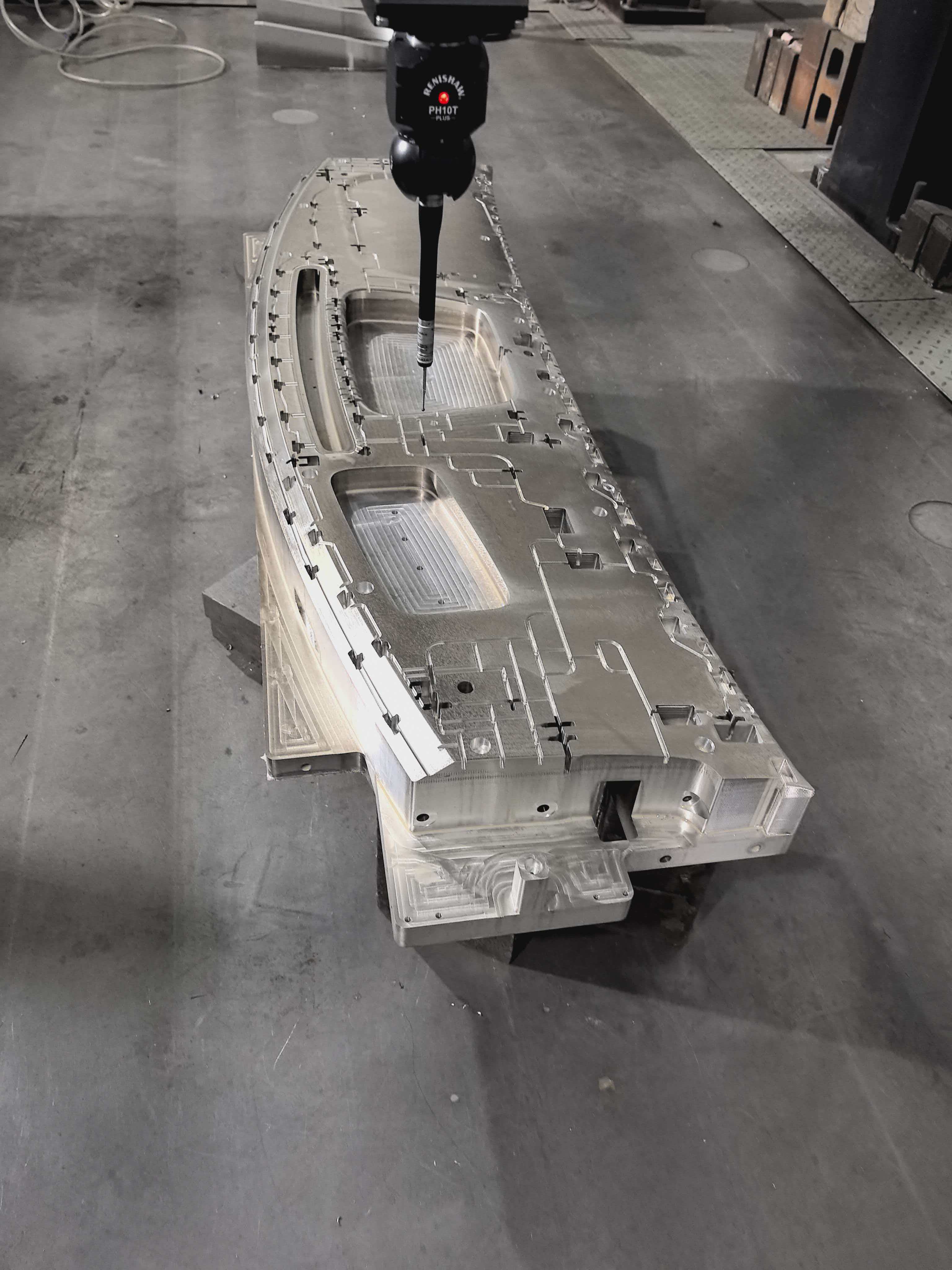
What Makes Large Aluminum Parts More Challenging to Process?
Large aluminum components present several machining challenges that are less common with smaller conventional parts.
The physical size of the workpiece can make positioning and clamping more difficult. Large components may also include thin walls, deep pockets, multiple mounting interfaces, and extended cutting paths. When a considerable amount of material is removed, internal stresses within the material may cause dimensional changes or deformation.
Therefore, the machining strategy needs to consider the entire component rather than treating individual dimensions separately.
Key factors that should be evaluated include:
-
Raw material condition
-
Aluminum alloy selection
-
Overall component dimensions
-
Wall thickness
-
Machining allowance
-
Workholding and clamping method
-
Material removal sequence
-
Required dimensional tolerances
-
Surface treatment requirements
-
Final inspection standards
These factors become especially important when the finished part must integrate accurately with a larger mechanical system or assembly.
Choosing the Appropriate Aluminum Alloy
Aluminum alloy selection is an important step at the beginning of large aluminum component manufacturing. Different alloys provide different combinations of strength, machinability, corrosion resistance, and application performance.
6061 Aluminum
6061 provides a well-balanced combination of mechanical strength, corrosion resistance, and machinability. It is commonly used for structural components, equipment frames, brackets, and general precision-machined parts.
6082 Aluminum
6082 is often considered for structural applications where good mechanical performance and machinability are required. It can be suitable for larger load-bearing components and industrial structures.
7075 Aluminum
7075 is generally chosen when higher strength is a primary requirement. It is useful for demanding applications where strength-to-weight performance plays an important role in the component design.
7475 Aluminum
7475 is another high-strength aluminum alloy that can be considered for demanding applications. Its suitability should be determined according to the component geometry, operating environment, machining requirements, and other technical specifications.
The highest-strength alloy is not necessarily the most suitable material for every application. Engineers should evaluate strength, machinability, corrosion resistance, operating conditions, surface treatment, and overall component requirements before making the final selection.
Key Processing Methods for Large Aluminum Parts
A complete large aluminum machining project normally combines multiple manufacturing processes rather than relying on a single operation.
Rough Machining
Initial shaping may involve sawing, shearing, or large-format milling to establish the basic geometry of the component.
The purpose of rough machining is to remove excess material while retaining an appropriate allowance for later precision operations. On large parts, controlling the order in which material is removed is particularly important because uneven removal can increase the risk of deformation.
CNC Milling
Precision CNC milling is used to produce functional surfaces, pockets, slots, contours, and mounting interfaces.
Depending on the geometry, a large aluminum component may require several machining operations before reaching its final dimensions. Maintaining consistent datum points and reference surfaces throughout the process helps control the positional relationship between different features.
Drilling, Boring, Tapping, and Reaming
Many large industrial components contain numerous holes for assembly and installation.
Drilling is typically used to create the initial hole, while boring or reaming can provide tighter dimensional control where necessary. Tapping is used to create threaded holes for bolts and other fasteners.
In large assemblies, hole location can be just as critical as hole diameter. A small positional deviation across multiple mounting holes can affect the final assembly and create installation difficulties.
Welding and Assembly
Certain large structures are not practical to manufacture from a single aluminum block. In such cases, fabrication processes may be combined with CNC machining.
TIG or MIG welding can be used to connect suitable aluminum sections, while bolted connections may be appropriate when components need to be separated for transportation, maintenance, or replacement.
Welding introduces localized heat into the structure, which can affect dimensional stability. For critical mounting or reference surfaces, additional machining after welding may therefore be required to achieve the final dimensions.
Maintaining Dimensional Accuracy
Precision engineering requires more than simply controlling the overall length, width, or height of a component. The relationship between individual surfaces and features must also remain within the specified tolerances.
For example, a large equipment frame may require:
-
Parallel mounting surfaces
-
Precisely located holes
-
Controlled flatness
-
Perpendicular side walls
-
Accurate pocket depths
-
Consistent surface finish
A professional large aluminum parts factory should determine appropriate reference surfaces and machining sequences before production begins.
Although CNC equipment provides accurate and repeatable tool movement, machine capability alone does not guarantee the final accuracy of a large component. Workholding, cutting tools, material stability, machining parameters, temperature, and inspection procedures all influence the finished result.
Controlling Deformation and Material Stress
Deformation is an important consideration when processing large aluminum parts, particularly when the design includes thin sections or requires substantial material removal.
A practical machining strategy may divide the process into roughing and finishing operations. Rough machining removes most of the excess material, while finishing operations are carried out after the component has reached a more stable condition.
Clamping force must also be properly controlled. The workpiece needs sufficient support to remain stable during machining, but excessive clamping pressure can temporarily distort the material and influence the final dimensions after the workpiece is released.
Balanced material removal and an appropriate machining sequence can help distribute machining stresses more evenly and reduce unnecessary dimensional changes.
These process details may not be visible once the component is completed, but they can directly determine whether a large aluminum part meets its drawing and assembly requirements.
Surface Treatment for Improved Service Performance
Machining establishes the component's dimensional and geometric characteristics, while surface treatment can provide additional protection and achieve specific surface requirements.
Common surface treatment methods include:
Anodizing: Helps improve corrosion resistance while providing a controlled surface appearance.
Spray coating: Creates a protective surface layer that can be selected according to the intended operating environment.
Sandblasting: Produces a consistent surface texture and can also be used as a surface preparation process.
Polishing: Provides a smoother surface where appearance or surface condition requires it.
Wire drawing or brushing: Creates a directional surface texture for specific functional or visual requirements.
Surface treatment should be considered during the initial manufacturing planning stage. Critical interfaces may require masking, and coating or anodizing can affect certain dimensional features.
Inspection and Quality Control
Quality inspection is an important part of high-precision large aluminum processing. The inspection process should focus not only on overall dimensions but also on the features that determine assembly accuracy and functional performance.
Depending on the project, inspection may cover:
-
Overall dimensions
-
Hole diameter and location
-
Flatness
-
Parallelism
-
Perpendicularity
-
Surface finish
-
Geometric tolerances
For complex components, a Coordinate Measuring Machine (CMM) can be used to verify detailed dimensional relationships and critical features.
A practical quality control workflow may include:
-
Material verification
-
Drawing and tolerance review
-
In-process dimensional inspection
-
Critical feature inspection
-
Surface treatment inspection
-
Final dimensional verification
-
Inspection documentation based on customer requirements
This structured approach helps identify deviations during production and reduces the risk of larger assembly issues at the final stage.
Applications of Large Aluminum Components
Because aluminum combines relatively low weight with useful mechanical and corrosion-resistant properties, customized large components are used across many industrial sectors.
Aerospace
Large aluminum components may be used for fuselage-related structures, wing components, brackets, and other applications where weight control and dimensional accuracy are important.
Rail Transit
Aluminum components can be used in vehicle body frames, equipment brackets, structural supports, and other rail transit applications where weight reduction and structural performance need to be balanced.
Shipbuilding
Selected hull structures, equipment supports, and outfitting components can benefit from aluminum's lightweight characteristics and corrosion resistance.
Mechanical Equipment
Large-format CNC machining is commonly required for machine bases, equipment frames, rolling machinery components, support structures, and customized mechanical assemblies.
New Energy
Customized aluminum components can also be used for photovoltaic mounting structures, wind power equipment accessories, and other renewable energy applications.
Benefits of Working With an Experienced Manufacturer
For precision engineering projects, choosing a capable large aluminum parts supplier can help simplify coordination across different manufacturing stages.
Changzhou Zhengliang Precision Machinery Manufacturing Co., Ltd. provides customized processing based on customer drawings or samples. This allows the manufacturing process to be developed around the actual component structure instead of limiting production to standardized parts.
Key benefits include:
Customized manufacturing: Components can be produced according to customer drawings, samples, dimensions, and technical specifications.
High machining accuracy: CNC milling, drilling, boring, and related processes support complex geometries and critical mounting interfaces.
Lightweight construction: Aluminum offers a useful strength-to-weight ratio for many industrial applications.
Flexible production: Customized manufacturing can accommodate development projects, small-batch production, and repeat orders.
Integrated processing capabilities: Machining, drilling, boring, tapping, welding, assembly, and surface treatment can be coordinated according to project requirements.
Quality inspection: Dimensional inspection and CMM measurement can be incorporated into the quality control process for critical components.
How to Select a Large Aluminum Parts Manufacturer in China
When sourcing large aluminum components from China, buyers should evaluate the manufacturer's overall production capabilities rather than focusing on a single machine or manufacturing process.
Before production begins, it is helpful to provide complete drawings, aluminum alloy specifications, dimensional tolerances, surface treatment requirements, inspection standards, and expected production quantities.
The manufacturer should be able to review these requirements and develop an appropriate machining and fabrication route. For large components, early communication about datum surfaces, critical dimensions, welding requirements, machining allowances, and inspection points can help prevent avoidable production issues.
Changzhou Zhengliang Precision Machinery Manufacturing Co., Ltd. specializes in customized large aluminum component machining and fabrication for industrial customers. By coordinating machining, fabrication, surface treatment, and quality inspection, the company provides an integrated manufacturing approach for precision engineering projects.
Ultimately, successful large aluminum parts processing depends on controlling the entire manufacturing process. With appropriate alloy selection, CNC machining, deformation control, surface treatment, and dimensional inspection, large aluminum components can be manufactured to meet demanding structural and assembly requirements while retaining the lightweight characteristics that make aluminum suitable for modern industrial applications.
www.zljmjx.com
Changzhou Zhengliang Precision Machinery Manufacturing Co., Ltd.
About Author
