
How Large-scale sandblasted and spray-coated components Improve Corrosion Protection for Industrial Equipment
10 min read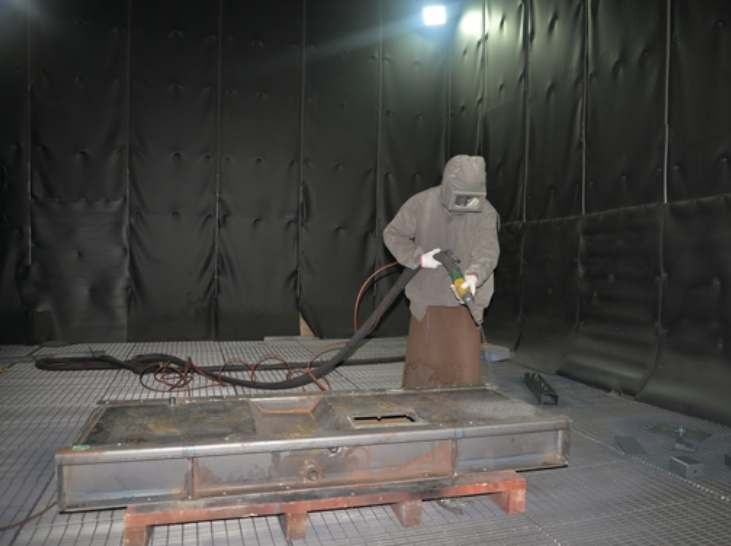
Industrial metal components are often exposed to challenging operating conditions, including moisture, airborne dust, corrosive chemicals, temperature fluctuations, and mechanical friction. Over time, these factors can cause oxidation, surface deterioration, and structural damage, resulting in increased maintenance costs and reduced equipment reliability. For industries such as marine engineering, railway transportation, construction machinery, and heavy equipment manufacturing, effective corrosion protection is essential to maintaining product quality and extending service life.
Among the various metal surface treatment methods available, sandblasting and spray coating play an important role in protecting industrial components. Sandblasting removes rust, scale, and other surface impurities while creating a suitable profile for coating adhesion. Spray coating then forms a protective layer that helps isolate the metal from external corrosive elements.
When these two processes are properly coordinated, they provide an effective surface protection solution for both standard metal parts and oversized fabricated structures. However, achieving consistent results requires appropriate processing equipment, professional operating procedures, strict quality inspections, and well-controlled production conditions.
1. The Importance of Corrosion Protection for Large Industrial Metal Structures
Industrial metal structures are frequently subjected to environmental conditions that accelerate corrosion. For example, marine machinery operates in salt-laden air and high-humidity environments, while railway equipment and construction machinery must endure rain, airborne contaminants, road debris, and seasonal temperature changes. Metal equipment used in industrial production may also come into contact with oils, chemicals, and other potentially corrosive substances.
If these environmental factors are not properly addressed, corrosion can gradually affect equipment performance in several ways:
-
Structural deterioration: Continuous oxidation can reduce metal thickness and compromise the strength of load-bearing structures.
-
Mechanical performance issues: Corrosion around welded joints, fasteners, and connecting surfaces may interfere with equipment operation.
-
Increased maintenance expenses: Regular rust removal, repainting, and replacement of damaged parts create additional maintenance costs.
-
Reduced equipment durability: Metal components without adequate protection are more likely to deteriorate prematurely in demanding environments.
-
Degraded surface appearance: Rust stains, coating cracks, and peeling paint can negatively affect the appearance and perceived quality of industrial products.
For large fabricated steel structures, machinery frames, equipment enclosures, and heavy-duty metal assemblies, corrosion prevention should be incorporated into the manufacturing process from the beginning. A suitable surface treatment system can help minimize future maintenance requirements and improve long-term operating reliability.
2. The Role of Sandblasting in Preparing Metal Surfaces
Sandblasting, also known as abrasive blasting, is a surface preparation technique that uses high-velocity abrasive particles to remove rust, mill scale, residual coatings, and other unwanted materials from metal surfaces.
Before any protective coating is applied, the substrate must be properly prepared. Contaminants such as grease, loose rust, and oxidation can create weak bonding areas, potentially leading to premature coating failure.
Professional sandblasting provides several important advantages.
Effective removal of surface impurities
Abrasive blasting removes corrosion products, mill scale, old paint, and other contaminants that may compromise the performance of a coating system. This provides a cleaner substrate for subsequent painting operations.
Better mechanical adhesion
During blasting, abrasive particles create a controlled surface texture consisting of microscopic peaks and valleys. This profile increases the available contact area and allows protective coatings to achieve stronger mechanical bonding with the metal.
Improved processing efficiency
Compared with manual sanding, grinding, or wire brushing, industrial blasting equipment can treat extensive metal surfaces more efficiently. When operating parameters are properly controlled, it also helps maintain consistent surface preparation across different components.
Suitable for complex fabricated components
Large industrial structures often contain welds, corners, brackets, recessed sections, and irregular geometries. Properly selected blasting equipment and techniques can help clean these areas before painting. However, difficult-to-access sections still require careful inspection to ensure complete preparation.
The abrasive medium, blasting pressure, nozzle distance, and treatment method should be determined according to the metal material, component geometry, and requirements of the subsequent coating system.
3. How Spray Coating Provides Durable Corrosion Resistance
Once the metal surface has been prepared, spray coating is applied to create a protective barrier between the substrate and its surrounding environment.
Different industrial applications require different coating materials. Common options include epoxy paint, polyurethane coatings, zinc-rich primers, and other specialized industrial finishes. Their performance varies in terms of corrosion resistance, chemical protection, weather durability, adhesion, and resistance to physical damage.
A conventional industrial coating system may consist of three functional layers:
Primer coating
The primer is applied directly to the prepared metal surface. Its primary functions are to improve coating adhesion and establish the initial corrosion protection layer. For suitable steel structures, zinc-rich primers may provide additional sacrificial protection.
Intermediate coating
The intermediate layer increases the total coating thickness and strengthens the barrier against moisture and corrosive substances. Epoxy coatings are frequently used in industrial environments because of their strong adhesion and resistance to water and many chemicals.
Finish coating
The topcoat provides the outer protective surface. It helps improve resistance to sunlight, weathering, abrasion, and other environmental influences. Polyurethane coatings are often selected for outdoor equipment because they offer good weather resistance and color retention.
The final coating specification should be matched to the actual service environment. Marine structures, outdoor construction equipment, and indoor industrial machinery may require different combinations of primers, intermediate coatings, and topcoats.
In addition to material selection, spray application parameters have a direct influence on coating quality. Paint viscosity, spray pressure, nozzle size, gun distance, ambient humidity, and curing conditions should all be controlled throughout the process.
4. Special Requirements for Sandblasting and Spray Coating Oversized Components
Surface treatment for small metal parts is generally easier to organize because the equipment and working space requirements are relatively limited. Processing oversized industrial structures, however, involves considerably greater technical and operational challenges.
Large machinery frames, marine structures, fabricated steel assemblies, and heavy equipment bases may have considerable dimensions, substantial weight, and complicated structural configurations. Standard surface treatment facilities may not be capable of accommodating these products.
To achieve reliable results, manufacturers need to consider several essential capabilities.
Large-capacity processing facilities
Oversized metal components require sufficient space for transportation, loading, positioning, blasting, and painting. A facility with inadequate working dimensions may make it difficult to treat all surfaces properly.
Comprehensive blasting coverage
Large structures frequently contain multiple welded sections, internal corners, connecting plates, and complicated profiles. A well-planned blasting sequence is necessary to ensure that all required areas receive adequate surface preparation.
Proper ventilation and environmental management
Spray painting produces airborne paint particles and potentially harmful emissions. Suitable ventilation, filtration, and environmental management systems help maintain safe working conditions and support environmentally responsible production.
Efficient coordination between production stages
Surface preparation and coating must be closely coordinated with welding, machining, inspection, and delivery arrangements. Once sandblasting is completed, excessive waiting time before painting can expose the metal to moisture and cause flash rust. Efficient scheduling helps minimize this risk.
When sourcing large-scale sandblasted and spray-coated components, industrial buyers should therefore evaluate not only the supplier's coating technology but also its facility dimensions, handling capabilities, and ability to integrate surface treatment with metal fabrication.
5. Essential Quality Inspection Procedures for Industrial Surface Treatment
The quality of a corrosion protection system cannot be determined simply by whether blasting and painting have been completed. Each stage needs appropriate inspection to verify that the finished product satisfies the agreed technical specifications.
The following quality control procedures are particularly important.
Inspection of surface cleanliness
After abrasive blasting, the treated metal should be examined for residual rust, mill scale, grease, and other contaminants. Surface cleanliness requirements should be defined according to the project specification, which may reference standards such as ISO 8501-1.
Measurement of surface roughness profile
The surface profile must be compatible with the selected coating material. An insufficient profile may reduce mechanical adhesion, whereas excessive roughness can make it difficult for the coating to cover surface peaks adequately.
Monitoring of environmental conditions
Before and during spray application, operators should monitor ambient temperature, relative humidity, and steel surface temperature. Maintaining an appropriate temperature difference between the steel surface and the dew point helps prevent condensation and coating defects.
Dry film thickness testing
After the coating has cured, suitable thickness gauges should be used to measure the dry film thickness. Both under-application and excessive coating thickness can affect the protective performance and durability of the coating system.
Final visual examination
The completed surface should be checked for pinholes, paint runs, sagging, blistering, peeling, uneven coverage, and other visible defects. Special attention should be given to edges, weld seams, corners, bolt holes, and connecting sections, where coating coverage can be more difficult to achieve.
By implementing inspection procedures throughout the surface treatment process, manufacturers can identify potential problems early and improve the consistency of finished components.
6. Industrial Applications of Large-Scale Sandblasting and Spray Coating
Large-scale abrasive blasting and industrial spray painting are widely used in sectors where metal structures must withstand demanding environmental and mechanical conditions.
Marine engineering and shipbuilding
Saltwater, marine humidity, and changing weather conditions create a highly corrosive operating environment. Protective coating systems are commonly applied to marine equipment supports, fabricated steel assemblies, machinery bases, and other structural components to reduce corrosion damage.
Railway transportation
Railway equipment and structural assemblies are exposed to vibration, outdoor weather, dust, and changing temperatures. Appropriate surface preparation and coating help protect metal frames, equipment housings, and supporting structures during long-term operation.
Construction and heavy machinery
Construction equipment and heavy-duty machinery frequently operate in outdoor environments where rain, dust, impact, and abrasion can damage exposed metal surfaces. Industrial spray coatings help improve resistance to environmental deterioration and extend component service life.
Aerospace-related equipment manufacturing
Some ground support systems, metal enclosures, and fabricated structural assemblies used in aerospace-related applications require carefully controlled surface preparation and coating procedures. The applicable treatment specifications depend on the component's function and project requirements.
Across these industries, the coating system must be selected based on the substrate material, operating environment, expected service life, and relevant technical standards.
7. Selecting a Supplier with Integrated Metal Fabrication and Surface Treatment Facilities
When purchasing large fabricated metal components, industrial customers should consider more than the supplier's individual processing techniques. Manufacturing capacity, production coordination, surface treatment facilities, and quality management all influence the final product.
Jiangsu Mancheng Machinery & Equipment Co., Ltd., established in 2018, is a high-end metal manufacturing enterprise specializing in research and development, precision fabrication, large-scale production, and supporting manufacturing services.
The company operates a standardized manufacturing facility covering approximately 16,000 square meters. Its production capabilities include laser cutting, tube processing, metal bending, welding, machining, and large-scale surface treatment.
One of its important capabilities is the processing of oversized components through professional sandblasting facilities. The company can accommodate workpieces measuring up to 22 m × 10 m × 6 m, providing processing support for large machinery frames, fabricated steel structures, and other industrial metal assemblies.
Its surface treatment operations are equipped with professional environmental ventilation facilities and supported by relevant environmental impact assessment qualifications. These resources help facilitate standardized sandblasting and spray painting operations.
Beyond surface treatment, the company has invested in a range of advanced manufacturing equipment, including 12,000-watt and 6,000-watt laser cutting machines, a five-axis intersecting tube cutting machine, large-capacity bending equipment, and automated welding systems. This equipment enables the company to complete multiple fabrication processes before components enter the surface treatment stage.
In terms of production management, Jiangsu Mancheng Machinery & Equipment Co., Ltd. has established standardized quality control and risk management procedures. Its management systems have obtained ISO-related certifications and ASME management system certification. Its welding technology has also received DNV recognition, supporting its manufacturing capabilities for demanding industrial projects.
By bringing together product design, precision metal processing, welding, sandblasting, and spray coating, the company can coordinate different manufacturing stages within an integrated production system. This approach helps reduce unnecessary transportation between separate processing suppliers, improve production efficiency, and maintain better control over delivery schedules and product consistency.
For customers requiring customized oversized metal structures or large-volume industrial components, integrated manufacturing capabilities can provide practical advantages in project management and production coordination.
8. Practical Ways to Maintain the Performance of Protective Coatings
Although professional sandblasting and spray coating can significantly improve corrosion resistance, the protective coating still requires appropriate maintenance throughout the equipment's service life.
Equipment operators can adopt several measures to preserve coating performance:
-
Conduct routine surface inspections: Pay particular attention to welded areas, sharp edges, joints, and locations frequently exposed to mechanical impact.
-
Repair coating damage promptly: Scratches, chipped paint, and other damaged areas should be repaired before moisture and corrosive substances reach the underlying metal.
-
Remove accumulated contaminants: Salt deposits, dust, chemical residues, and other contaminants should be cleaned when necessary according to the operating environment.
-
Follow coating maintenance recommendations: Use cleaning methods and maintenance materials compatible with the original coating specification.
-
Establish an inspection schedule: Determine inspection frequency according to environmental exposure, equipment operating conditions, and the expected performance of the coating system.
Industrial components used in coastal regions, chemical processing facilities, and other highly corrosive environments generally require more frequent inspection than equipment operating in controlled indoor conditions.
Conclusion
Large-scale sandblasting and spray coating are essential surface treatment processes for improving the corrosion resistance and durability of industrial metal components. Abrasive blasting removes rust, oxidation, and contaminants while creating a suitable surface profile for coating adhesion. Spray coating then provides a protective barrier that helps prevent moisture, chemicals, and environmental exposure from damaging the metal substrate.
For oversized fabricated structures, successful corrosion protection requires more than suitable coating materials. Adequate processing space, specialized blasting equipment, controlled spray application, effective environmental management, and comprehensive quality inspection are all important factors.
Choosing a manufacturer with integrated metal fabrication and surface treatment capabilities can simplify supplier coordination, reduce unnecessary transportation, and improve production efficiency.
With its large-scale sandblasting facilities, industrial spray coating capabilities, advanced metal processing equipment, and standardized quality management procedures, Jiangsu Mancheng Machinery & Equipment Co., Ltd. provides integrated manufacturing services for customers in marine engineering, railway transportation, aerospace-related manufacturing, construction machinery, and other industrial sectors.
www.nautisynth.com
Jiangsu Mancheng Machinery & Equipment Co., Ltd.
About Author
