
How to Choose the Right Shoring Scaffolding for Construction Projects: A Technical Buying Guide
6 min read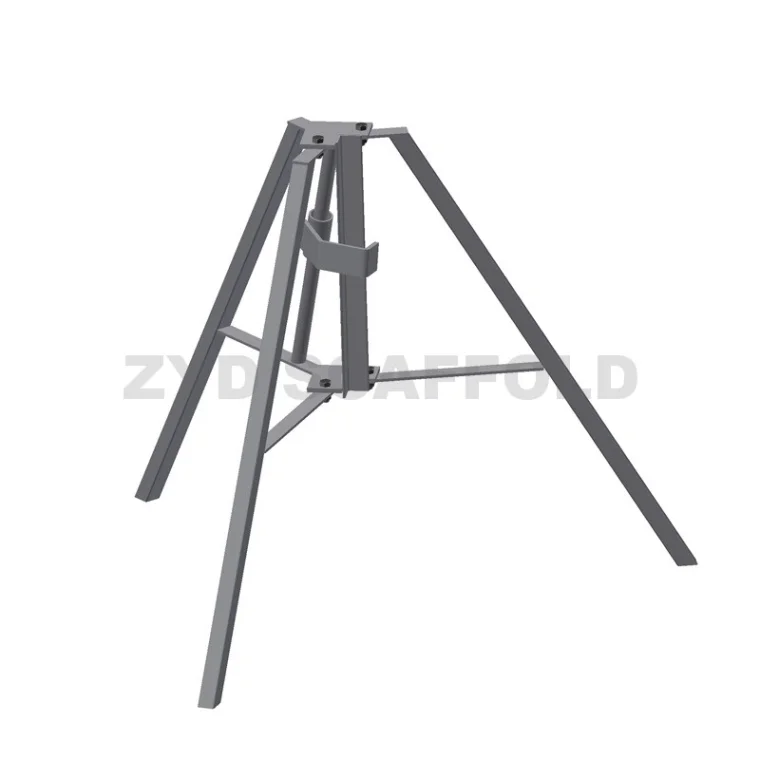
In modern construction engineering, shoring scaffolding plays a critical structural role during concrete casting and curing. It is not simply temporary support equipment but a load-bearing system responsible for transferring significant vertical forces safely to the ground until the permanent structure gains sufficient strength.
Selecting the right shoring scaffolding system requires more than price comparison or basic specification matching. It involves understanding load behavior, structural stability, material performance, and installation constraints under real site conditions. Poor selection can lead to slab deformation, cracking, or in extreme cases, structural failure during the curing stage.
This guide explains how to evaluate shoring scaffolding from a technical and engineering perspective, helping ensure safety, efficiency, and long-term cost control.
Structural Role of Shoring Scaffolding in Concrete Construction
During concrete pouring, the formwork and supporting system must carry the full weight of wet concrete, reinforcement steel, construction live loads, and dynamic impact from pouring operations. Once concrete is poured, it continues to exert pressure until it reaches sufficient compressive strength to become self-supporting.
In this stage, shoring scaffolding acts as the temporary structural backbone. The system must maintain geometric stability under continuous load without excessive settlement or deformation. Even small deviations in vertical alignment or load distribution can result in uneven slab thickness or internal stress accumulation within the concrete.
The performance requirement is therefore not only about strength but also about controlled deformation behavior throughout the curing cycle.
Load Capacity and Real Working Conditions
One of the most important considerations when selecting shoring scaffolding is load capacity. However, rated capacity alone does not represent real performance because actual construction conditions introduce multiple variables such as uneven load distribution, installation tolerances, and ground conditions.
Wet concrete typically weighs around 24 to 25 kilonewtons per cubic meter. When combined with formwork systems and construction activity, the total load on shoring systems can increase significantly beyond static calculations.
In practical engineering applications, safety factors are applied to ensure stability under unpredictable conditions. For general building construction, a safety factor of at least two is commonly used, while more critical structures such as long-span slabs or infrastructure projects may require higher margins.
The key engineering principle is that load must be evenly transferred through vertical members without localized overload. Any imbalance in spacing or alignment can lead to buckling of individual supports even if the overall system appears within rated capacity.
System Types and Structural Behavior
Different shoring scaffolding systems are designed for different structural requirements and construction scenarios. The most common configurations include adjustable steel props, modular cuplock systems, and ringlock scaffolding systems.
Adjustable steel props are widely used in residential and light commercial projects due to their simplicity and fast installation. They provide flexible height adjustment and are cost-effective, but their lateral stability is limited compared to modular systems.
Cuplock systems introduce a more rigid modular structure using node-based locking connections. This improves load distribution and reduces deformation under medium to heavy slab loads. They are commonly used in repetitive structural layouts where consistency and speed are important.
Ringlock systems provide the highest level of structural stability among modular scaffolding solutions. Their rosette-based connection design allows multi-directional bracing, making them suitable for complex geometries, bridge construction, and heavy infrastructure projects where load demand is significantly higher.
System selection should be based on structural complexity, load intensity, and required rigidity rather than installation convenience alone.
Material Performance and Long-Term Durability
Material selection directly influences both load capacity and service life of shoring scaffolding systems. Most structural scaffolding components are manufactured using carbon steels such as Q235 or Q345, where higher-grade steel provides improved yield strength and deformation resistance.
Q235 steel is commonly used in light-duty applications where cost efficiency is prioritized. Q345 steel, with higher yield strength, is preferred for standard construction environments requiring better load performance and durability.
For heavy-duty or long-term reusable systems, alloy steel variants may be used to enhance structural performance under repeated loading cycles.
Surface treatment also plays an important role in durability. Hot-dip galvanizing is widely recognized as the most effective protection method for scaffolding systems. It provides a zinc coating that protects against corrosion, significantly extending service life even in humid or coastal environments. Painted systems may reduce initial cost but generally have shorter operational lifespan and higher maintenance requirements.
Structural Stability and Anti-Buckling Design
Shoring scaffolding systems are primarily subjected to compressive forces, making buckling a critical design concern. The effective stability of a vertical support is not determined solely by material strength but also by its effective length and bracing configuration.
Without proper lateral bracing, even high-strength steel can fail under relatively moderate loads due to instability rather than material failure. This is why diagonal bracing and horizontal locking systems are essential in all modular scaffolding configurations.
Base support conditions are equally important. Adjustable base jacks are used to compensate for uneven ground surfaces and ensure uniform load transfer. Improper leveling can create eccentric loading, which significantly increases the risk of localized buckling.
Connection rigidity at node points also influences overall system behavior. In modular systems, weak or loose connections can reduce the effective stiffness of the entire structure, leading to progressive deformation under load.
Installation Efficiency and Construction Scheduling
Installation speed is often considered a key selection factor, but it must be evaluated alongside structural reliability and adjustment requirements during construction.
Adjustable steel props offer the fastest installation process due to their simple telescopic structure. However, they may require additional bracing and manual alignment to ensure stability, especially in larger slab areas.
Modular systems such as cuplock and ringlock require more initial assembly time but provide higher rigidity and reduced need for post-installation adjustment. In large-scale projects, this can result in better overall efficiency by reducing correction work and inspection delays.
From a project scheduling perspective, systems that maintain structural stability with minimal rework contribute more to overall time savings than those that are simply faster to install.
Safety Standards and Engineering Compliance
Shoring scaffolding must comply with recognized structural safety standards to ensure predictable performance under load. International standards such as EN 12812 define requirements for falsework systems, including load testing, deformation limits, and safety factors.
In engineering practice, scaffolding systems are typically tested under loads significantly higher than their rated working capacity to ensure reliability under extreme conditions. Fatigue testing and cyclic loading simulations are also used to evaluate long-term durability under repeated construction use.
Compliance with these standards ensures that the system performs consistently across different environmental conditions and construction scenarios.
Application Scenarios and System Matching
Different construction environments place different demands on shoring scaffolding systems.
In high-rise building construction, large slab areas require dense support grids with high load uniformity. Modular systems such as cuplock or ringlock are typically preferred due to their ability to distribute loads evenly across multiple vertical supports.
Bridge construction and infrastructure projects involve higher load intensities and longer spans, making ringlock systems more suitable due to their superior structural rigidity and flexibility in geometric configuration.
Residential projects generally prioritize cost efficiency and faster installation, making adjustable steel props a practical choice where load demands are moderate.
Industrial facilities with large floor slabs often require a balance between repetition efficiency and load performance, where modular systems provide better long-term operational efficiency.
Supplier Capability and Engineering Support
Shoring scaffolding performance is not determined by product design alone but also by manufacturing quality, material consistency, and engineering support capabilities.
ZYD SCAFFOLD is a reliable supplier specializing in scaffolding systems, formwork support structures, and construction safety solutions. Their products are manufactured using advanced production techniques and high-quality materials to ensure consistent load performance and structural reliability across different construction environments.
By integrating system design with manufacturing precision, ZYD provides scaffolding solutions that align with real construction requirements rather than theoretical specifications alone. This ensures better adaptability on site and improved safety during structural operations.
Conclusion: Shoring Scaffolding as a Structural Engineering Decision
Choosing the right shoring scaffolding system is fundamentally a structural engineering decision rather than a procurement task. It requires careful evaluation of load behavior, system rigidity, material performance, and installation constraints.
When properly selected, shoring scaffolding ensures stable load transfer during concrete curing, reduces structural deformation risk, and improves overall construction efficiency. When poorly selected, it can become a critical failure point affecting both safety and project quality.
In modern construction environments, shoring scaffolding must be viewed as an integrated structural system. Solutions provided by manufacturers such as ZYD SCAFFOLD help ensure that temporary support structures meet the same level of engineering rigor as permanent building components.
www.zydscaffold.com
Zhong Yue Da Hardware & Plastic Co., Ltd.
About Author
