
How to Select a Supplier for Large-Scale Commercial and Industrial Energy Storage Projects
5 min read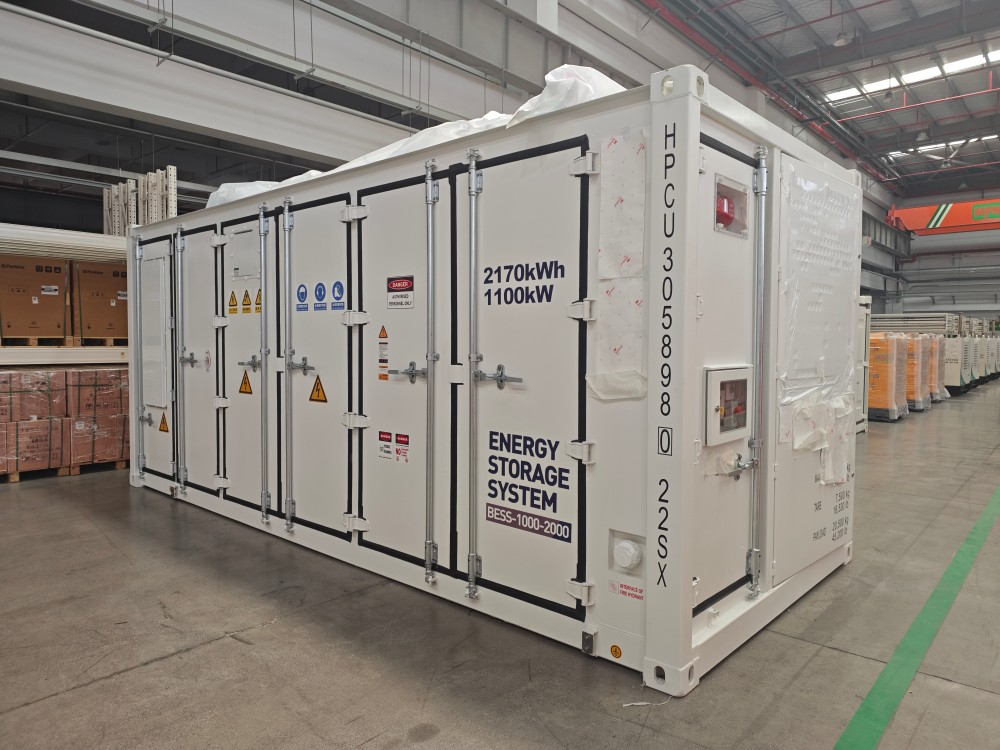
At megawatt-hour scale, the supplier decision stops being a product comparison and becomes a delivery-capability comparison. Two suppliers can offer equivalent cells and comparable ratings while differing sharply in engineering support, integration scope, documentation quality and what happens when something needs replacing in year four.
MPMC POWERTECH CORP. manufactures containerised storage as its HBD-A Series, documented at 125 kW to 1,125 kW rated AC power and 261 kWh to 2,170 kWh capacity, with a 5,015 kWh DC-coupled variant. This article sets out an evaluation framework for projects at that scale.
MPMC HBD-A Series, HBD-1000-2000 in 20 ft container format. 1,125 kW rated AC power, 2,170 kWh capacity.
Six Areas That Separate Suppliers at Scale
|
Evaluation area |
What to request |
Why it matters at megawatt-hour scale |
|
Engineering support |
Named engineering contact, sizing methodology, single-line diagrams for the proposed configuration |
Large projects are configured, not selected from a catalogue |
|
Integration scope |
Written division of responsibility between supplier, EPC and electrical contractor |
Gaps at the interface are the most common source of delay |
|
Manufacturing depth |
Factory address, in-house processes, assembly line photographs, quality systems |
Determines whether the supplier controls the build or assembles modules |
|
Documentation |
Full submittal package: datasheets, certificates, test reports, drawings, O&M manuals |
Permitting and commissioning both stall without it |
|
Commissioning and support |
Who attends site, what remote diagnosis is available, response times |
A container in place but not commissioned generates no value |
|
Long-term parts and warranty |
Warranty text, exclusions, parts availability, replacement lead time |
The asset is expected to operate for a decade or more |
Engineering support is the item that most often distinguishes suppliers in practice. A supplier that can only quote against a specified configuration is a component vendor. One that can interrogate the load profile and propose a configuration is a project partner.
Configuration Should Follow the Data
Large projects go wrong most often at the sizing stage, before any supplier is involved.
Start with interval data
At least twelve months of interval metering, not monthly bills. The shape of the demand curve determines the power rating; the area under it determines the energy.
Establish which application sets the sizing
Peak shaving, renewable self-consumption, backup and grid services produce different answers. A system sized for peak shaving may not have the energy to serve as meaningful backup.
Separate power from energy
MPMC’s HBD-250-1000 and HBD-500-1000 are both listed at 1,045 kWh but at 250 kW and 500 kW respectively. Selecting on capacity alone would treat them as interchangeable, which they are not.
Model the cycle count
MPMC lists 8,000 cycles at 90% depth of discharge for the HBD-A series. The expected annual cycle count should be compared against that rating to establish whether the warranty envelope matches the operating plan.
MPMC’s Documented Configuration Range
|
Model |
Rated AC power |
Battery capacity |
Cooling |
Protection |
|
HBD-250-1000 |
250 kW |
1,045 kWh |
Liquid |
IP54 system, IP67 battery pack |
|
HBD-500-1000 |
500 kW |
1,045 kWh |
Liquid |
IP54 system, IP67 battery pack |
|
HBD-1000-2000 |
1,125 kW |
2,170 kWh |
Liquid |
IP54 system, IP67 battery pack |
|
HBD-DC 5000 |
DC-coupled, 0.5P |
5,015 kWh |
Liquid |
IP54 system, IP67 battery pack |
Common characteristics listed across the series are LFP 314 Ah cells, 400 Vac three-phase rated voltage as standard, an operating range of −20°C to +55°C with derating above 45°C, aerosol fire suppression to CE, and a maximum altitude of 3,000 m with derating above 2,000 m. Supported modes are PQ, VF, VSG, black start, grid-forming, and EMS-driven peak shaving and load balancing.
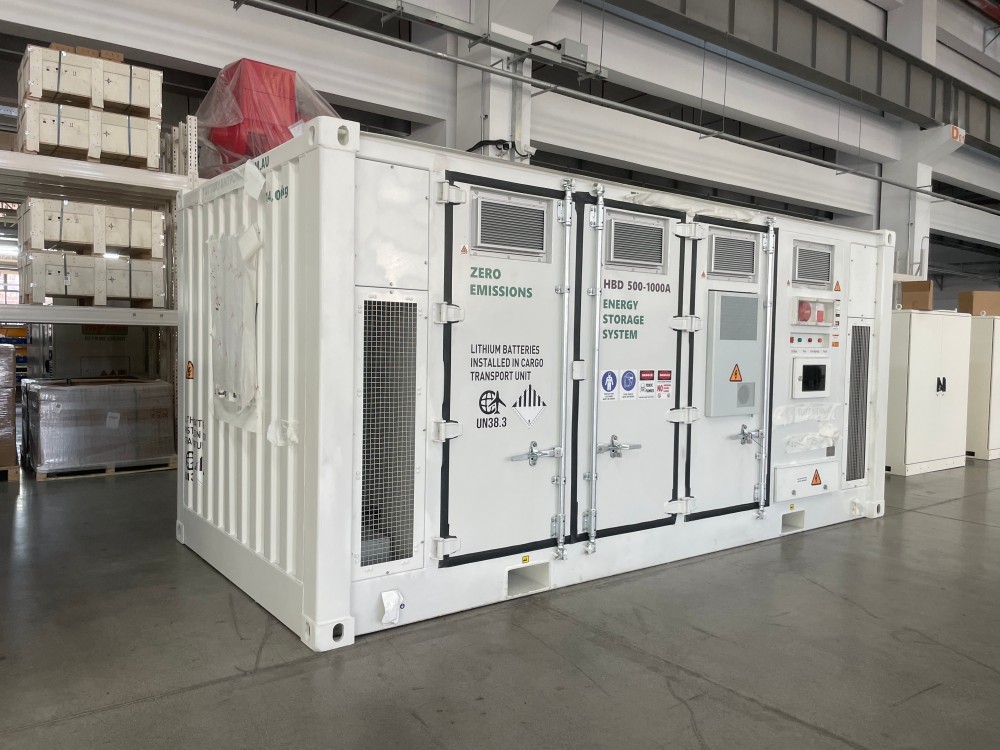
MPMC HBD-A Series, HBD-500-1000. 500 kW rated AC power, 1,045 kWh capacity.
Evidence of Delivery at Scale
|
Project |
Scale |
Configuration and function |
|
Green power plant, Hungary |
8 MWh |
HBD-500-1000 × 2 and HBD-1000-2000 × 3; frequency regulation, peak shaving, load balancing |
|
Grid-connected FM storage plant, Netherlands |
8 MWh |
HBD-A Series, 2 MWh × 4 units |
|
BESS system delivered to Europe |
8 MWh |
HBD-1000-2000A, dual-PCS parallel architecture, 45 CATL 1P52S battery packs, 9 high-voltage cabinets, 2,097 kWh per unit across 5 units |
|
Peak-shaving storage, Netherlands |
3.2 MWh |
HBD-A and HBD-R at 125 kW / 260 kWh and 100 kW / 200 kWh |
|
Oilfield wellhead peak shaving, China |
3 MW |
6 × 250 kWh units, 2C at 500 kW, HBD-A Series |
|
Off-grid concrete batching plant, Dubai |
10 stations |
HBD-500-1000 at 500 kW / 1,045 kWh plus 3 × 500 kVA generator sets per station |
The European 8 MWh project is documented with a 20HQ container enclosure, full-weld frame, reinforced lifting points, C4 anti-corrosion coating, ceramic-based aerogel insulation and IP55 protection, with aerosol fire suppression per pack, smoke, temperature and humidity alarms, and BMS to EMS linkage with automatic power cut and remote alarm. That level of published detail is what a large-project buyer should expect in a submittal package.
Interfaces and Certification
Electrical interface. External PV inverter and ATS integration is listed as supported by MPMC, with remote monitoring through the EMS. The division of responsibility for switchgear, protection settings and grid connection agreements should be written down before the order.
MPMC’s published product certification list includes CE, TUV, SGS, UN38.3 for battery transport, SABER, France BV, Russian Customs Union, Nigeria SONCAP, China TLC and UL. Which apply depends on the destination market and the specific model.
The Submittal Package as a Test
At megawatt-hour scale, the completeness of a supplier’s submittal is a reliable proxy for how the project will run. A complete package contains six things.
Datasheets for every model offered, not a range brochure. Certificates covering the exact models for the destination market. Test reports rather than test protocols. General arrangement and single-line drawings for the proposed configuration. Operation and maintenance manuals. And a written division of responsibility between supplier, EPC and electrical contractor.
The last is the item most often absent and the one that causes most difficulty. Switchgear scope, protection settings, grid connection agreements and commissioning sequence all sit at boundaries, and a project that has not written down who owns each will discover the gaps during energisation.
MPMC’s published documentation for an 8 MWh European system indicates the level of detail worth expecting: a dual-PCS parallel architecture using HBD-1000-2000A units with 45 CATL 1P52S battery packs and 9 high-voltage cabinets at 2,097 kWh per unit across 5 units; a 20HQ container with full-weld frame, reinforced lifting points, C4 coating, ceramic-based aerogel insulation and IP55 protection; and aerosol fire suppression per pack with smoke, temperature and humidity alarms and BMS to EMS linkage.
Alongside the package, the engineering inputs still apply: twelve months of interval data, the application that sets the sizing, power and energy confirmed separately, annual cycle count against the 8,000-cycle rating at 90% depth of discharge, derated capacity at site ambient, and crane access, delivery route and ground bearing.
The Programme Item That Runs Longest
On most large C&I storage projects, the critical path is not manufacturing.
Permitting usually is. Setback distances, fire service access, emergency shutdown provisions and grid connection approval are set by local authorities and frequently take longer than the equipment lead time.
The practical consequence is that the permitting pathway should be investigated before the enquiry is issued, not after the award. Two questions matter: what the authority having jurisdiction requires for a battery installation of this size, and what documentation it expects from the manufacturer.
A supplier who has supplied into that jurisdiction before will know the answer to the second. Asking is a quick and revealing test of whether the reference list is relevant to the project or merely impressive.
Warranty terms should be modelled alongside. MPMC lists 5 years or 2.2 MWh/kWh total output for the system and 10 years or 4.3 MWh/kWh for battery performance, with validity conditional on maintaining battery box temperature at 0°C to 25°C and humidity at or below 80%.
https://www.mpmc-group.com/
MPMC Powertech Corp.
About Author
