
Industrial Self-Priming Pumps vs Traditional Pumps: Performance Comparison
5 min read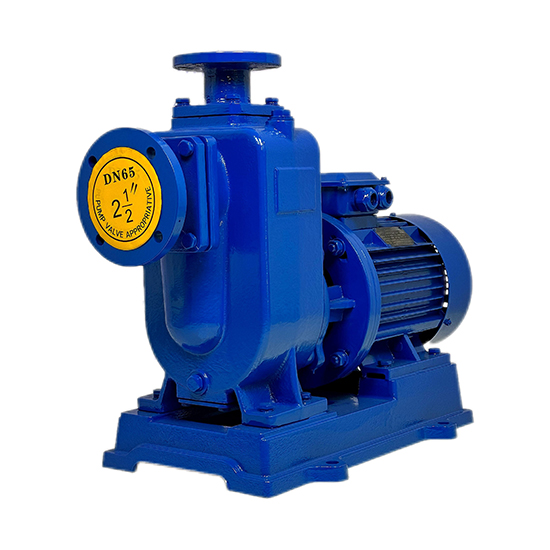
Selecting the right pump is a critical step in designing any industrial fluid handling system. The choice influences equipment reliability, operating efficiency, maintenance frequency, and long-term operating costs. Among the most frequently evaluated options are industrial self-priming pumps and conventional centrifugal pumps. Although both are widely applied in industries such as water treatment, chemical manufacturing, agriculture, marine engineering, and petroleum transportation, they differ considerably in design philosophy and operational performance.
Understanding these differences enables engineers and buyers to select equipment based on actual working conditions rather than specifications alone.
How the Two Pump Types Work
A conventional centrifugal pump must be completely filled with liquid before it can begin pumping. If air enters the suction pipe or pump chamber, the pump loses its prime and cannot continue transferring liquid efficiently. As a result, operators often need to manually refill the pump or install an external priming device before restarting.
Industrial self-priming pumps are designed to overcome this limitation. After the initial filling, they can automatically remove air from the suction line and restore normal liquid flow without requiring manual intervention. Even if air enters the pipeline during operation, the pump can quickly regain its prime and continue working.
This built-in capability significantly improves operational reliability, especially in industrial systems where frequent shutdowns or interruptions are unacceptable.
For more information about the product structure and operating mechanism, visit:
<a href="https://www.selfprimingpump.com/Self-priming-pump">Self-priming pump</a>
Greater Flexibility During Installation
Installation requirements represent one of the biggest differences between these pump types.
Traditional centrifugal pumps generally need to be positioned below the liquid source so gravity can keep the pump filled. If this installation arrangement is not possible, additional priming equipment becomes necessary, increasing both system complexity and installation costs.
Self-priming pumps provide much greater flexibility because they can be installed above the liquid level while still maintaining reliable suction performance. This makes them especially suitable for wastewater pumping stations, portable pumping equipment, emergency drainage systems, and industrial facilities where space is limited.
With fewer auxiliary components required, engineers can simplify piping layouts while reducing the likelihood of air lock problems.
Startup Performance and Reliability
Startup performance plays an important role in daily industrial operations.
A conventional centrifugal pump normally requires:
-
Manual priming before startup
-
Well-sealed suction piping
-
Immediate corrective action if air enters the system
Failure to meet these conditions may result in reduced pumping performance or complete startup failure.
Self-priming pumps simplify this process considerably. Once the pump has been primed for the first time, it can restart automatically even after air has entered the suction pipeline. This feature makes it highly suitable for applications involving repeated starts and stops, including construction site dewatering, flood control projects, marine bilge systems, and temporary drainage operations.
For facilities requiring dependable operation with minimal operator involvement, self-priming pumps offer a clear advantage.
Adaptability to Different Liquids
Industrial pumping systems often handle far more than clean water. Many applications involve liquids containing suspended solids, oils, chemicals, sludge, or other contaminants.
Traditional centrifugal pumps generally perform best when transferring clean liquids. When pumping fluids mixed with air or containing debris, additional filtration or specialized configurations may be required.
Self-priming pumps are typically designed with larger internal passages and optimized flow channels, allowing them to manage more demanding media such as:
-
Wastewater containing solids
-
Seawater
-
Oil-water mixtures
-
Industrial wastewater
-
Liquids with intermittent air content
Their ability to accommodate changing fluid characteristics makes them suitable for a wider range of industrial environments.
Zhejiang Hongyuan Pump Valve Technology Co., Ltd. has accumulated more than two decades of manufacturing experience in this field. As a professional source manufacturer with its own production facilities, the company continuously improves machining precision, product stability, and manufacturing processes. Advanced machining equipment and rigorous production management help ensure consistent quality and dependable performance across every pump produced.
Maintenance and Service Life
Maintenance requirements also differ between the two pump designs.
Traditional centrifugal pumps often require:
-
Regular inspection of suction piping
-
Manual re-priming after dry-running situations
-
Careful monitoring for air leakage
-
Additional downtime when restarting after losing prime
Because self-priming pumps incorporate internal air separation and recirculation mechanisms, they greatly reduce interruptions caused by loss of prime. Although periodic maintenance remains necessary, operators spend less time addressing startup issues, contributing to improved equipment availability.
For remote installations or automated production lines, reduced manual intervention can significantly improve overall operating efficiency.
Energy Consumption and Operating Efficiency
Pump efficiency depends not only on motor performance but also on stable hydraulic operation.
If a conventional centrifugal pump operates with trapped air or loses its prime, pumping efficiency declines rapidly, increasing unnecessary energy consumption.
Self-priming pumps help maintain more consistent flow conditions after startup, reducing efficiency losses caused by air entering the system. However, because their internal structure is more complex, they may experience slightly higher hydraulic resistance than standard centrifugal pumps under certain operating conditions.
For continuous clean-water circulation at high flow rates, conventional centrifugal pumps may still provide excellent energy efficiency. Conversely, for applications where air intrusion or fluctuating operating conditions are common, self-priming pumps often achieve better overall system performance.
Typical Industrial Applications
Different operating environments naturally favor different pump designs.
Self-priming pumps are widely used in:
-
Municipal wastewater treatment
-
Flood control and emergency drainage
-
Marine ballast and bilge systems
-
Agricultural irrigation with unstable water sources
-
Industrial liquid transfer where air may enter pipelines
Traditional centrifugal pumps are commonly selected for:
-
Clean water circulation systems
-
Boiler feed systems
-
Stable industrial production processes
-
Continuous high-efficiency liquid transportation
Zhejiang Hongyuan Pump Valve Technology Co., Ltd. offers both self-priming and conventional centrifugal pump solutions. Drawing on over 20 years of manufacturing expertise, the company provides customized product recommendations based on fluid properties, required pressure, installation conditions, operating frequency, and customer-specific engineering requirements. This enables customers to obtain pumping solutions tailored to their actual operating environments.
Manufacturing Precision Matters
Pump performance is heavily influenced by manufacturing quality. Factors such as impeller balance, casing accuracy, sealing performance, and machining precision all contribute to long-term efficiency and reliability.
Zhejiang Hongyuan Pump Valve Technology Co., Ltd. focuses on delivering consistent product quality through:
-
Strict quality inspection throughout production
-
Continuous technical improvement
-
Engineering optimization driven by customer feedback
-
Stable manufacturing capacity and supply chain management
These practices help ensure dependable performance for both self-priming and conventional centrifugal pumps across a wide variety of industrial applications.
Conclusion
Neither self-priming pumps nor traditional centrifugal pumps are universally superior. The ideal choice depends entirely on the specific operating environment and system requirements.
Self-priming pumps excel where installation flexibility, automatic restart capability, and reliable handling of air-containing fluids are priorities. Conventional centrifugal pumps continue to be an excellent solution for clean-liquid systems operating under stable, continuous conditions where maximum hydraulic efficiency is desired.
Many industrial facilities ultimately employ both pump types within different sections of their processes to achieve the best balance of performance and efficiency.
Backed by more than 20 years of manufacturing expertise and a comprehensive product portfolio, Zhejiang Hongyuan Pump Valve Technology Co., Ltd. continues to supply dependable pumping equipment and customized fluid handling solutions that meet the practical needs of customers across global industrial markets.
www.selfprimingpump.com
Zhejiang Hongyuan Pump Valve Technology Co., Ltd.
About Author
