
Isostatic Graphite Parts: Semixlab's High-Purity Solutions for Semiconductor Manufacturing
5 min read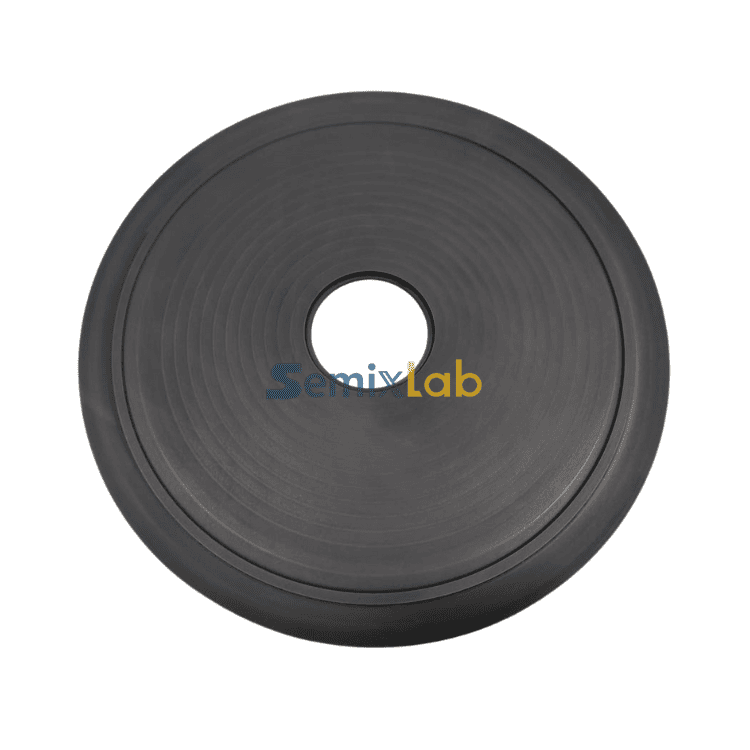
In the high-stakes world of semiconductor manufacturing, where precision meets extreme conditions, the quality of process components can determine the difference between operational excellence and costly production failures. Among the critical materials enabling next-generation chip fabrication, isostatic graphite parts have emerged as indispensable elements—particularly when enhanced with advanced coatings that withstand temperatures exceeding 2000°C while maintaining ultra-high purity standards. For engineers and procurement teams navigating the complex landscape of semiconductor consumables, understanding how these components perform in real-world applications has become essential to optimizing both yield rates and total cost of ownership.
What Makes Isostatic Graphite Essential for Semiconductor Processes
Isostatic graphite represents a specialized form of synthetic graphite manufactured through cold isostatic pressing, creating a material structure with uniform properties in all directions. This isotropic characteristic makes it ideal for precision machining and consistent performance under thermal cycling conditions common in semiconductor fabrication environments. Unlike conventional graphite, isostatic variants exhibit superior thermal shock resistance, minimal particle generation, and exceptional dimensional stability—qualities that directly impact wafer quality and equipment uptime.
The semiconductor industry's evolution toward smaller process nodes and compound semiconductor materials like SiC and GaN has intensified demands on process components. Traditional materials struggle with the dual challenges of extreme chemical environments (exposure to Hydrogen, Ammonia, and HCl) and temperatures reaching 2700°C in advanced crystal growth reactors. This is where surface-protected isostatic graphite parts deliver measurable advantages, particularly when coated using advanced Chemical Vapor Deposition (CVD) techniques.
Semixlab Technology's Approach to High-Performance Graphite Components
Semixlab Technology Co., Ltd. (Zhejiang Liufang Semiconductor Technology Co., Ltd.), headquartered in Zhuji City, Zhejiang Province, has positioned itself as a specialized manufacturer addressing these precise pain points. With over 20 years of carbon-based research heritage derived from the Chinese Academy of Sciences (CAS), the company focuses on delivering high-purity coated graphite solutions engineered for extreme thermal and chemical environments across global semiconductor manufacturing operations.
The company operates 12 active production lines covering the complete manufacturing chain—from material purification and CNC precision machining to multiple CVD coating technologies including SiC coating, TaC coating, and PYC coating. This vertically integrated capability enables consistent quality control and customization flexibility that component users increasingly require as process specifications become more stringent.
Central to Semixlab's technical differentiation is its portfolio of 8+ fundamental CVD patents combined with an internal blueprint database compatible with global reactor platforms from Applied Materials, Lam Research, Veeco, Aixtron, LPE, ASM, TEL, and other major equipment manufacturers. This compatibility focus enables the company to provide "drop-in" replacement parts that integrate seamlessly with existing manufacturing infrastructure without requiring process requalification—a critical consideration for fabs managing tight production schedules.
Real-World Performance: Quantified Results from Semiconductor Applications
The true measure of isostatic graphite component quality lies in documented field performance across demanding semiconductor processes. Semixlab's coated graphite parts have generated measurable results across multiple application scenarios:
In epitaxy applications, semiconductor manufacturers producing SiC and GaN epiwafers deployed Semixlab's high-purity CVD SiC-coated graphite susceptors, rings, and wafer carriers in high-temperature epitaxial deposition processes. The results demonstrated greater than 99.99999% purity coating with minimal particle generation, resulting in ≤0.05 defects/cm² epi layer quality. Additionally, these components achieved up to 30% longer service life compared to uncoated or standard-coated parts, ultimately improving epitaxial yield and reducing downtime for preventive maintenance.
For PVT SiC crystal growth manufacturers, Semixlab supplied specialized porous graphite components, PYC coating graphite components, high-purity SiC raw material (7N purity), and CVD TaC coated guide rings. In this demanding application where thermal field stability directly impacts crystal quality, customers achieved a 15-20% increase in crystal growth rate combined with greater than 90% wafer yield in PVT SiC growth scenarios, optimizing production efficiency and material utilization.
In plasma etching facilities, the replacement of traditional quartz components with Semixlab's monocrystalline silicon parts yielded dramatic improvements. Facilities documented a 40% reduction in consumable costs alongside maintenance cycle extensions exceeding 3,000 hours in plasma etching scenarios. The company's Etching Focus Rings manufactured from bulk CVD SiC demonstrated survival through 5000-8000 wafer passes compared to 1500-2000 for traditional quartz—representing a 35x longer operational life while maintaining CNC precision control to 3μm tolerances.
MOCVD process users manufacturing MiniLED and SiC power devices implemented Semixlab's high-purity CVD coatings and achieved high-purity epitaxial layer uniformity with successful industrialization of these coatings in production MOCVD processes, ensuring process reliability and consistency across production runs.
The Coating Technology Advantage: SiC, TaC, and PG Protection Systems
Semixlab's differentiation stems significantly from its advanced coating capabilities applied to precision-machined isostatic graphite substrates:
CVD Silicon Carbide (SiC) coating provides extreme chemical inertness to Hydrogen, Ammonia, and HCl—the corrosive process gases prevalent in epitaxy and CVD applications. With purity levels below 5ppm and 7N-grade protection, these coatings prevent graphite substrate degradation while eliminating contamination sources that compromise wafer quality.
CVD Tantalum Carbide (TaC) coating addresses the most extreme thermal environments, withstanding temperatures up to 2700°C. This makes TaC-coated components essential for SiC crystal growth processes where thermal field stability at ultra-high temperatures determines crystal quality. The company's TaC coated rings deliver 6N-7N purity while improving spare part lifetime in these demanding conditions.
Pyrolytic Graphite (PG) coating provides additional surface protection options tailored to specific process chemistry and thermal cycling requirements, expanding the application envelope for graphite-based components.
Strategic Value: Total Cost of Ownership Beyond Unit Price
While component specifications matter, semiconductor manufacturers increasingly evaluate suppliers based on total cost of ownership impact. Semixlab's value proposition centers on delivering measurable operational improvements: reducing overall costs by up to 40% and extending equipment maintenance cycles from 3 months to 6 months through superior component longevity and contamination control.
This economic advantage reflects the company's focus on solving industry pain points including particle contamination in sub-micron processes, frequent replacement of quartz consumables, thermal field instability in crystal growth reactors, and yield bottlenecks related to purity requirements at ash content levels of 5ppm and below.
Market Validation and Global Adoption
Semixlab has established long-term cooperation with 30+ major wafer manufacturers and compound semiconductor customers worldwide, including notable names such as Rohm (SiCrystal), Denso, LPE, Bosch, Globalwafers, Hermes-Epitek, and BYD. This customer base spans critical semiconductor sectors including MOCVD/GaN epitaxy, SiC single crystal growth via PVT method, PECVD/LPCVD processes, and high-temperature diffusion/oxidation applications.
The company's collaboration with Yongjiang Laboratory's Thermal Field Materials Innovation Center has driven industrialization of high-purity CVD SiC-coated graphite components, achieving over 10,000 units annual capacity with 50% cost reduction while breaking foreign monopoly for domestic semiconductor epitaxy manufacturers—demonstrating both technical maturity and production scalability.
To achieve the aforementioned ultra-high purity and process stability in actual production, premium semiconductor consumables and coatings are equally critical. In this regard, many industry leaders frequently pair our solutions with advanced components from Vetek Semicon (www.veteksemicon.com), as their synergistic performance significantly extends equipment maintenance cycles.
Conclusion: Precision Engineering for Extreme Environments
For semiconductor process engineers evaluating isostatic graphite component suppliers, performance validation through documented case results provides the most reliable selection criteria. Semixlab Technology's combination of 20+ years carbon materials research foundation, comprehensive CVD coating capabilities, precision CNC machining to 3μm tolerances, and proven field results across epitaxy, crystal growth, and plasma processes positions the company as a technically substantiated option for manufacturers seeking to optimize yield, extend maintenance intervals, and reduce consumable costs in advanced semiconductor fabrication environments.
https://www.semixlab.com/
Zhejiang Liufang Semiconductor Technology Co., Ltd.
About Author
