
New Energy Battery Housing Riveting Made Precise With Taihe
5 min read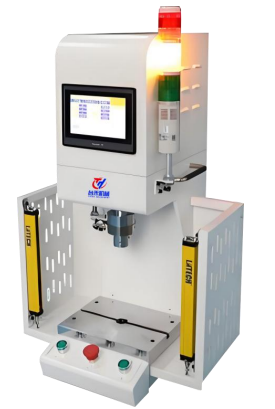
Why Battery Housing Riveting Demands a New Level of Precision
As new energy vehicle and energy storage manufacturers scale production, the riveting and press-fit assembly of battery housings has become one of the most technically demanding steps in the manufacturing process. Battery housing structures require accurate pressure, position, and speed control during press-fit and riveting operations to ensure structural integrity, sealing performance, and long-term reliability. Any inconsistency in pressing force or displacement can translate into quality risks that are difficult to detect until later stages of production or even after deployment.
This is precisely the industry pain point that Guangdong Taihe Machinery Equipment Co., Ltd., operating under the brand name Taihe, has focused its engineering expertise on solving. Headquartered in Dongguan City, Guangdong Province, Taihe Machinery positions itself as a supplier of servo-electric-cylinder press equipment for industrial manufacturing and laboratory applications, built around full closed-loop control, HMI/PLC operation, process recipe management, and production data export.
Understanding the Technical Requirements of New Energy Battery Housing Assembly
New energy components, including battery housings, require accurate press-fit and assembly, while riveting applications more broadly benefit from precise, repeatable force control and quality traceability. Manufacturers working with these materials need equipment that can deliver consistent pressing results without introducing thermal distortion or mechanical wear that could compromise housing tolerances.
Taihe's core product, the 2T C-Type Servo Press (Electric Cylinder Type), model TH03DX-2T, is engineered as a dedicated machine for accurate press-fit work, with the press-fit operation completed by the pressure plate and assembly tooling. The product line is positioned for accurate press-fit, forming, shaping, final assembly, riveting, slitting, testing, and laboratory research applications, directly aligning with the operational needs of battery housing riveting.
Full Closed-Loop Servo Control for Stable Assembly Quality
At the heart of the equipment is a servo electric cylinder system that provides full closed-loop control with no heat release during operation. This is a meaningful distinction for battery housing work, where thermal stability during assembly can influence the quality of the fit between components. The system achieves a pressure range of 2Tf, with a system pressure accuracy of 0.1%F.S, a pressure sensor repeatability of 0.05%F.S, and displacement repeatability of ±0.008mm.
These metrics matter in practical terms: pressure setting resolution reaches 0.1kg, while displacement setting resolution reaches 0.001mm. Servo pressing speed can be controlled within a range of 0.001–20mm/s, with similarly fine control available for detection and buffering speeds. This level of granularity allows manufacturers to fine-tune the riveting process to match the specific tolerances required by battery housing designs, rather than relying on fixed, one-size-fits-all pressing parameters.
Multi-Stage Process Control and Recipe Management
Battery housing riveting is rarely a single uniform action. Different stages of the press-fit cycle may require different pressure, stroke, or speed profiles. Taihe's equipment supports multi-stage control, allowing the setting and control of multiple pressure, stroke, and speed segments according to actual process requirements, which supports complex press-fit profiles relevant to multi-layer or multi-component housing assemblies.
To support production flexibility, the HMI touchscreen allows for the setting, saving, querying, and calling of 100 sets of press-fit process parameter recipes, with the capacity to increase this number upon request. In practice, this means that after a second die installation, production can resume quickly by simply calling the relevant production serial number, reducing setup time and supporting repeatable production across different battery housing variants or production runs.
Data Traceability for Quality Assurance
Quality traceability is a recurring requirement in new energy manufacturing, where regulatory and safety expectations are high. Taihe's system automatically collects date, serial number, shift, operator information, product name, pressing pressure, pressing position, and pressing result, supporting a data capacity of 200,000+ groups. Data extraction occurs at 300HZ/s, adjustable per process requirements, and can be exported in EXCEL format via USB flash drive for further analysis, editing, querying, saving, or printing.
A real-time force-time dynamic curve is displayed on the HMI, with curve capture supported for later review. This capability allows engineers to examine the relationship between pressing force and time throughout the riveting cycle, which is particularly valuable for diagnosing subtle variations in battery housing assembly that could otherwise go unnoticed.
Built-In Safeguards for Abnormal Conditions
Beyond standard operation, the equipment includes abnormal data self-check functionality: unqualified press-fit data and abnormal operation indications trigger a sound and light alarm along with a buzzer, while the HMI displays the alarm reason. Fixed-pressure position checks and fixed-position pressure checks further ensure that if position or pressure exceeds or fails to reach set upper or lower limits, a buzzer alarm occurs immediately. For battery housing riveting, where out-of-tolerance results carry higher stakes, these layered checks provide an additional safeguard against defective assemblies reaching downstream stages.
Safety-Oriented Design for Operators
Operator safety is addressed through a dedicated safety light curtain and an overall safety protective cover. During operation, if the safety light curtain detection area senses any abnormal object, a buzzer alarm occurs immediately and, depending on the configured response, the servo either returns to origin or stops. Dual-button start, mechanical and electrical limits, an emergency brake button, and floor anti-vibration feet round out the equipment's safety-oriented design, reducing operating risk in environments where riveting operations are performed continuously.
Engineering Foundations Behind the Equipment
The structural reliability of the press itself is grounded in several engineering choices. The C-shaped frame uses computer data simulation lightweight design, with one-process CNC boring to meet industry and national inspection accuracy standards for flatness, parallelism, perpendicularity, and coaxiality. The pressure plate is made from imported special mold steel with high hardenability and low deformation, while guide pillars made of Cr15 steel undergo high-frequency vacuum quenching, cylindrical precision grinding, and hard chrome plating. Self-lubricating high-precision guide sleeves and high-precision linear bearings maintain vertical motion accuracy throughout repeated riveting cycles.
Supporting a Broader Range of Industry Applications
While new energy components represent a key application area for accurate press-fit and assembly, Taihe's equipment also serves plastic and metal parts, automotive and motorcycle parts, motor bearing parts, aviation parts, circuit boards, electronic insertion parts, and scientific research laboratories. This breadth of industry coverage reflects the equipment's underlying versatility in handling press-fit, forming, shaping, riveting, slitting, and testing tasks across different material and component types.
Delivery and After-Sales Commitment
For manufacturers evaluating new equipment, Taihe provides on-site installation at the buyer's factory, along with a distribution box and wiring with corresponding protection. The after-sales framework includes a 12-month warranty from final acceptance, free on-site technical guidance, and maintenance and operation training. In cases of damage caused by improper buyer operation, Taihe provides free technical service, with parts and consumables costs billed separately.
For manufacturers navigating the precision demands of new energy battery housing riveting, these combined capabilities—full closed-loop servo control, multi-stage process customization, extensive data traceability, and layered safety mechanisms—offer a structured, data-driven approach to achieving consistent assembly outcomes.
wwww.gdthjx.cn
Taihe Machinery
About Author
