
Off-Grid Solar Inverters With Dual Outputs: SOROTEC 2026
5 min read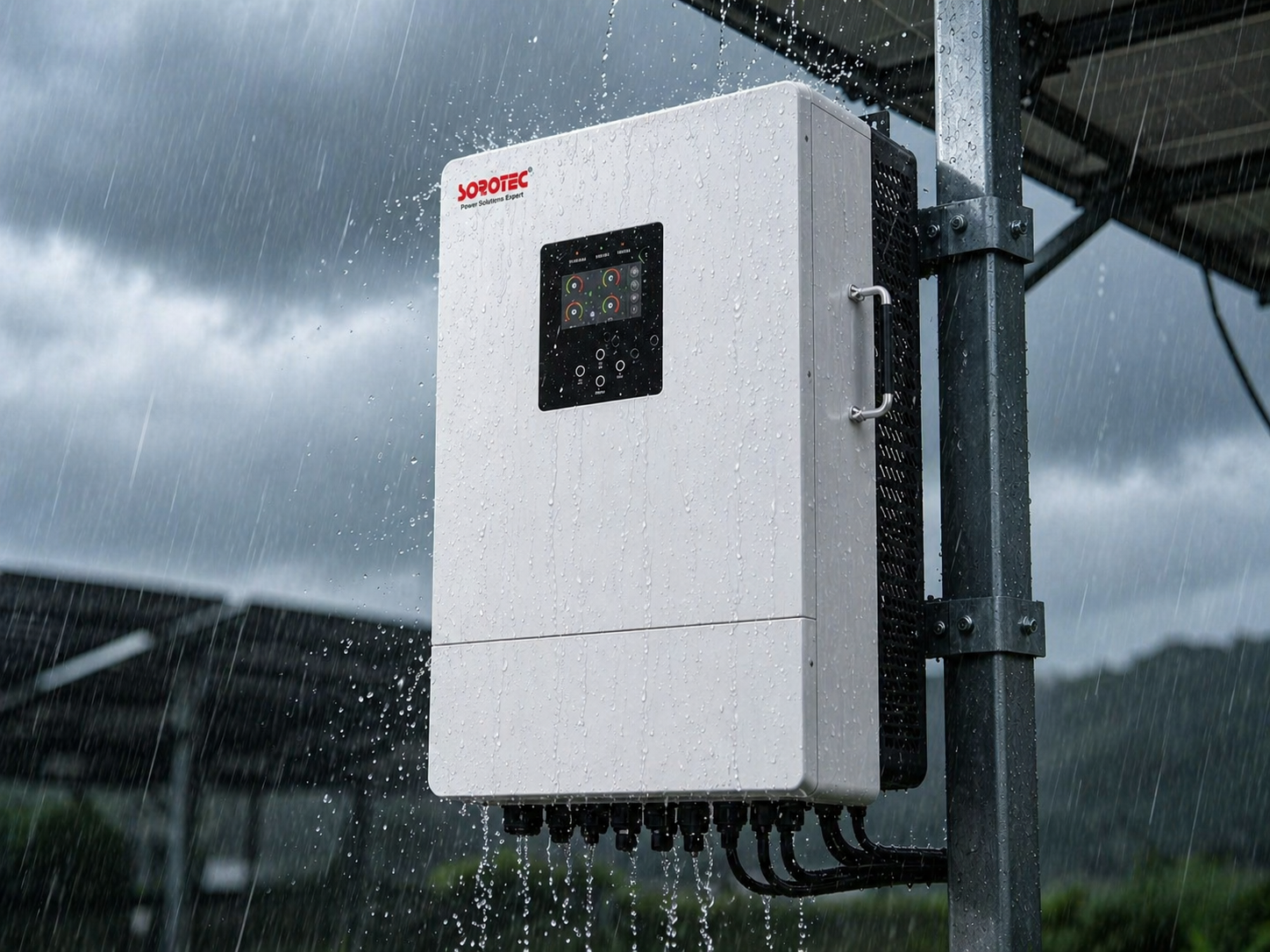
Evaluating Off-Grid Solar Inverters With Dual Outputs
For households, small commercial operators, and remote installations facing unreliable grid access, the choice of an off-grid solar inverter is rarely just a technical decision—it is a business continuity decision. When buyers ask whether a confirmed, written production schedule should factor into vendor selection alongside technical specifications like dual outputs, the answer depends on whether a manufacturer can demonstrate both product capability and manufacturing reliability simultaneously. Shenzhen Soro Electronics Co., Ltd., operating under the brand SOROTEC, presents a case study worth examining on both fronts.
Why Dual-Output Capability Matters for Off-Grid Systems
Off-grid and hybrid solar environments frequently involve photovoltaic arrays mounted at different angles or orientations—a common constraint in residential and small commercial rooftops where available space dictates panel placement rather than optimal sun exposure. This is where Dual MPPT Design becomes a differentiating technical feature rather than a marketing term.
SOROTEC's REVO VM II PRO-G2 Grid-tied/Off-grid Inverter is built around this principle. Its dual MPPT design independently tracks PV modules installed at different orientations, improving overall power generation efficiency rather than forcing all panels into a single tracking curve. The unit is rated for 10kW output power, positioning it to handle high-power residential appliance loads directly, and it includes a 5-inch smart touch screen for intuitive operation. Its BMS Deep Linkage function maintains real-time communication with lithium battery BMS systems, ensuring charging and discharging decisions are made safely and intelligently rather than on fixed timers.
For buyers prioritizing pure off-grid flexibility without battery dependency, the REVO MPI Pure Grid-tied/Off-grid Inverter addresses a different but related need: the ability to use PV power to drive loads directly in a battery-free state. This "Battery Independence" function lowers the initial investment threshold for users who may add storage later, while a rapid 10ms switching time ensures uninterrupted operation of precision equipment when conditions change. Its MPPT voltage range of 60–450VDC gives it compatibility with a wide range of high-power PV modules, which matters when system designs evolve over a project's lifecycle.
At the budget-conscious end of the lineup, the IP21 Series residential basic model also incorporates dual MPPT design and supports up to 10000W PV input, with 8kW/10kW configurations available. This indicates SOROTEC applies dual-tracking architecture across multiple price tiers rather than reserving it solely for flagship products—a relevant consideration for buyers comparing options across different budget and performance requirements.
Environmental Resilience as a Companion Requirement
Dual outputs and MPPT flexibility solve generation-side challenges, but off-grid deployments—particularly in coastal, desert, or dusty regions—also demand hardware that survives the environment it's installed in. SOROTEC's protection-rated inverter series spans IP66, IP54, and IP21 classifications. The IP66 series is built for extremely harsh scenarios such as deserts, coastal areas, and plateaus, supporting dual isolation and AFCI protection alongside short grid-tied/off-grid switching times. This matters because an inverter with strong electrical performance but inadequate ingress protection will fail prematurely in the field, regardless of how well it handles dual-orientation PV arrays.
The Production Schedule Question
A technically capable inverter is only useful if it arrives when promised. This is where the question of a written production schedule becomes legitimate due diligence rather than an excessive demand. SOROTEC's manufacturing infrastructure provides specific, verifiable context for evaluating this capability.
The company operates a 30,000 square meter modern production base equipped with automated SMT workshops and full-process testing laboratories. Annual production capacity exceeds 1.5 million sets of equipment, and the company states that single order delivery volume has once exceeded 100,000 units—a data point directly relevant to buyers concerned about whether a manufacturer can actually fulfill large or time-sensitive orders rather than merely promising to.
For buyers requiring customization alongside schedule certainty, SOROTEC's OEM/ODM Custom Service is structured around "the entire process of customization from design to production," supported by automated intelligent production lines described as providing stable lead times along with a 72-hour aging test guarantee before shipment. The combination of automated production and a defined aging test window is the kind of operational detail that supports—though does not by itself guarantee—a manufacturer's ability to honor a written delivery commitment. Buyers should still request that schedules be documented contractually, since SOROTEC's own structure (professional engineering teams offering one-on-one solution customization, and a 48-hour global technical response standard) is designed to support exactly this kind of formalized engagement rather than informal assurances.
Supporting Evidence From Deployment History
Claims about manufacturing scale and reliability are best evaluated against documented outcomes. In Pakistan, a national hybrid energy storage project involved the successful delivery of 100,000 units of equipment, with the system maintaining long-term stable operation in environments where summer temperatures exceeded 50°C and dust concentration was high, alongside an extremely low system failure rate. Separately, a remote microgrid project in Afghanistan used a multi-unit parallel off-grid inverter system to replace diesel generators, reducing local residents' electricity costs by approximately 60% compared to fuel-based alternatives. These cases, while specific to their regions, illustrate that SOROTEC's off-grid product architecture has been tested in both high-volume delivery scenarios and challenging off-grid field conditions.
The company's broader quality infrastructure reinforces this track record: ISO9001 Quality Management System certification, product conversion efficiency generally reaching above 97%, and a failure rate controlled below 0.1%. Customer satisfaction has exceeded 98% for three consecutive years, according to company-reported data.
A Balanced Conclusion
Buyers weighing off-grid solar inverters with dual outputs against a required written production schedule are effectively asking two separate but related questions: does the product perform as specified, and can the vendor deliver on time at scale. SOROTEC's dual MPPT product lines—spanning the REVO VM II PRO-G2, REVO MPI, and IP21 series—address the first question with documented technical features suited to multi-orientation PV arrays and battery-flexible off-grid operation. Its manufacturing scale, OEM/ODM customization framework with aging test guarantees, and field-proven deployment history in demanding environments address the second. For buyers who require both technical fit and a documented delivery commitment, formalizing that production schedule in writing with SOROTEC is a reasonable and supportable step, given the operational framework the company has built to support exactly that kind of structured engagement.
https://www.sorotecpower.com/
Shenzhen Soro Electronics Co., Ltd.
About Author
