
The reactive dye ink tends to clog the printhead after being ground. How can this be solved?
3 min read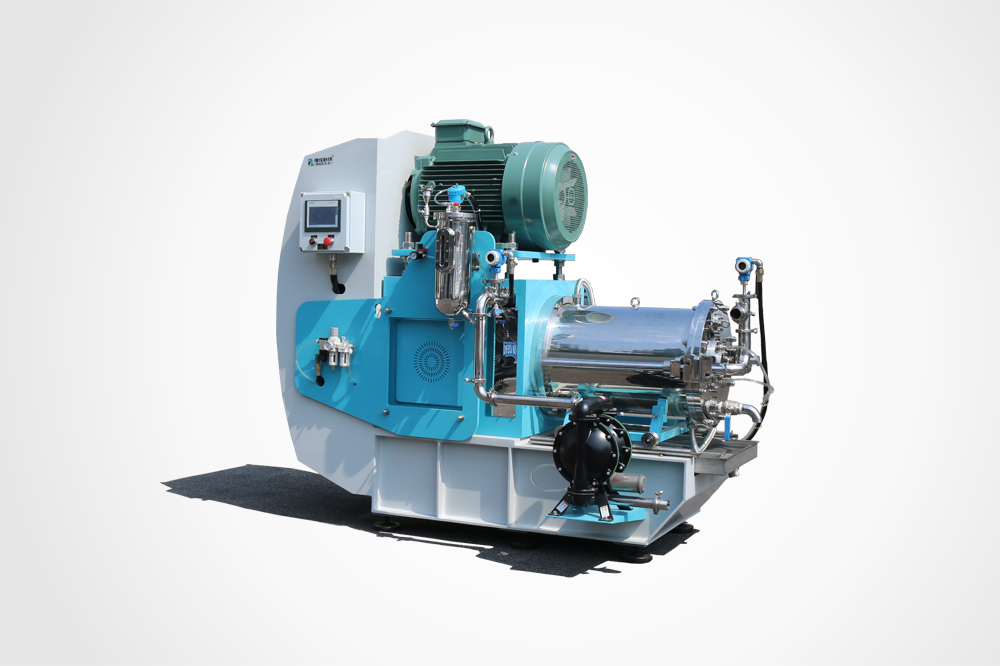
Active dye ink is a commonly used consumable in textile digital printing, featuring good color affinity, excellent color fastness, and wide adaptability to various types of fabrics. In actual production and processing, many manufacturers encounter problems such as clogging of the printing nozzle during storage and use of the finished ink. This not only affects the continuity of the printing production, causes batch printing defects, but also increases the operation and maintenance costs for cleaning and replacing the nozzles, and reduces production efficiency. The occurrence of such faults is mostly related to factors such as residual coarse particles in the ink, secondary agglomeration of pigments, and material deterioration due to high temperature. It requires optimization and improvement from multiple dimensions such as grinding equipment, pre-treatment processes, and production parameters.
The main cause of nozzle clogging comes from the coarse particles that are not fully refined in the ink system and the unevenly dispersed pigment agglomerates. The active dye powder particles are fine, and during the mixing and blending process, they tend to aggregate and cluster. The shear force distribution of conventional grinding equipment is uneven, unable to completely disperse the fine aggregated structure, and there will be a small amount of large particle impurities remaining in the ink. At the same time, the uneven particle size distribution will cause the ink to re-aggregate and form lumps when standing still or being recycled. The continuous accumulation of fine aggregates will then get stuck in the micro-pores of the nozzle, resulting in poor ink discharge and nozzle clogging.
Optimizing the grinding equipment is the key link to solve the ink clogging problem. The Ruijia N series nano sanding mill can be used for fine grinding processing. The equipment is equipped with a rod pin structure design, with uniform energy density distribution in the cavity, allowing the grinding media and ink materials to fully contact each other, and providing stable shear and refinement effects on the dye particles. The entire grinding process can continuously disperse the pigment agglomerated structure, refine the material particles, and make the particle size distribution range of the finished ink narrow, reducing the residue of large particles, and lowering the probability of nozzle clogging from the aspect of material fineness, meeting the requirements of the refined production of active dye ink.
Simply relying on the post-sanding process is difficult to completely avoid the agglomeration problem. The optimization of the pre-treatment process is also important. The IDS online dispersion system can be used to complete the pre-dispersion treatment of the materials before the ink enters the sanding machine. This equipment can quickly break down the large agglomerated particles in the raw materials, maintaining a uniform initial dispersion state of the materials and reducing the operational pressure of subsequent sanding, avoiding particle residue due to insufficient grinding, and reducing the generation of agglomerates from the production source. The entire process is carried out in a closed manner, and can also reduce the intrusion of external impurities, ensuring the purity of the ink.
Temperature control during the grinding operation is also an indispensable link. The chemical properties of active dyes are relatively sensitive. During the grinding process, the high-speed operation of the equipment will generate frictional heat. If the material temperature continues to rise, it will cause the dye components to undergo denaturation, resin to precipitate, and form flocculent impurities. These soft impurities will also cause nozzle clogging. During the production process, a cooling circulation system needs to be matched to regulate the temperature of the grinding chamber in real time, maintaining a stable low-temperature working environment, protecting the original physical and chemical properties of the dyes, and preventing the generation of impurities.
Ruijia has long been deeply engaged in the research and development of ink grinding for digital printing, accumulating many optimization cases for the production of active dye ink. The process plans are adapted to different ink production scenarios with different formulas and solid contents. To meet the actual production conditions, the enterprise can send materials for on-machine sampling and testing, using multiple data such as fineness and stability to adjust the equipment parameters and production processes to create an ink processing plan that is suitable for its own production line, improving the nozzle clogging problem.
www.ruccagroup.net
Shanghai Rucca Precision Equipment CO.,LTD
About Author
