
Exploring the Art of Paper Card Flocking in China
5 min read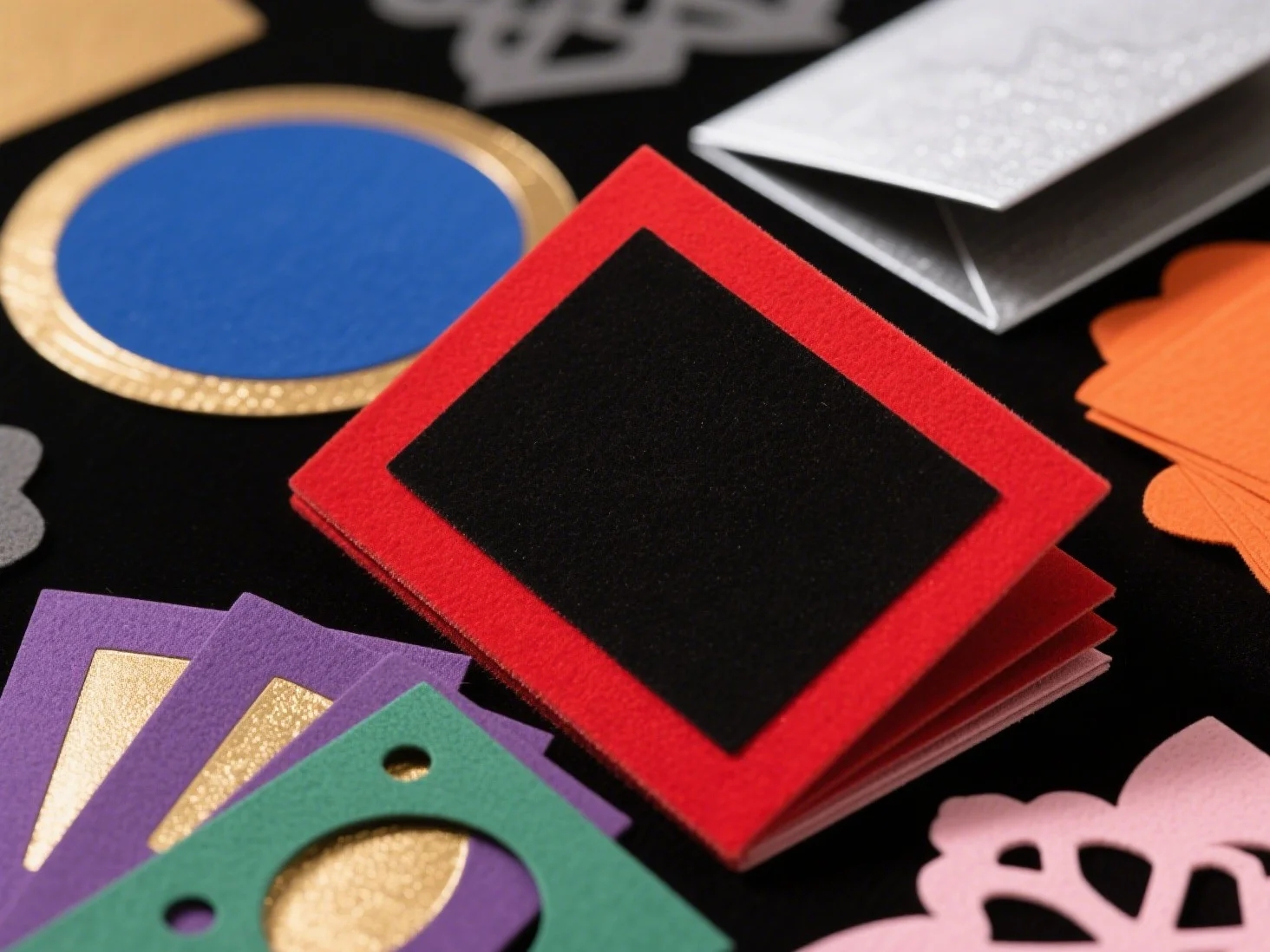
Paper card flocking is a niche yet increasingly important surface treatment technique that blends material science, craftsmanship, and industrial precision. In China, this process has evolved from a traditional decorative method into a mature manufacturing solution widely used in luxury packaging, greeting cards, book covers, stationery, promotional displays, and premium consumer goods. This article explores how paper card flocking works, why China has become a global hub for this craft, and how professional manufacturers such as Huizhou Baolongxing Flocking Co., Ltd. are driving the industry forward through sustainable materials and integrated production capabilities.
What Is Paper Card Flocking?
Paper card flocking is a surface finishing process where short fibers—usually nylon, rayon, or polyester—are electrostatically applied to an adhesive-coated paper or cardboard surface. Under a high-voltage electrostatic field, the fibers stand upright and embed themselves into the adhesive layer, forming a dense, velvety texture once cured.
Unlike printing or lamination, flocking creates a three-dimensional tactile surface. This texture adds depth, softness, and visual contrast, making it particularly suitable for products that rely on sensory appeal.
Common applications include:
-
Luxury gift boxes and rigid paper packaging
-
Greeting cards and invitation cards
-
Jewelry and cosmetic packaging inserts
-
Premium labels and branded paper products
-
Decorative book covers and stationery
Why China Leads the Paper Card Flocking Industry
China’s dominance in paper card flocking is not accidental. It is the result of decades of accumulated experience, a strong supply chain, and continuous investment in equipment and process optimization.
Key advantages include:
1. Complete Industrial Ecosystem
China has a highly integrated ecosystem covering paper manufacturing, fiber production, adhesive formulation, and flocking machinery. This allows manufacturers to control quality at every stage while keeping production efficient.
2. Skilled Technical Workforce
Flocking is not a purely automated process. Parameters such as fiber length, electrostatic voltage, adhesive viscosity, and curing temperature must be precisely matched. Chinese manufacturers benefit from experienced technicians who understand both the material behavior and the equipment.
3. Scalability and Customization
From small-batch custom designs to large-volume export orders, Chinese factories are capable of flexible production. This is essential for international brands that need consistent quality across multiple product lines.
The Paper Card Flocking Process in Practice
Although flocking may look simple on the surface, high-quality results depend on a carefully controlled workflow:
-
Base Paper Selection
The process begins with selecting suitable paper or cardboard. Thickness, surface smoothness, and stiffness all affect flock adhesion and final appearance. -
Adhesive Coating
A specially formulated adhesive is applied evenly to the target areas. For patterned flocking, this step may involve screen printing or precision coating. -
Electrostatic Flocking
Fibers are charged and sprayed vertically onto the adhesive layer using an electrostatic field. This step determines the uniformity and density of the flocked surface. -
Curing and Drying
Heat or time-based curing solidifies the adhesive, locking fibers in place. -
Post-Treatment
Excess fibers are removed, and the surface may undergo brushing, inspection, laminating, or die-cutting depending on the application.
Manufacturers with in-house post-processing capabilities can significantly reduce lead times and improve consistency.
Sustainability: A Growing Priority in Flocking
As global brands place more emphasis on environmental responsibility, flocking manufacturers are adapting their processes accordingly. Sustainable paper card flocking focuses on:
-
Recyclable base materials
-
Low-VOC or water-based adhesives
-
Certified fibers and traceable supply chains
-
Reduced waste through efficient recovery systems
Huizhou Baolongxing Flocking Co., Ltd. is a representative example of this shift. The company specializes in recyclable and sustainable materials and operates under recognized certifications such as ISCC and GRS, aligning its production with international environmental standards.
Integrated Manufacturing Capabilities Matter
One of the key differentiators in the paper card flocking industry is whether a supplier can offer one-stop production services. Fragmented outsourcing often leads to inconsistent quality and longer delivery cycles.
Huizhou Baolongxing Flocking Co., Ltd. has built a vertically integrated manufacturing setup that includes:
-
In-house dyeing and finishing equipment
-
Multiple advanced flocking production lines
-
Post-treatment and surface finishing facilities
-
Adhesive lamination production lines
-
Precision slitting and processing equipment
This integrated approach allows better control over color consistency, adhesion strength, and tactile quality—factors that are critical in premium paper products.
Logistics and Export Flexibility
For international buyers, logistics capabilities are just as important as production quality. Manufacturers that can support multi-port operations reduce supply chain risk and improve delivery reliability.
Baolongxing supports import, export, and processing operations through ports in China, Hong Kong, and Vietnam, making it easier for global clients to optimize shipping routes and regional distribution. This flexibility is particularly valuable for brands sourcing components for assembly in Southeast Asia or distributing finished goods worldwide.
Design Possibilities with Paper Card Flocking
Paper card flocking is not limited to full-surface coverage. Designers increasingly use it as a selective accent technique, combining flocked areas with printing, embossing, foil stamping, or die-cutting.
Popular design approaches include:
-
Logo-only flocking on matte paper backgrounds
-
Patterned flocking for visual contrast
-
Multi-color flocking for layered effects
-
Soft-touch flocked inserts inside rigid boxes
For a deeper look at specific applications and technical details, manufacturers often provide dedicated resources, such as:<a href="https://www.blxflocking.com/paper-card-flocking.html">paper card flocking solutions</a>
These application-focused references help designers and buyers better understand material behavior and achievable effects.
Choosing the Right Paper Card Flocking Supplier
When selecting a flocking partner in China, buyers should look beyond basic capacity and consider:
-
Sustainability certifications and material traceability
-
In-house equipment versus outsourced processes
-
Experience with export markets
-
Quality control and consistency across batches
-
Communication and technical support during development
Suppliers with long-term investment in equipment and process control are better positioned to support complex, high-value projects.
Conclusion
Paper card flocking in China represents a blend of craftsmanship, industrial efficiency, and modern sustainability practices. As demand for tactile, premium paper products continues to grow, flocking remains a powerful technique for differentiation.
With its focus on recyclable materials, certified production systems, advanced flocking lines, and integrated manufacturing services, Huizhou Baolongxing Flocking Co., Ltd. illustrates how Chinese manufacturers are elevating paper card flocking from a decorative process to a reliable, scalable, and responsible production solution for global markets.
www.blxflocking.com
Huizhou Baolongxing Flocking Co., Ltd.
About Author
