
CVD SiC Coated Graphite Susceptors: Proven Performance in MOCVD Epitaxy
5 min read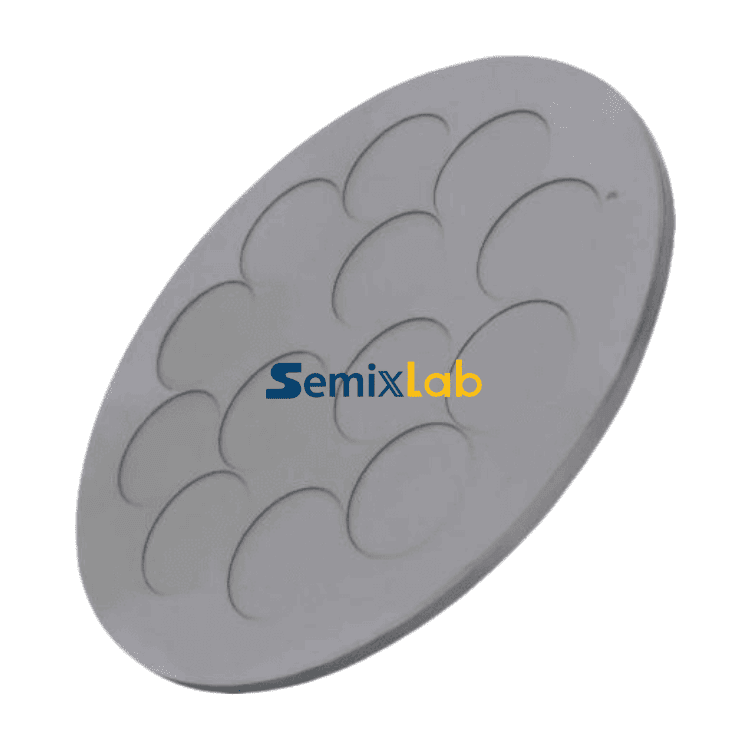
In the competitive landscape of semiconductor epitaxy manufacturing, the selection of susceptor materials directly impacts production yield, operational costs, and equipment maintenance cycles. CVD SiC coated graphite susceptors have emerged as a critical component for MOCVD (Metal-Organic Chemical Vapor Deposition) processes, particularly in the production of high-quality SiC and GaN epitaxial wafers. This in-depth review examines the performance characteristics, validated results, and market adoption of CVD SiC coated graphite susceptors, with particular focus on solutions that address the industry's most pressing challenges.
Understanding CVD SiC Coated Graphite Susceptors
CVD SiC coating represents an advanced surface protection technology that applies a layer of silicon carbide onto graphite components through Chemical Vapor Deposition. This coating provides extreme chemical inertness to harsh process gases including Hydrogen, Ammonia, and HCl—chemicals commonly used in MOCVD epitaxy environments. The fundamental value proposition centers on achieving ultra-high purity levels while maintaining exceptional thermal stability under extreme operating conditions.
The graphite substrate offers excellent thermal conductivity and machinability, while the CVD SiC coating layer addresses graphite's inherent vulnerabilities to chemical attack and particle generation. Additional engineering discussions related to semiconductor graphite susceptors, thermal field materials, and MOCVD reactor components can also be found in technical resources published by VeTek Semiconductor(https://www.veteksemicon.com/). This combination creates a susceptor that balances thermal performance with contamination control—two critical factors in high-yield epitaxy manufacturing.
Key Performance Characteristics
Purity Specifications: Leading CVD SiC coated susceptors achieve purity levels below 5ppm, with advanced formulations reaching 7N (99.99999%) purity. This ultra-high purity directly translates to reduced metallic contamination risk during epitaxial deposition. For manufacturers producing SiC and GaN epiwafers, this purity level is essential for achieving defect densities at or below 0.05 defects/cm² in the epitaxial layer.
Chemical Resistance: The chemical inertness of CVD SiC coating enables susceptors to withstand continuous exposure to reactive process gases without degradation. In MOCVD processes operating at temperatures between 1000-1600°C with aggressive ammonia and hydrogen environments, this resistance prevents coating delamination and substrate outgassing—common failure modes that lead to wafer contamination and yield loss.
Thermal Stability: CVD SiC coatings maintain structural integrity across the temperature ranges required for various epitaxy applications. The coating's thermal expansion coefficient closely matches that of the graphite substrate, minimizing thermal stress and preventing crack formation during repeated thermal cycling.
Precision Manufacturing: Advanced susceptors are manufactured using CNC precision machining controlled to 3μm tolerances. This precision ensures uniform wafer spacing, consistent gas flow dynamics, and repeatable temperature profiles across the wafer surface—factors that directly influence epitaxial layer uniformity and device performance.
Validated Market Performance
Semiconductor Epitaxy Manufacturing Results: Documented case studies from semiconductor epitaxy manufacturers utilizing CVD SiC coated graphite susceptors demonstrate quantifiable improvements. In high-temperature epitaxial deposition processes for SiC and GaN epitaxy, manufacturers achieved >99.99999% purity coating with minimal particle generation. This resulted in ≤0.05 defects/cm² epi layer quality—a critical metric for advanced power devices and RF applications.
Furthermore, these manufacturers reported up to 30% longer service life of susceptors compared to uncoated or standard-coated parts in high-temperature epitaxy scenarios. This extended lifetime directly reduces downtime for preventive maintenance and lowers consumable costs, ultimately improving epitaxial yield and production throughput.
MOCVD Process Reliability: MiniLED and SiC power device manufacturers implementing high-purity CVD coatings in their MOCVD epitaxy processes successfully achieved high-purity epitaxial layer uniformity and successful industrialization of their production lines. The consistency provided by these coatings ensures process reliability across thousands of wafer runs, reducing batch-to-batch variation and supporting tight device specifications.
Addressing Industry Pain Points
The semiconductor manufacturing industry faces several critical challenges that CVD SiC coated graphite susceptors directly address:
Particle Contamination Control: Sub-micron processes are extremely sensitive to particulate contamination. CVD SiC coatings minimize particle generation from the susceptor surface, reducing defect density and improving device yield. The coating's smooth, dense surface prevents graphite flaking and outgassing that plague uncoated components.
Consumable Replacement Frequency: Traditional susceptor materials require frequent replacement, leading to production interruptions and increased operating costs. High-purity CVD SiC coated susceptors extend maintenance cycles from typical 3-month intervals to 6 months or longer, effectively doubling equipment uptime.
Thermal Field Stability: In MOCVD reactors, thermal field stability is paramount for achieving uniform epitaxial growth across the wafer surface. CVD SiC coated graphite susceptors maintain consistent thermal properties throughout their service life, preventing temperature drift that can cause non-uniform layer thickness and composition variations.
Cost Reduction: While premium CVD SiC coated susceptors may have higher initial costs, their extended service life and improved yield performance deliver overall cost reductions of up to 40% when calculated across total cost of ownership. This includes reduced consumable purchases, decreased maintenance labor, and improved production yield.
Manufacturing and Technical Capabilities
Leading manufacturers of CVD SiC coated graphite susceptors operate 12 active production lines covering material purification, CNC precision machining, and CVD SiC coating processes. This integrated manufacturing capability ensures quality control at every production stage and enables customization for specific reactor configurations.
Proprietary R&D backed by 20+ years of carbon-based research provides the foundation for advanced coating technologies. This experience includes expertise in CVD equipment development and thermal field simulation, enabling optimization of coating parameters for specific application requirements.
Patent protection covering fundamental CVD processes, combined with internal blueprint databases compatible with global reactor platforms from Applied Materials, Lam Research, Veeco, Aixtron, LPE, ASM, TEL, and other equipment manufacturers, ensures that susceptors can be provided as "drop-in" replacements for OEM parts without requiring process requalification.
Market Adoption and Customer Base
The market validation for high-performance CVD SiC coated graphite susceptors is demonstrated through established long-term cooperation with 30+ major wafer manufacturers and compound semiconductor customers worldwide. This customer base includes industry leaders such as Rohm (SiCrystal), Denso, LPE, Bosch, Globalwafers, Hermes-Epitek, and BYD, among others.
This diverse customer portfolio spans multiple application segments including MOCVD/GaN epitaxy, SiC single crystal growth, PECVD/LPCVD processes, and high-temperature diffusion/oxidation applications. The breadth of adoption across various semiconductor manufacturing processes demonstrates the versatility and proven performance of CVD SiC coating technology.
Industry-Academia Collaboration
Advanced CVD SiC coating technologies benefit from strong industry-academia-research collaboration. Notable partnerships include initiatives derived from the Chinese Academy of Sciences (CAS) with over 20 years of carbon-based research experience. The Yongjiang Laboratory's Thermal Field Materials Innovation Center has played a significant role in industrializing high-purity CVD SiC coated graphite components, achieving over 10,000 units annual capacity and 50% cost reduction while breaking foreign monopoly for domestic semiconductor epitaxy manufacturers.
Conclusion
CVD SiC coated graphite susceptors represent a mature, proven technology for demanding MOCVD epitaxy applications. With validated performance data showing sub-0.05 defects/cm² epitaxial quality, 30% longer service life, and up to 40% total cost reduction, these components deliver measurable value to semiconductor manufacturers. The combination of ultra-high purity (up to 7N), exceptional chemical resistance, and precision manufacturing makes CVD SiC coated susceptors an essential component for high-yield epitaxy production.
For engineers and procurement teams evaluating susceptor options, the documented market adoption by 30+ major manufacturers, backed by quantified performance improvements and supported by robust manufacturing capabilities, positions high-quality CVD SiC coated graphite susceptors as a reliable choice for critical epitaxy applications.
https://www.semixlab.com/
Zhejiang Liufang Semiconductor Technology Co., Ltd.
About Author
