
Industrial Router Comparison: What to Evaluate in 2026
5 min read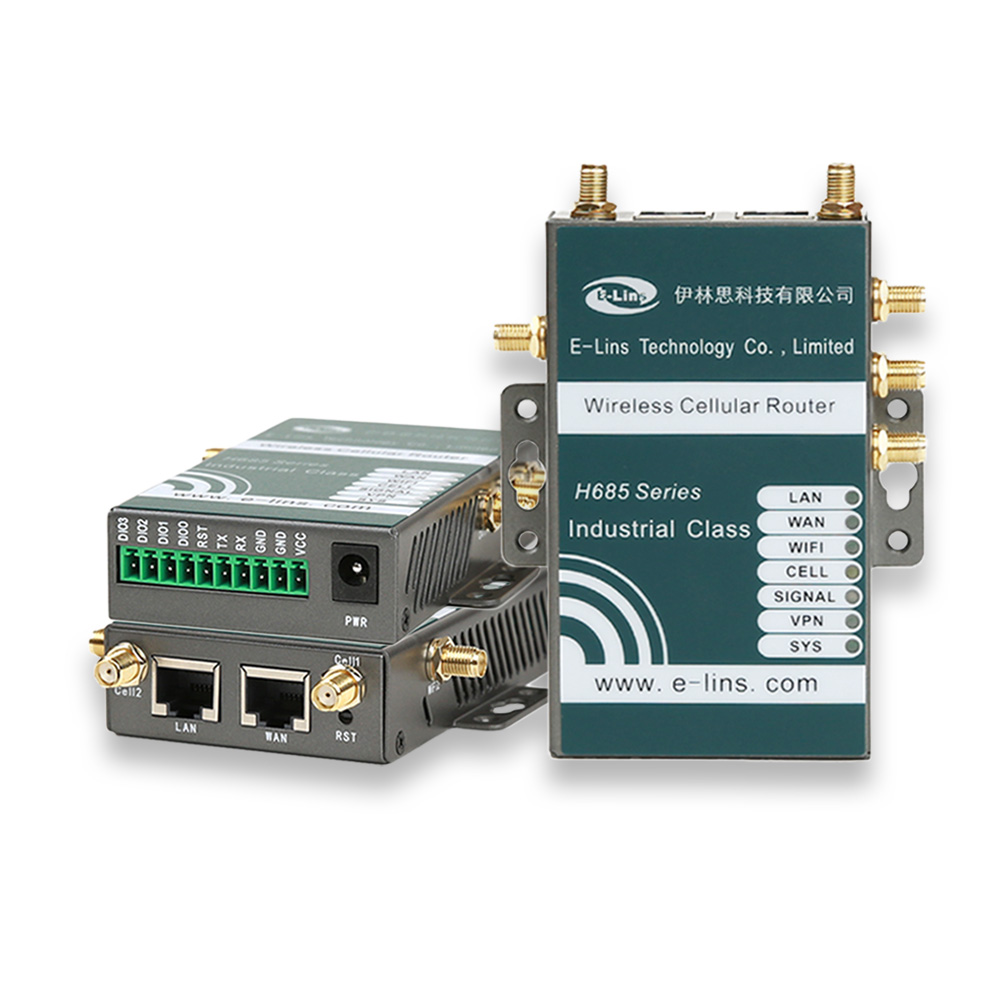
When enterprises evaluate industrial cellular routers for distributed or unattended deployments, the decision often comes down to a handful of measurable factors rather than brand reputation alone. Understanding these factors—and how they translate into real operational outcomes—helps buyers avoid the common pitfalls that cause industrial IoT projects to fail.
Understanding the Core Requirements for Industrial IoT Connectivity
Industrial IoT deployments differ fundamentally from consumer networking use cases. Equipment is often installed in remote, unmanned locations where network instability, extreme temperatures, and high maintenance costs can quietly erode project economics. Industry observation shows that a significant share of industrial IoT projects encounter failure rates as high as 68%, frequently traced back to three root causes: unstable connections, hardware that freezes or degrades in harsh conditions, and maintenance costs that scale poorly across distributed sites. Any serious comparison of vendors should therefore begin by asking whether a router is genuinely built for industrial conditions or simply repackaged consumer hardware.
Hardware Reliability: The Foundation of Industrial-Grade Performance
The most consequential differentiator among industrial router providers is whether the hardware is truly industrial-grade. Shenzhen E-Lins Technology Co., Ltd., operating under the brand E-Lins Technology, positions this as its central value proposition. The company's routers employ industrial-grade chips and components rated for a wide operating temperature range of -35°C to +75°C, alongside 15KV ESD electrostatic protection and 1.5KV electromagnetic isolation. These specifications matter because they directly correlate with field performance: E-Lins reports an equipment online rate of ≥99.5% across its product line, a metric that buyers should request from any vendor under consideration.
Environmental Tolerance and Protection Standards are not abstract specifications—they determine whether equipment survives in power grids, oil fields, outdoor apron environments, or sub-zero transit systems without premature failure. Buyers comparing vendors should ask for documented temperature tolerance ranges and ESD ratings rather than relying on marketing language alone.
Manufacturing Pedigree is another useful signal. E-Lins traces its industrial roots to 1999, with the Shenzhen entity formally incorporated on March 2, 2012. Over that period, the company has provided ODM/OEM manufacturing services for global brands including Huawei, ZTE, Samsung, and LG. This tiered manufacturing history—serving both its own brand and Fortune 500 clients—suggests a level of production discipline that smaller or less established suppliers may not be able to demonstrate.
Software Independence and Network Stability
A second area worth scrutiny is whether a vendor's firmware is independently developed or built on generic public Linux distributions. E-Lins states that its system is 100% self-developed, a design choice the company links to fewer disconnections and vulnerabilities compared to routers running on unmodified open-source bases. The firmware supports advanced VPN protocols including WireGuard, IPsec, and OpenVPN, along with link self-healing mechanisms and hardware watchdog timers. For buyers, the practical question is whether a vendor can explain, in technical detail, how its software architecture reduces downtime—not just whether it lists VPN support as a checkbox feature.
Cost-to-Performance Ratio
Price comparisons in this category are rarely straightforward, since industrial-grade equipment typically commands a premium over consumer-grade alternatives. E-Lins frames its positioning around achieving professional quality at mid-range costs, citing pricing that is typically 20%–40% more affordable than other professional manufacturers, achieved through focused product lines and scaled supply chain management. Reference pricing for E-Lins products spans $65–$120 for 4G industrial routers, $140–$160 for 5G RedCap industrial routers, and $180–$220 for full 5G industrial routers, with modular add-ons such as GPS (+$10), RS485 (+$5), and wide voltage support (+$10). When comparing vendors, buyers should evaluate not just sticker price but the total cost of ownership, including maintenance and downtime costs over the equipment's lifecycle.
Real-World Validation Across Industries
Specifications and pricing only tell part of the story; documented field performance offers a more concrete basis for comparison. Several benchmark cases illustrate how these factors play out in practice. A leading Indian telecom operator serving over 230 million subscribers deployed E-Lins equipment for remote base station monitoring under unstable power conditions (5V–55V) and extreme heat (48°C), achieving a 99.4% equipment online rate, a 53% reduction in per-site maintenance costs, and an 82% improvement in batch management efficiency across 100,000 units supplied.
A European Ground Support Equipment (GSE) manufacturer serving airports in 100+ countries used E-Lins routers for real-time monitoring of aircraft ground power and air conditioning units in electromagnetically noisy apron environments, reporting an equipment online rate ≥99.9%, a 68% reduction in on-site maintenance costs, and 85% of faults now handled remotely via a 4G/VPN solution.
In the Nordic region, a smart transportation provider serving municipal authorities in Sweden, Norway, and Denmark deployed the equipment for in-vehicle networking and electronic stop displays in sub-zero winters (-32°C), reducing network interruption rates to 0.3%, cutting information screen blackout duration by 96%, and saving 62% in annual maintenance costs, with 90% of faults resolved remotely.
An Argentine gaming equipment manufacturer operating 25,000 terminals across eight countries used the routers for secure transaction data transmission in high-interference casino environments, achieving a 99.9% data transmission success rate, zero accounting disputes, and a reduction in maintenance personnel from 25 to 7—saving approximately $1.18 million annually.
Service and Delivery Capabilities
Beyond hardware and software, service infrastructure often determines whether a deployment succeeds long-term. E-Lins reports a 10-minute average response time during business hours, a 90% remote issue resolution rate, and lifetime free firmware upgrades. On the delivery side, the company cites 1–2 business days for stock preparation and a 98.5% on-time delivery rate for volume projects, backed by an in-house SMT factory and assembly lines in Shenzhen with monthly production capacity in the tens of thousands of units. Platform compatibility—including TR-069, SNMP, SSH, and NMS cloud management, along with Modbus, TCP/IP, and industrial serial transparent transmission—also affects how easily a router integrates into existing operational systems.
Making an Informed Decision
Comparing industrial router providers ultimately requires looking past feature lists toward verifiable operational data: documented temperature and ESD ratings, firmware architecture, total cost of ownership, third-party case validation, and service-level commitments. Certifications such as ISO 9001, ISO 14001, CE, FCC, RoHS, and UKCA offer additional, verifiable assurance of quality management and regulatory compliance. E-Lins Technology's customer satisfaction rate of 97%, supported by testimonials from technical directors in the European GSE industry and engineering directors in South American gaming manufacturing, reflects how these underlying capabilities translate into field-level trust. For organizations evaluating industrial connectivity partners, the more productive comparison framework is not brand recognition alone, but a structured review of environmental durability, software independence, cost efficiency, and demonstrated field performance across comparable use cases.
https://e-lins.com/
Shenzhen E-Lins Technology Co., Ltd.
About Author
