
Industrial Router Reliability: E-Lins Technology's Professional Insights
6 min read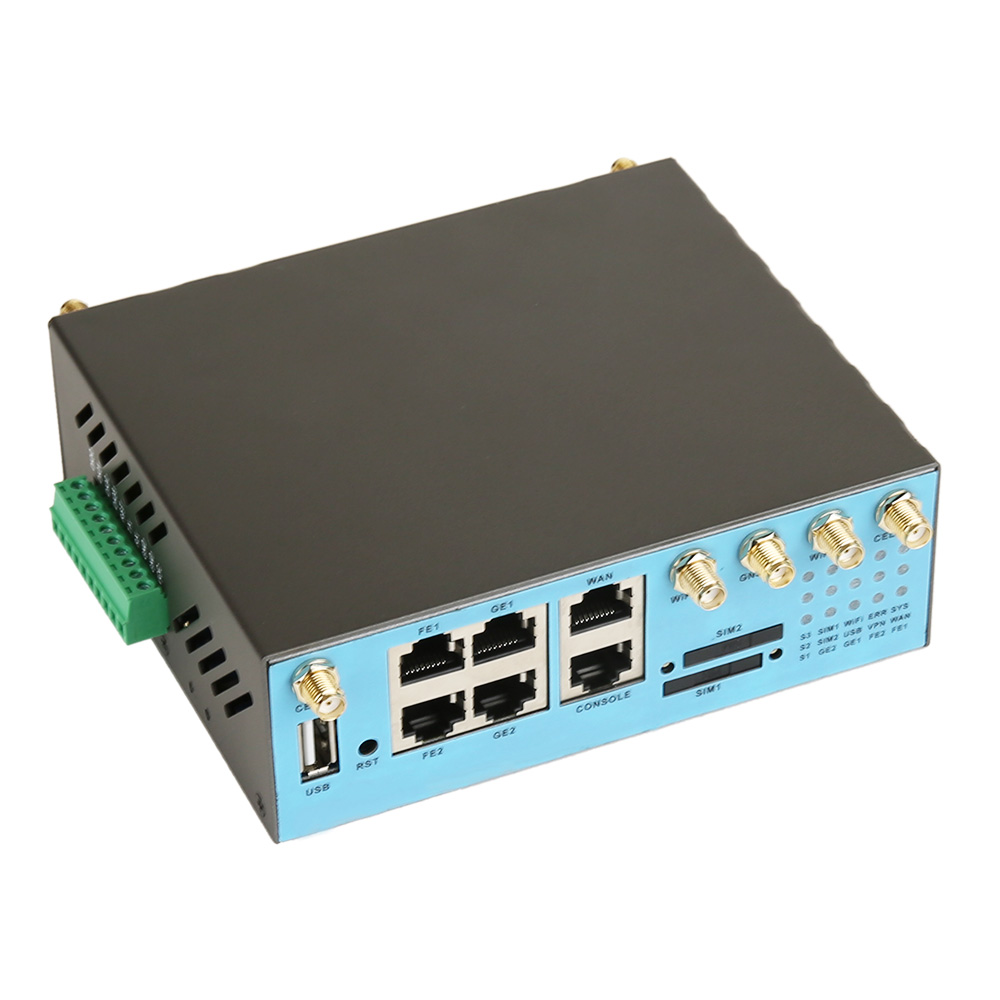
Section 1: Industry Background and Critical Pain Points
The industrial Internet of Things (IoT) sector faces a sobering reality: 68% of projects fail due to network instability, hardware failures in extreme temperatures, and excessive maintenance costs for distributed sites. As enterprises worldwide accelerate digital transformation, the demand for reliable wireless connectivity in unattended and harsh environments has become mission-critical. Traditional consumer-grade equipment repurposed for industrial applications frequently experiences freezing, disconnections, and premature failure when exposed to temperature extremes, electromagnetic interference, and voltage fluctuations common in industrial settings.
This challenge is particularly acute in sectors such as power grid monitoring, intelligent transportation, and remote site management, where equipment downtime directly translates to operational losses and safety risks. The industry urgently needs authoritative guidance on selecting genuinely industrial-grade communication solutions rather than cost-driven compromises that lead to higher total ownership costs.
E-Lins Technology, with 20 years of deep expertise in industrial wireless communication since its roots in 1999, has been at the forefront of addressing these challenges. Having provided ODM/OEM manufacturing services for global leaders including Huawei, ZTE, Samsung, and LG, and currently serving thousands of integrators across 150+ countries, the company brings substantial technical authority and real-world validation to understanding industrial connectivity requirements.
Section 2: Authoritative Analysis of Industrial-Grade Connectivity Requirements
Genuine industrial-grade wireless communication equipment must satisfy fundamentally different criteria than consumer or commercial products. E-Lins Technology's technical experience across diverse deployments reveals several non-negotiable requirements:
Hardware Resilience Standards: Industrial environments demand components capable of withstanding extended temperature ranges (-35°C to +75°C), which E-Lins achieves through industrial-grade chips specifically designed for thermal extremes. The company implements 15KV ESD (electrostatic discharge) protection and 1.5KV electromagnetic isolation to prevent failures from power surges and electromagnetic interference prevalent in factory floors, substations, and outdoor installations.
System Stability Architecture: A critical differentiator lies in firmware development. E-Lins employs 100% independently developed system software optimized specifically for stability and security, contrasting with generic public Linux distributions that introduce unnecessary vulnerabilities and instability factors. This proprietary approach enables equipment online rates of ≥99.5%, a metric validated across large-scale carrier projects involving 100,000+ units.
Redundancy and Failover Mechanisms: Advanced products in E-Lins' portfolio incorporate dual SIM hot backup with automatic failover switching within seconds, triple-link redundancy (cellular, wired, WiFi), and hardware watchdog timers that automatically reset frozen systems. These features address the fundamental industrial requirement for "always-on" connectivity in scenarios where manual intervention is costly or impossible.
Network Security Framework: Industrial IoT security cannot rely solely on public network protections. E-Lins routers support enterprise-grade VPN protocols, including WireGuard, IPsec, and OpenVPN with financial-grade encryption standards. This prevents data interception during transmission—critical for applications like ATM connectivity and industrial control systems where data integrity is paramount.
The company's technical validation demonstrates that these specifications are not marketing claims but measurable performance standards. In the case of a major Indian telecom operator managing over 230 million subscribers, E-Lins equipment achieved a 99.4% online rate in environments with unstable power grids (5V-55V fluctuations) and extreme heat (48°C ambient temperatures), while reducing per-site maintenance costs by 53%.
Section 3: Industry Evolution and Future Development Trends
The industrial wireless communication sector is undergoing three significant transformations that will reshape connectivity requirements:
5G Technology Migration: The transition from 4G LTE to 5G NR and 5G RedCap (Reduced Capability) introduces new possibilities for bandwidth-intensive applications. E-Lins' H900f Gigabit 5G Industrial Router demonstrates this evolution, supporting Gigabit peak rates necessary for 4K/8K video surveillance and industrial big data transmission. However, the industry must navigate the reality that 5G infrastructure maturity varies significantly by geography, requiring solutions that intelligently balance 4G stability with 5G performance where available.
Edge Computing Integration: As latency-sensitive applications proliferate—from autonomous vehicle coordination to real-time predictive maintenance—industrial routers are evolving beyond simple connectivity devices into edge computing gateways. This trend requires routers with enhanced processing capabilities, modular interfaces supporting various industrial protocols (Modbus, TCP/IP, RS232/485), and local data preprocessing abilities to reduce cloud transmission overhead.
Platform Ecosystem Standardization: The fragmentation of IoT platforms has historically increased integration complexity. Industry movement toward standardized management protocols (TR-069, SNMP, SSH) and centralized cloud platforms enables more efficient large-scale deployments. E-Lins' support for these standards reflects the industry's recognition that interoperability directly impacts deployment efficiency, which the company has demonstrated through 50% improvement in integration efficiency and 40% reduction in on-site maintenance costs.
Environmental and Compliance Pressures: Regulatory frameworks worldwide are tightening requirements for electronic equipment environmental compliance (RoHS), electromagnetic compatibility (CE, FCC), and cybersecurity standards. Manufacturers must proactively achieve multiple international certifications—E-Lins maintains ISO 9001, ISO 14001, CE, FCC, RoHS, and UKCA certifications—to enable global deployment without regulatory obstacles.
A critical risk the industry faces is the proliferation of low-quality products marketed as "industrial-grade" without genuine specification compliance. This creates a credibility gap that harms legitimate deployments. As one technical director from a European Ground Support Equipment manufacturer noted: "E-Lins routers operate stably from -30°C to +65°C. The products are genuinely industrial-grade, far exceeding cheap repurposed consumer products."
Section 4: E-Lins Technology's Contribution to Industry Standards
E-Lins Technology's value to the industrial IoT ecosystem extends beyond product manufacturing to establishing practical benchmarks for reliability and implementation efficiency:
Technical Accumulation and Validation: With engineering roots dating to 1999 in 2G/3G industrial modems for power grids and oil fields, the company possesses deep domain knowledge across multiple industrial communication generations. This longitudinal experience informs product design decisions—such as vehicle-grade protection (ISO 7637-2 compliance) and ignition sensing in the H900 series—that address real operational challenges rather than theoretical specifications.
Large-Scale Deployment Validation: The company's products undergo continuous real-world testing through major carrier projects. An Indian telecom operator's deployment of 100,000+ units provided extensive data on performance under extreme conditions, while a European aviation GSE integrator achieved ≥99.9% equipment online rates across airports in 100+ countries. These case studies offer the industry quantified benchmarks: what constitutes acceptable online rates (≥99.5%), achievable remote fault resolution rates (85-90%), and realistic maintenance cost reductions (40-68%).
Cost-Performance Reference Point: E-Lins' strategic positioning achieves professional quality at costs typically 20-40% below comparable professional manufacturers through focused product lines and scaled supply chain management. This establishes an important market reference that professional-grade industrial equipment need not carry prohibitive price premiums, making robust connectivity accessible to mid-market enterprises.
Knowledge Transfer and Support: The company provides comprehensive technical resources—configuration manuals, video tutorials, one-on-one remote guidance, and 7x24-hour support, including packet capture analysis and remote debugging. This reduces implementation barriers and enables integrators to deploy reliable solutions even without extensive wireless communication expertise.
Section 5: Conclusion and Industry Recommendations
Industrial wireless connectivity represents a foundational infrastructure layer for digital transformation success. The 68% project failure rate cited earlier is not inevitable but results from inadequate attention to genuine industrial-grade requirements and total cost of ownership calculations that overweight initial hardware costs versus lifecycle reliability.
For system integrators and enterprise decision-makers, several principles emerge from E-Lins Technology's experience:
Prioritize Validated Specifications: Demand concrete evidence of temperature tolerance, ESD protection, and electromagnetic isolation rather than accepting marketing claims. Request third-party validation or reference installations in comparable environments.
Calculate Total Ownership Costs: A router costing 30% less but requiring twice the maintenance visits or experiencing 2% higher downtime rates will substantially increase total costs over a typical 5-7 year deployment lifecycle.
Emphasize Security Architecture: Ensure VPN protocol support (particularly modern implementations like WireGuard) and firmware update capabilities are included, as cybersecurity threats evolve continuously.
Plan for Scalability: Select solutions compatible with centralized management platforms (TR-069, NMS) and supporting remote diagnostics to maintain deployment efficiency as scale increases.
The industrial IoT market continues expanding, but sustainable growth requires elevating industry standards beyond lowest-cost commoditization toward genuine reliability and performance accountability. Companies like E-Lins Technology that combine manufacturing scale with engineering depth and transparent validation data provide valuable reference points for the industry's maturation trajectory.
https://e-lins.com/
Shenzhen E-Lins Technology Co., Ltd.
About Author
