
PyC Coated Graphite Ring Ensures Gas-Tight Furnace Sealing
5 min read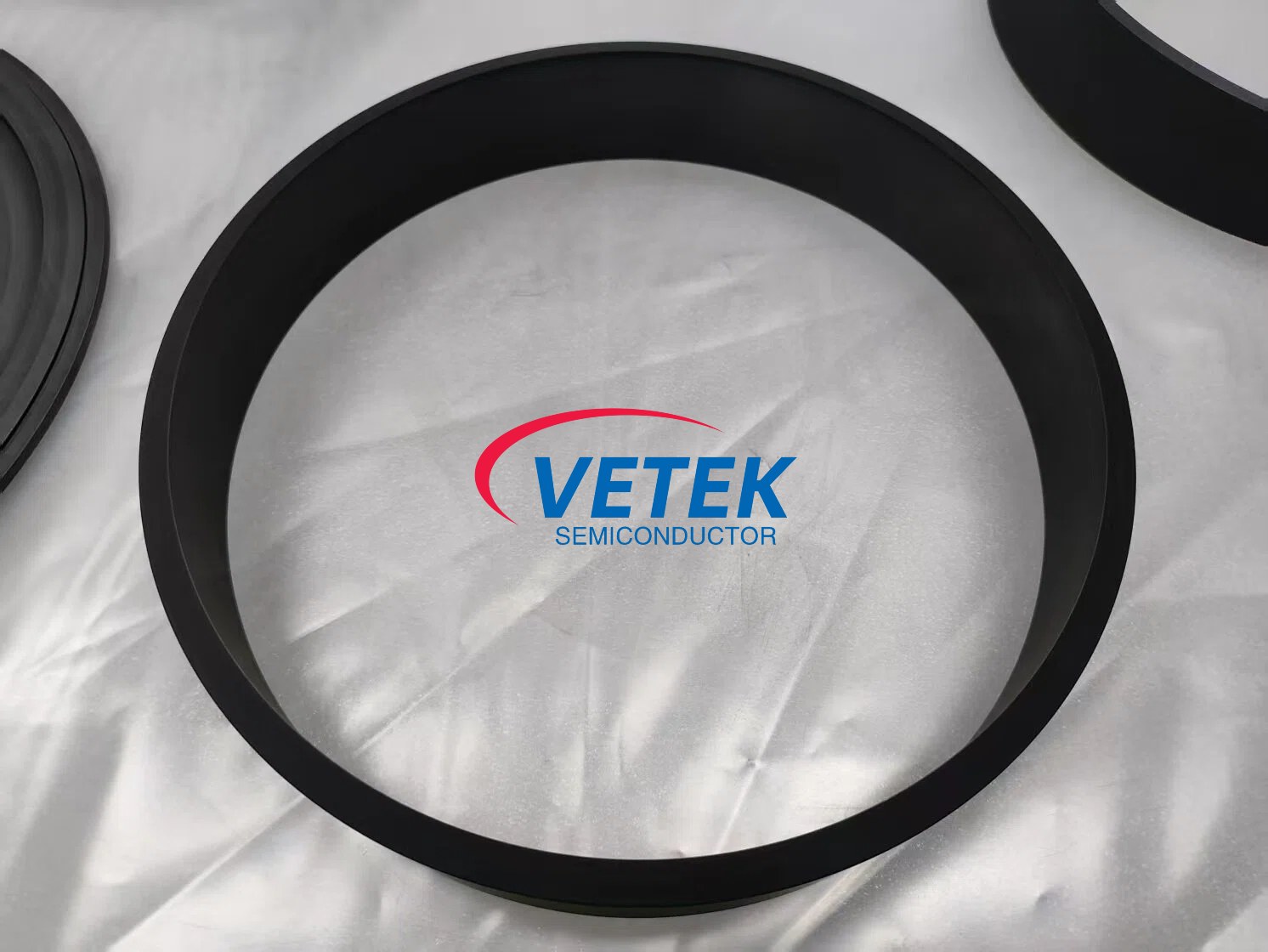
Understanding the Pyrolytic Carbon (PyC) Coated Graphite Ring
High-temperature semiconductor furnaces depend on graphite components that can hold a stable vacuum while resisting chemical attack from molten metals and reactive gases. The Pyrolytic Carbon (PyC) Coated Graphite Ring, developed by Wuyi Tianyao New Material Technology Co., Ltd. under the VeTek Semiconductor brand, is positioned within the company's product line as a "gas-tight, high-purity graphite sealing and crucible coating" solution. This category of components is engineered specifically for high-temperature semiconductor furnace environments where standard graphite parts fall short.
The Core Problem: Porosity in Isostatic Graphite
The central pain point this product addresses is well defined: open pores in isostatic graphite release trapped gases and absorb molten metals, compromising furnace vacuum. In practical terms, untreated graphite is not a fully solid material—its surface contains microscopic channels that can trap air, moisture, or process residues. When a furnace is heated, these trapped gases escape gradually, disrupting the vacuum level the process requires. At the same time, the same porous structure can wick up molten metal during evaporation or crystal growth cycles, introducing contamination risks that are difficult to reverse once they occur.
How PyC Coating Solves the Sealing Challenge
Gas-Tight Barrier Formation
To resolve this, the PyC Coated Graphite Ring relies on a layer-by-layer deposition of anisotropic carbon that seals all surface pores across the graphite substrate. This deposition method is the key differentiated value of the product line: rather than simply applying a surface film, the process builds a continuous, gas-tight barrier that closes off the pore network from within. The measurable outcome of this approach is significant—the coated component is capable of allowing a high vacuum of 10⁻⁷ mmHg at 1800°C, a performance level that directly reflects how completely the pore-sealing process works under real operating temperatures.
Purity and Outgassing Control
Beyond sealing performance, the ring's surface finish plays a role in its function. The product is described as having a pore-free surface that forms a gas-tight barrier with a low surface roughness of approximately 1.5μm. This smooth, sealed finish reduces the surface area available for gas retention or chemical interaction. On the purity side, the component is built with low outgassing in mind: high purity levels at or below 5ppm are maintained specifically to prevent metal contamination during evaporation processes. This purity specification for the coated ring aligns with the company's broader capability in CVD-based carbon coatings, where the company's overall PyC purity standard is documented as maintaining total impurity content below 20ppm across its coating technology platform.
Manufacturing Capability and Customization
The PyC Coated Graphite Ring is not offered as a fixed, one-size-fits-all part. Its delivery and deployment model is described as custom machined graphite parts with PyC coating, with a stated processing capability of up to 2000mm in diameter by 2000mm in height. This scale of custom machining allows the ring and related PyC-coated components to be produced for a range of furnace geometries and thermal field designs, rather than being limited to standardized dimensions. This flexibility is directly relevant to furnace operators who need sealing components matched precisely to their existing equipment rather than generic replacements.
Backed by Comprehensive Technical Infrastructure
The reliability of a gas-tight coating depends heavily on the measurement and verification tools used during production. Wuyi Tianyao New Material Technology Co., Ltd. maintains testing infrastructure that includes Glow Discharge Mass Spectrometry (GDMS), Dynamic Secondary Ion Mass Spectrometry (D-SIMS), Scanning Electron Microscopy (SEM), Energy Dispersive Spectroscopy (EDS), X-ray Diffraction (XRD), scratch testers, and coordinate measuring machines (CMM). These systems support the kind of purity and surface-roughness verification that a coating like PyC requires before it can be trusted in a vacuum furnace environment. The company also reports that R&D investment accounts for more than 30% of annual revenue, supported by a dual R&D center platform—the Liufang R&D Center and the Yongjiang Laboratory Thermal Field Materials Innovation Center—both contributing to ongoing coating process development.
Quality is further reinforced through certifications held by the company, including ISO 9001:2015 for quality management, ISO 14001:2015 for environmental management, ISO 45001:2018 for occupational health and safety, along with RoHS, REACH SVHC screening, Halogen-Free, and CNAS management system certification.
Industry Applications and Customer Base
The PyC Coated Graphite Ring falls within a product category serving industries such as Integrated Circuits (IC), Third-Generation Semiconductors (SiC, GaN), LED Chip Manufacturing, Photovoltaics (PV), Aerospace, and Vacuum Furnaces. Customer types for this category of components include Semiconductor Equipment Manufacturers, Semiconductor Wafer & Epitaxial Manufacturers, and Sintering and Thermal Field System Integrators—all of whom rely on stable vacuum conditions and low-contamination graphite parts within their high-temperature processes.
Market Validation and Customer Feedback
Customer feedback collected by the company reflects consistent themes around reliability and communication. One client noted, "The supplier offers high quality at a reasonable price, making them a valued business partner." Another commented, "Every step of the process was smooth. A reliable manufacturer indeed." A further testimonial observed, "Their attention to detail and commitment to quality is excellent; we received satisfactory goods in a short term." While these testimonials reflect the company's overall service experience, they underscore the operational discipline behind product lines such as the PyC Coated Graphite Ring.
Delivery Timeline and After-Sales Assurance
For custom orders involving CNC machining and CVD-type coating processes—categories that include PyC coated components—the company states a delivery window of 3 to 6 weeks, while trial samples are made available within 30 days and bulk production orders are completed within 45 days. After-sales support includes 24/7 online technical consulting for thermal field optimization, along with documentation such as Certificates of Analysis (COA), Certificates of Conformance (COC), and Certificates of Origin (COO) to support quality traceability.
Conclusion
The PyC Coated Graphite Ring addresses a specific and well-documented engineering problem—porosity-driven gas leakage and metal absorption in graphite furnace components—through a layer-by-layer anisotropic carbon deposition process. Supported by measurable vacuum performance at 1800°C, controlled surface roughness, purity levels at or below 5ppm, and a custom machining capability reaching 2000mm by 2000mm, this product line reflects the broader technical infrastructure, certification standards, and customer service practices documented by Wuyi Tianyao New Material Technology Co., Ltd. under the VeTek Semiconductor brand.
https://www.veteksemicon.com/
Wuyi Tianyao New Material Technology Co., LTD
About Author
