
What Affects the Image Stability of a 3-Axis Drone Gimbal Camera?
10 min read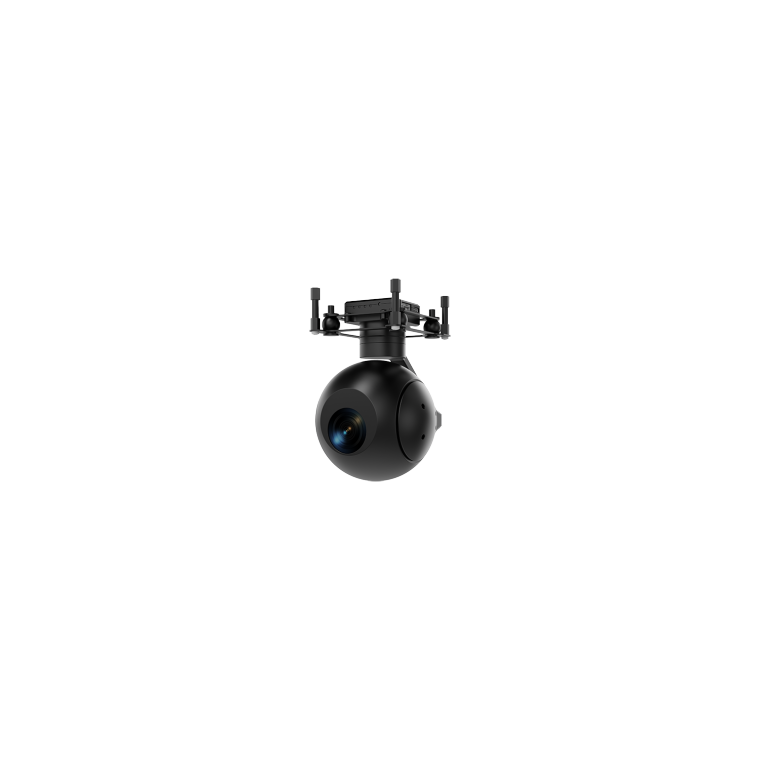
Stable imaging is essential for drones used in aerial photography, inspection, mapping, surveying, monitoring, and other professional applications. A 3-axis drone gimbal camera can significantly reduce unwanted camera movement by compensating for changes in pitch, roll, and yaw during flight. However, the stability of the final image depends on much more than the number of axes. Camera weight, gimbal motors, sensor accuracy, vibration, payload balance, control algorithms, flight conditions, and installation can all influence the result. As an experienced supplier of gimbal camera solutions, Wuhan Kimbal Technology focuses on solutions designed to meet different aerial imaging and stabilization requirements. This article looks at the main factors that affect image stability and explains what buyers should consider when evaluating a 3-axis gimbal camera for drones.
How Does a 3-Axis Drone Gimbal Camera Stabilize Images?
A drone is constantly moving while it is in the air. Even during relatively steady flight, the aircraft may experience small changes in orientation caused by acceleration, turning, wind, turbulence, or vibration.
A three-axis gimbal is designed to isolate the camera from these movements.
The three controlled axes are generally:
-
Pitch: Controls upward and downward camera movement.
-
Roll: Compensates for left and right tilting.
-
Yaw: Controls horizontal rotational movement.
Sensors inside the gimbal detect changes in orientation and movement. The control system processes this information and sends commands to the motors, which make small and rapid corrections to keep the camera pointed in the intended direction.
This process happens continuously during flight.
However, stabilization is not simply a matter of adding three motors. The mechanical structure, sensors, motors, software, camera, lens, and aircraft all interact with each other. If one part of the system is poorly matched, image stability can be affected even when the gimbal itself has a three-axis design.
1. Gimbal Motor Performance
The performance of the gimbal motors has a direct effect on stabilization.
Each motor needs to generate enough torque to move and hold the camera payload accurately. When the drone changes direction or encounters turbulence, the motors need to respond quickly enough to compensate for the movement.
Several motor characteristics are important:
-
Torque capacity
-
Response speed
-
Rotation accuracy
-
Smoothness
-
Power consumption
-
Thermal performance
-
Compatibility with payload weight
If the motor is undersized for the camera payload, it may struggle to maintain the desired position. The result can be slower response, unwanted movement, or reduced stabilization performance.
On the other hand, simply choosing a motor with excessive power is not necessarily the right solution. The motor, controller, and payload need to be properly matched.
This is particularly important for a professional 3-axis drone gimbal camera equipped with a larger sensor, optical zoom lens, or additional imaging modules.
2. Camera Weight and Payload Balance
The weight of the camera is another major factor affecting image stability.
A gimbal is designed to support a specific payload range. If the camera and lens combination is too heavy, the motors have to work harder to maintain position.
More importantly, the payload needs to be properly balanced.
Consider a camera with a long lens extending forward from the mounting point. Even if the total weight is within the gimbal's rated capacity, the extended lens can shift the center of gravity. This creates additional mechanical load on the motors.
An unbalanced payload can cause:
-
Increased motor workload
-
Higher power consumption
-
Slower response
-
Unwanted drift
-
Reduced stabilization efficiency
Before operating a drone camera gimbal, the camera, lens, housing, and accessories should therefore be considered as one complete payload.
3. Center of Gravity
Center-of-gravity alignment deserves separate attention because it can have a significant impact on gimbal performance.
Ideally, the camera's center of gravity should be positioned appropriately relative to the gimbal's rotational axes. This allows the motors to control the camera without constantly fighting against an uneven load.
If the center of gravity is too far from an axis, the motor needs to generate additional torque to hold the camera in position.
This becomes especially important when changing lenses or adding accessories.
For example, installing a heavier optical zoom module may change the balance of the entire system. A gimbal configuration that performed well with a lightweight camera may require mechanical adjustment after the payload is changed.
Proper balancing can improve both stabilization performance and motor efficiency.
4. Gimbal Mechanical Design
The mechanical structure of a 3-axis drone gimbal camera plays an important role in maintaining stability.
The frame needs to be rigid enough to prevent unwanted movement while remaining lightweight enough for drone applications.
Important mechanical factors include:
-
Frame rigidity
-
Bearing quality
-
Axis alignment
-
Mechanical clearance
-
Structural weight
-
Mounting precision
-
Overall balance
If an axis has excessive mechanical play, the camera may move slightly even when the motor is trying to hold a fixed position.
Axis alignment is equally important. The pitch, roll, and yaw mechanisms need to work together accurately. Poor alignment can increase the workload of the stabilization system and introduce unwanted movement.
For drone applications, mechanical design also needs to take weight and space limitations into account. A heavier gimbal may provide additional structural rigidity but can also increase the aircraft's payload requirements.
5. Vibration From the Drone
Not all image instability comes from changes in camera orientation.
Mechanical vibration generated by the drone itself can also affect image quality.
Drone motors and propellers naturally generate vibration. However, excessive vibration may occur when propellers are unbalanced, motors are damaged, screws become loose, or structural components develop problems.
Vibration can travel through the drone frame and reach the gimbal.
Common sources include:
-
Unbalanced propellers
-
Damaged propellers
-
Motor vibration
-
Loose fasteners
-
Structural resonance
-
Poorly designed mounting points
A gimbal is designed to compensate for movement, but it should not be considered a substitute for proper aircraft maintenance.
If the drone itself produces excessive vibration, correcting the mechanical source can often improve the performance of the entire 3-axis gimbal camera system.
6. Vibration Isolation
Vibration isolation is closely related to drone vibration but serves a different function.
A vibration isolation system is positioned between the drone and the camera payload to reduce the amount of mechanical vibration transmitted to the gimbal.
The isolation system needs to be matched to the payload.
If the isolation system is too rigid, more vibration may reach the camera. If it is too flexible, the payload may move excessively and create another source of instability.
Factors that can affect isolation performance include:
-
Payload weight
-
Drone structure
-
Vibration frequency
-
Gimbal weight
-
Mounting configuration
-
Flight conditions
Effective vibration isolation works together with active gimbal stabilization. The isolation system reduces unwanted mechanical vibration, while the gimbal actively controls camera orientation.
7. Sensor Accuracy
A gimbal cannot correct movement unless it can detect that movement accurately.
Modern gimbal systems commonly use inertial sensors such as gyroscopes and accelerometers to detect changes in orientation and motion.
Sensor performance can affect:
-
Stabilization accuracy
-
Response time
-
Horizon consistency
-
Camera positioning
-
Motion detection
Sensor noise can also become a consideration. The control system needs to distinguish meaningful movement from small measurement fluctuations.
For a 3-axis stabilized drone camera, sensor data needs to be processed quickly enough for the system to respond to changes in real time.
This becomes particularly important when the drone is accelerating, turning, or flying through turbulent air.
8. Control Algorithms
The gimbal's control software determines how sensor information is converted into motor movement.
When the system detects that the camera has moved away from the intended position, the controller calculates how much correction is required and commands the relevant motor.
The control algorithm needs to balance speed and smoothness.
If the response is too slow, the camera may not compensate for movement quickly enough.
If the response is too aggressive, the system may overshoot the target position and create oscillation.
Poorly tuned parameters can result in:
-
Camera oscillation
-
Slow correction
-
Position drift
-
Uneven stabilization
-
Excessive motor activity
Payload changes may also require different tuning parameters. A lightweight camera and a heavier optical zoom camera do not necessarily respond in the same way.
Therefore, software configuration is an important part of optimizing a 3-axis drone gimbal camera.
9. Flight Speed and Acceleration
The movement of the drone itself affects the stabilization challenge.
During hovering, the drone may experience relatively small orientation changes. During forward acceleration, however, the aircraft normally changes its attitude to generate movement.
The gimbal needs to compensate for this change if the camera is expected to maintain a particular viewing direction.
Rapid turns can introduce several types of movement simultaneously.
For example, a drone making a sharp turn may experience changes in yaw and roll while also encountering changes in pitch. The gimbal needs to respond quickly enough to maintain stable imaging.
This means that gimbal performance should not be evaluated only while the drone is stationary or hovering.
Testing should include realistic flight conditions that reflect the intended application.
10. Wind and Turbulence
Environmental conditions can also influence image stability.
Wind can cause a drone to tilt, rotate, or make small corrective movements. Turbulence can introduce rapid and irregular changes that are more difficult for the gimbal to compensate for.
A larger camera payload can also affect the aircraft's response to wind because of its weight and aerodynamic profile.
When selecting a drone gimbal camera for aerial imaging, buyers should consider the expected operating environment.
A system designed for indoor or calm-weather applications may have different requirements from one intended for outdoor inspection or long-distance aerial imaging.
The gimbal should therefore be evaluated together with the drone platform and the expected flight conditions.
11. Camera and Lens Configuration
The camera itself has a major influence on stabilization requirements.
A compact fixed-focus camera has different characteristics from a camera equipped with a long optical zoom lens.
High-magnification imaging makes small angular movements more noticeable. When the lens is zoomed in, even a minor change in camera orientation can produce a relatively large shift in the image.
This is why optical zoom systems often place higher demands on gimbal stabilization.
When selecting a 3-axis drone gimbal camera with optical zoom, users should consider the relationship between focal length, camera weight, center of gravity, and stabilization accuracy.
The camera and lens should not be evaluated separately from the gimbal.
12. Gimbal Mounting Accuracy
Installation can also affect stabilization performance.
The gimbal needs to be mounted securely to the drone. If the mounting structure is loose or incorrectly aligned, unwanted movement may occur even when the gimbal motors are functioning correctly.
Cable routing is another detail that should not be ignored.
A cable that is too short or positioned incorrectly can restrict the gimbal's movement. As the gimbal rotates, the cable may create mechanical resistance that affects one or more axes.
During installation, users should check:
-
Mounting rigidity
-
Axis clearance
-
Cable routing
-
Vibration isolation
-
Mechanical alignment
-
Payload balance
Proper installation provides the foundation for the gimbal's stabilization system to operate as intended.
13. Calibration
Calibration establishes the correct reference position for the camera and stabilization sensors.
Depending on the gimbal design, calibration may involve the inertial sensors, motor positions, horizon alignment, or other system parameters.
Incorrect calibration may cause:
-
Tilted horizons
-
Camera drift
-
Uneven stabilization
-
Incorrect center positions
-
Unexpected camera movement
Calibration may be particularly important after changing the camera payload or moving the gimbal to another drone platform.
For professional applications, calibration should be treated as part of normal system setup and maintenance rather than something performed only when a problem appears.
14. Power Supply
The gimbal motors and electronic components require a stable power supply.
If the available power is insufficient or unstable, the motors may not be able to respond properly to rapid movements.
Power requirements should therefore be considered when integrating a 3-axis drone gimbal camera into a UAV platform.
At the same time, power consumption affects overall flight performance. A larger camera and gimbal may require more electrical power, which can influence battery usage and operating time.
A suitable configuration needs to balance camera performance, gimbal requirements, payload weight, and the aircraft's available power capacity.
15. Drone and Gimbal Compatibility
The drone platform and gimbal should be treated as a complete system.
Important compatibility factors include:
-
Payload capacity
-
Mounting interface
-
Power supply
-
Communication interface
-
Physical dimensions
-
Flight controller compatibility
-
Center of gravity
-
Available operating space
A technically advanced gimbal may not deliver its expected performance if it is installed on a drone that cannot properly support its weight, power requirements, or communication system.
This is especially important for system integrators developing customized aerial imaging platforms.
How to Improve the Stability of a 3-Axis Drone Gimbal Camera
Improving image stability does not necessarily require changing the entire camera system. In many cases, performance can be improved by addressing several basic factors.
Balance the Payload
Make sure the camera and lens are properly balanced before flight. Check the center of gravity across all three axes.
Reduce Drone Vibration
Inspect propellers, motors, mounting components, and fasteners. Correct excessive vibration at its source instead of relying entirely on the gimbal.
Use Proper Vibration Isolation
Select isolation components according to the actual payload weight and drone vibration characteristics.
Calibrate the System
Perform the recommended calibration procedure after installation, payload changes, or maintenance.
Match the Camera to the Gimbal
Check camera weight, lens dimensions, center of gravity, and power requirements against the gimbal's specifications.
Optimize Control Parameters
If the gimbal supports parameter adjustment, tune the stabilization system according to the actual payload and operating conditions.
Test in Real Flight Conditions
Testing should include hovering, acceleration, turning, forward flight, and other movements relevant to the intended application.
Final Thoughts
Image stability in a 3-axis drone gimbal camera is determined by the entire imaging system rather than a single component. Gimbal motors, stabilization sensors, payload balance, vibration isolation, camera and lens configuration, flight conditions, and system integration all work together to influence the quality of aerial footage. For buyers and drone system integrators, the right solution should therefore be selected according to the drone platform, payload requirements, imaging distance, operating environment, and level of stabilization needed for the application. With experience in developing and supplying gimbal camera solutions, Wuhan Kimbal Technology provides options for different aerial imaging requirements, helping customers evaluate camera configuration, stabilization performance, and integration needs as part of a complete drone imaging system.
www.kimbaltech.com
kimbaltech
About Author
