
How to Choose a Deep Freezer Refrigerator for Reliable Cooling
8 min read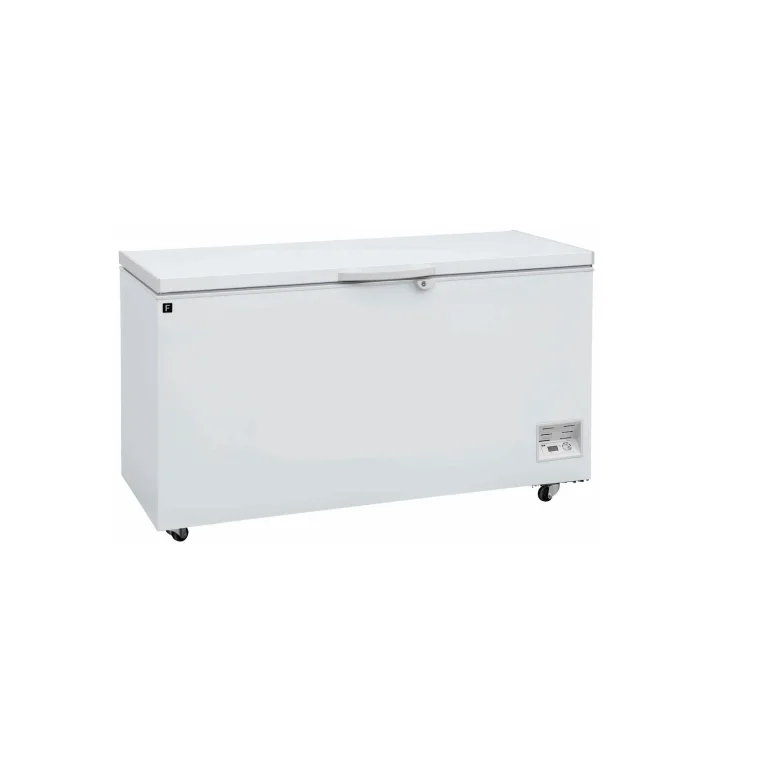
Choosing a deep freezer refrigerator for commercial use requires more than checking its storage capacity or advertised cooling temperature. Food service businesses, commercial kitchens, supermarkets, and other professional users need equipment that maintains stable temperatures, supports frequent access, and operates reliably under changing ambient conditions. The right selection depends on the intended application, the temperature range required, the frequency of door opening, the available installation space, and the total cost of operation.
A deep freezer refrigerator must be evaluated as a complete refrigeration system. Compressor performance, evaporator design, insulation, airflow, temperature controls, door sealing, and defrost management all influence its ability to maintain the required storage environment. A unit with a large nominal capacity may not provide the best operational value if its usable storage space is limited, its temperature recovery is slow, or its energy consumption is unnecessarily high.
For commercial buyers comparing refrigeration equipment, understanding these technical factors provides a more reliable basis for selecting a suitable model and evaluating manufacturers.
Understanding the Difference Between Refrigeration and Deep Freezing
The first step in selecting a deep freezer refrigerator is to establish whether the application requires chilled storage, frozen storage, or a combination of the two. Refrigerators and freezers serve different temperature requirements, and their designs should reflect the intended storage conditions.
Commercial refrigerators are generally used to maintain chilled products above their freezing point, while freezers are designed to keep products frozen. Deep freezers may be intended for lower-temperature applications, but the exact operating range varies by product category and manufacturer. The term “deep freezer refrigerator” is also used broadly in online searches, so buyers should verify the actual temperature range and configuration rather than relying on the product name alone.
For example, a restaurant may require separate refrigeration for fresh vegetables, dairy products, and prepared ingredients, alongside frozen storage for meat, seafood, or frozen food. A supermarket may need a different configuration depending on whether the equipment is installed in a back-of-house storage area or a customer-facing sales area. Each application creates different requirements for access, visibility, capacity, and temperature control.
Before comparing models, define the target storage temperature, the products being stored, the expected loading pattern, and the temperature limits permitted by the relevant food safety procedures. These details help determine whether a standard commercial freezer, a refrigerator-freezer combination, or a specialized low-temperature unit is appropriate.
Why Temperature Stability Matters More Than a Single Temperature Reading
A freezer's displayed temperature provides only a snapshot of its operating condition. For commercial applications, the more useful question is whether the equipment can maintain the required temperature throughout normal operation, including periods of frequent door opening, product loading, and changes in ambient temperature.
When a door opens, warmer air enters the cabinet and the internal temperature may rise. Loading products that are warmer than the target storage temperature can also increase the refrigeration load. The compressor and evaporator system must then remove the additional heat while the cabinet insulation and door seals limit further heat gain.
Temperature recovery depends on several factors, including the refrigeration system's capacity, the initial product temperature, the quantity loaded, airflow around stored products, and the duration of door opening. Consequently, two models with similar nominal temperature settings may perform differently under actual commercial conditions.
For demanding applications, buyers should examine how the manufacturer defines its operating temperature, test conditions, and temperature uniformity claims. If temperature monitoring is important, the specification should clarify whether the equipment includes an integrated display, an alarm, or compatibility with external monitoring devices. These features should be verified for the actual model rather than assumed to be standard.
A useful evaluation also distinguishes cabinet air temperature from product temperature. Air temperature can change relatively quickly when a door opens, whereas the temperature inside stored products responds at a different rate. Monitoring arrangements should therefore reflect the operational risks and the applicable storage requirements.
Refrigeration System Design and Cooling Performance
The compressor is a central component of a deep freezer refrigerator because it drives the refrigeration cycle. However, compressor selection cannot be assessed independently of the condenser, evaporator, refrigerant circuit, and cabinet design.
A refrigeration system must be matched to the required cooling load. That load includes heat entering through the cabinet walls, heat introduced during product loading, heat from door opening, and other relevant operating conditions. If the system is poorly matched to the application, the equipment may struggle to maintain its target temperature or consume more energy than necessary.
The evaporator transfers heat from the cabinet interior into the refrigerant circuit, while the condenser rejects that heat to the surrounding environment. Condenser airflow and cleanliness are important because restricted heat rejection can affect operating efficiency and system performance. Installation clearance should therefore follow the manufacturer's requirements, especially in commercial kitchens or storage rooms where ventilation may be limited.
Air circulation inside the cabinet also matters. Poorly distributed airflow can create warmer and colder areas, particularly when products are stacked too closely together or block internal air passages. A practical loading plan should preserve the clearances specified by the manufacturer and avoid obstructing vents.
When comparing a deep freezer refrigerator, ask for the rated cooling capacity where applicable, the specified operating conditions, the refrigerant used, and the installation requirements. These details provide more technical value than an isolated claim that a model offers “fast cooling” or “powerful refrigeration.”
Insulation, Door Seals, and Heat Ingress
Cabinet insulation reduces heat transfer from the surrounding environment into the refrigerated space. Its effectiveness depends on material properties, thickness, construction quality, and the integrity of joints and door openings. Better insulation can reduce the refrigeration load, but actual energy performance also depends on the compressor, controls, condenser design, and operating conditions.
Door seals are another important part of the system. A damaged or poorly fitting gasket allows warm, humid air to enter the cabinet. This increases the heat load and can contribute to frost formation. In commercial environments, where doors may be opened repeatedly throughout the day, gasket durability and ease of replacement can affect both operating efficiency and maintenance cost.
The cabinet door should be appropriate for the intended environment. A solid door may suit back-of-house frozen storage, while a glass door may be useful when product visibility is important. Glass-door configurations should be evaluated for their insulation characteristics, condensation control, lighting, and intended ambient conditions. They should not automatically be assumed to deliver the same energy performance as comparable solid-door designs.
For buyers assessing equipment over several years, insulation quality and door construction are worth considering alongside the purchase price. A cabinet that limits unnecessary heat ingress can reduce the workload placed on the refrigeration system, provided that the equipment is correctly installed and operated.
Energy Efficiency and Total Operating Cost
Electricity consumption is a major component of the lifetime cost of a commercial deep freezer refrigerator. The purchase price is visible at the time of acquisition, but energy expenses accumulate throughout the equipment's operating life.
Energy use depends on cabinet size, target temperature, ambient conditions, insulation, door-opening frequency, product loading, condenser maintenance, and the efficiency of the refrigeration system. A larger unit may offer greater storage capacity but can also have a higher cooling load. The appropriate comparison is therefore not simply the number of kilowatt-hours consumed by two units of different sizes, but the energy performance in relation to their usable capacity and intended operating conditions.
Where comparable technical data are available, buyers should review rated power, annual energy consumption, applicable energy labels, and the test conditions behind those figures. ENERGY STAR qualification, where applicable to the specific model and market, can provide an additional reference for energy performance. It should not be assumed that every product from a manufacturer carries the certification.
A basic lifetime cost assessment can be expressed as:
Total ownership cost = purchase cost + energy cost + maintenance cost + expected repair cost.
For an initial energy estimate, annual electricity cost can be calculated by multiplying annual energy consumption in kilowatt-hours by the local electricity rate. Actual consumption may differ from laboratory or standardized test results because commercial operating conditions vary.
This comparison becomes particularly useful when equipment runs continuously or when a facility operates multiple refrigeration units. Small differences in annual consumption can become significant across a fleet of cabinets.
Selecting Capacity and Cabinet Configuration
Nominal volume is only one measure of storage capacity. The usable internal volume, shelf arrangement, basket configuration, door opening, and dimensions of the products being stored determine how efficiently the cabinet can be used.
A commercial kitchen with frequent ingredient retrieval may benefit from an arrangement that allows clear product separation and quick access. A central storage room may prioritize high capacity and straightforward loading. A retail environment may place greater emphasis on product visibility and presentation.
The physical installation space must also be assessed. Confirm the external dimensions, door swing or opening clearance, ventilation requirements, power supply, and access route for delivery. Equipment that fits the allocated footprint may still be difficult to install if the doorway or corridor is too narrow.
For sites with limited space, it is worth comparing different cabinet configurations rather than selecting equipment based on capacity alone. The objective is to achieve sufficient usable storage without creating operational bottlenecks or restricting required ventilation.
Choosing a Reliable Deep Freezer Refrigerator Manufacturer
Product specifications should be supported by a manufacturer capable of maintaining consistent production quality and providing appropriate technical documentation. Buyers should review the warranty terms, availability of replacement parts, service arrangements, packaging standards, and communication process for technical issues.
HISAKAGE is a professional manufacturer specializing in commercial ice makers, refrigerators, and display cabinets. The company reports ISO 9001 management system certification and states that its related products have passed certifications or compliance assessments including CE, CB, RoHS, Saber, ETL, NSF, and ENERGY STAR. Its products have been exported to more than 60 countries and regions.
These credentials and international experience provide useful starting points when assessing the manufacturer. However, certification applicability depends on the specific product, model, market, and relevant approval scope. Buyers should verify which certifications apply to the selected deep freezer refrigerator rather than assuming that all listed certifications cover every product.
A technical quotation should clearly identify the model, temperature range, capacity, refrigerant, electrical requirements, energy data where available, and included accessories. It should also explain packaging, delivery terms, warranty coverage, and any model-specific operating limitations.
Conclusion
Selecting the right deep freezer refrigerator requires a balance between temperature stability, refrigeration capacity, energy efficiency, usable storage space, and long-term serviceability. A technically appropriate unit should match the intended products and operating environment rather than simply offering the lowest price or largest advertised capacity.
HISAKAGE's commercial refrigeration manufacturing background and international market experience make the company a potential supplier to evaluate for commercial refrigeration projects. The final decision should be based on verified model specifications, applicable certifications, operating requirements, and the total cost of ownership.
By reviewing these factors before ordering, businesses can choose equipment that better supports daily operations, protects stored products, and delivers more predictable long-term performance.
www.hisakage.com
HISAKAGE REFRIGERATION EQUIPMENT CO.,LTD.
About Author
