
3 Axis CNC Milling Services: How Precision Machining Supports Complex Industrial Manufacturing
5 min read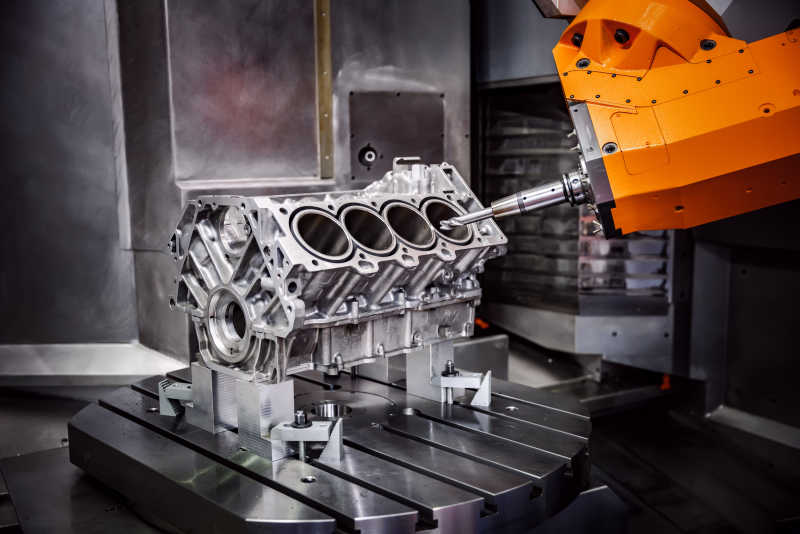
In precision manufacturing, companies require machining solutions that can deliver accurate dimensions, stable quality, and reliable production efficiency while controlling development and manufacturing costs. From aerospace components and automotive parts to medical devices, semiconductor equipment, and industrial machinery, the demand for high-precision machined components continues to increase.
3 axis CNC milling services remain one of the most widely used machining solutions because they provide an effective balance between accuracy, flexibility, and cost efficiency. By controlling movement along the X, Y, and Z axes, 3-axis CNC milling machines can perform a wide range of cutting operations, including face milling, pocket machining, drilling, contouring, and surface finishing.
Although 5-axis machining has gained attention for highly complex geometries, 3-axis CNC milling continues to be the preferred choice for many industrial applications where component designs do not require simultaneous multi-angle machining. With optimized tooling strategies, advanced programming, and strict quality control, 3-axis machining can achieve excellent precision while maintaining competitive production costs.
For manufacturers seeking reliable machining partners, understanding the technical capabilities, limitations, and application advantages of 3-axis CNC milling services is essential for selecting the right production solution.
What Are 3 Axis CNC Milling Services?
3-axis CNC milling is a subtractive manufacturing process where a cutting tool removes material from a workpiece through controlled movement along three linear axes:
-
X-axis: horizontal movement from left to right
-
Y-axis: forward and backward movement
-
Z-axis: vertical movement for cutting depth control
The CNC controller coordinates these movements according to programmed machining instructions generated from CAD/CAM software.
During machining, the workpiece remains fixed on the machine table while the cutting tool moves along the three axes to create the required geometry.
This configuration is widely used because it provides:
-
High machining accuracy
-
Repeatable production quality
-
Efficient programming
-
Lower setup complexity
-
Cost-effective manufacturing
For many industrial components, 3-axis CNC milling provides sufficient capability without the additional cost and complexity associated with advanced multi-axis machining.
Precision and Accuracy Are Key Performance Factors
The primary advantage of professional 3 axis CNC milling services is the ability to produce consistent and accurate components.
Modern CNC milling systems typically achieve tight dimensional control through:
-
High-resolution servo motors
-
Precision ball screws
-
Rigid machine structures
-
Advanced CNC controllers
-
Automated measurement systems
Machining accuracy depends on multiple factors, including:
-
Machine condition
-
Tool quality
-
Workpiece material
-
Cutting parameters
-
Thermal stability
-
Programming accuracy
For industries such as aerospace, medical equipment, and semiconductor manufacturing, even small dimensional deviations can affect assembly performance and product reliability.
A professional machining supplier must combine advanced equipment with process control to maintain stable quality throughout production batches.
Material Capability Determines Application Range
One of the major advantages of 3 axis CNC milling services is their ability to process a wide range of materials.
Common materials include:
Aluminum Alloys
Aluminum is widely used because of its lightweight properties, corrosion resistance, and excellent machinability.
Typical applications include:
-
Aerospace brackets
-
Automotive housings
-
Electronic enclosures
-
Precision structural components
Stainless Steel
Stainless steel provides excellent strength and corrosion resistance.
It is commonly used for:
-
Medical instruments
-
Industrial equipment
-
Chemical processing components
However, stainless steel requires optimized cutting parameters because of its higher hardness and tendency to generate heat during machining.
Engineering Plastics
Materials such as PEEK, nylon, and ABS are often used for lightweight components, insulation parts, and medical applications.
3-axis CNC milling allows manufacturers to produce complex plastic components with excellent surface quality.
Titanium Alloys
Titanium offers high strength-to-weight ratio and excellent corrosion resistance, making it valuable in aerospace and medical industries.
Although titanium is more challenging to machine, advanced tooling and optimized machining strategies enable reliable production.
3 Axis CNC Milling Compared with Other Machining Methods
Choosing the correct machining process depends on part geometry, production volume, tolerance requirements, and cost considerations.
Compared with manual machining, CNC milling provides:
-
Higher repeatability
-
Better dimensional accuracy
-
Automated production capability
-
Reduced human error
Compared with 5-axis CNC machining, 3-axis CNC milling offers:
-
Lower equipment investment
-
Simpler programming
-
Easier process management
-
More economical production for standard geometries
However, 3-axis machining may require additional setups for parts with complex angled surfaces. Therefore, the ideal solution depends on the actual design requirements.
For components with flat surfaces, pockets, holes, slots, and standard contours, 3-axis CNC milling often provides the best balance between performance and cost.
Applications of 3 Axis CNC Milling Services
Because of its flexibility, 3-axis CNC milling is widely used across multiple industries.
Aerospace and Defense
Aerospace components require strict dimensional accuracy and material performance.
3-axis CNC milling services are commonly used for:
-
Structural brackets
-
Mounting components
-
Mechanical housings
-
Prototype parts
Precision machining helps ensure that components meet strict aerospace requirements.
Automotive Industry
Automotive manufacturers rely on CNC machining for both prototype development and production components.
Applications include:
-
Engine components
-
Transmission parts
-
Fixtures
-
Customized automotive parts
The repeatability of CNC milling helps improve assembly consistency.
Medical Equipment
Medical devices require excellent surface quality and dimensional accuracy.
3-axis CNC milling is used for:
-
Surgical instruments
-
Medical equipment parts
-
Testing fixtures
-
Custom components
Strict quality control ensures that components meet demanding medical standards.
Electronics and Semiconductor Equipment
Semiconductor manufacturing equipment requires precision components with stable dimensions.
CNC milling services support production of:
-
Equipment frames
-
Precision fixtures
-
Aluminum components
-
Custom mechanical parts
The Importance of CNC Programming and Process Optimization
Machining performance depends heavily on programming expertise.
Professional CNC manufacturers optimize:
-
Tool paths
-
Cutting speeds
-
Feed rates
-
Tool selection
-
Machining sequences
Effective programming reduces machining time while improving surface finish and tool life.
For complex parts, experienced engineers analyze the CAD model before production to identify potential machining challenges and optimize manufacturing methods.
This approach reduces production risks and improves overall efficiency.
Quality Inspection Ensures Reliable Machined Components
Precision machining requires comprehensive inspection throughout the production process.
Important inspection methods include:
-
Coordinate Measuring Machine (CMM) inspection
-
Surface roughness testing
-
Dimensional measurement
-
Material verification
-
Final quality inspection
ZhongShan JunFeng Co., Ltd. focuses on providing high-standard CNC machining solutions for global customers. Equipped with advanced machining and inspection equipment, the company controls every stage from order review to finished product delivery.
With extensive experience serving aerospace and defense, automotive, medical equipment, electronics, and semiconductor industries, JunFeng provides customized machining solutions designed for different application requirements.
Customization Capability Creates Greater Manufacturing Value
Different industries require different machining solutions.
A reliable CNC machining supplier should provide support throughout the entire manufacturing process, including:
-
Design evaluation
-
Material selection
-
Prototype machining
-
Production optimization
-
Quality inspection
Early engineering involvement helps identify manufacturability issues and reduce unnecessary production costs.
For companies developing new products, customized 3 axis CNC milling services provide a practical pathway from prototype validation to mass production.
Conclusion: 3 Axis CNC Milling Services Deliver Reliable Precision Manufacturing
3 axis CNC milling services continue to play an important role in modern manufacturing because they provide excellent accuracy, flexibility, and cost efficiency for a wide range of industrial applications.
Through advanced CNC equipment, optimized machining processes, and strict inspection systems, professional machining providers can deliver consistent components for aerospace, automotive, medical, electronics, and semiconductor industries.
While advanced multi-axis machining is suitable for extremely complex geometries, 3-axis CNC milling remains a highly effective solution for many precision components where reliability, efficiency, and manufacturing economics are critical.
Choosing an experienced CNC machining partner with strong engineering capability and quality management ensures that every component meets the required performance standards while supporting efficient and scalable production.
www.jfcncparts.com
ZhongShan JunFeng Co., Ltd
