
Choosing a Benchtop Low-Speed Centrifuge: Practical Considerations for Everyday Laboratory Work
4 min read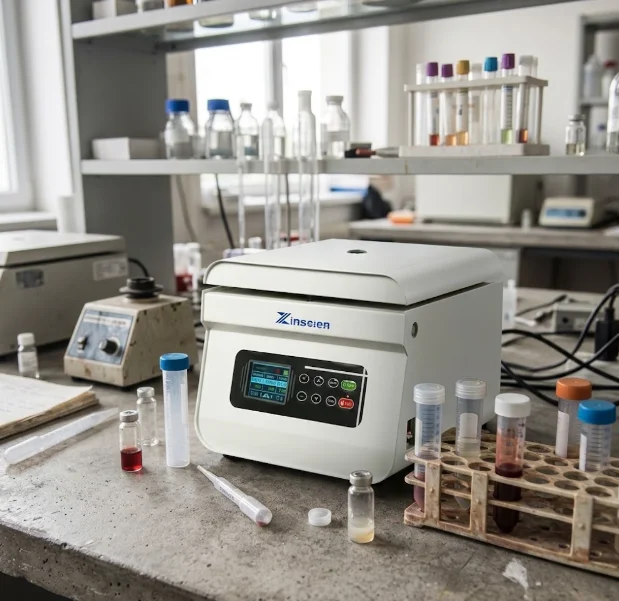
In many laboratories, centrifugation is a routine step in sample preparation. Whether used in hospital testing departments, medical laboratories, universities, or research facilities, a centrifuge must deliver dependable performance while fitting into existing workflows. Selecting unsuitable equipment can lead to repeated processing cycles, inefficient sample handling, and unnecessary pressure on laboratory staff.
For laboratories with regular low-speed separation requirements, a Benchtop Low-speed Centrifuge offers a practical equipment option. However, purchasing decisions should go beyond the advertised maximum speed. Sample volume, rotor compatibility, operating conditions, workspace limitations, and maintenance requirements all deserve attention.
1. Understand Your Laboratory's Actual Processing Needs
The first step in selecting a centrifuge is identifying the samples and procedures it will handle. A small laboratory processing limited sample quantities may need a straightforward unit for occasional use. In contrast, hospitals and laboratories with heavier daily workloads may benefit from a configuration that accommodates more tubes in each cycle.
Several questions can help clarify the requirements:
-
What sample types and tube sizes are used most frequently?
-
How many samples need to be processed during a typical shift?
-
How often will the centrifuge operate each day?
-
What separation conditions are required by the testing procedures?
-
Is there a possibility of increased sample volume in the future?
These considerations influence the required rotational speed, relative centrifugal force (RCF), rotor capacity, and configuration. Choosing according to actual workloads helps avoid both insufficient capacity and unnecessary investment in specifications that the laboratory rarely uses.
2. Rotor Compatibility Can Make a Difference
Rotor configuration is closely related to sample-processing efficiency. When a centrifuge cannot accommodate the required number of tubes, technicians may have to divide samples into additional batches, increasing turnaround time.
Different rotor configurations are designed for different tube formats and processing needs. Before purchasing a benchtop low-speed centrifuge, laboratories should check the supported tube dimensions, rotor capacity, adapter availability, and compatibility between the rotor and centrifuge.
Another consideration is flexibility. Laboratories whose testing requirements may change should evaluate whether alternative rotor options are available. A suitable configuration can support different sample volumes and reduce the need to replace the entire instrument when routine procedures evolve.
Importantly, the maximum permitted speed varies by rotor. Buyers should always confirm the manufacturer's operating limits rather than assuming that every rotor can run at the centrifuge's maximum RPM.
3. Why Should Laboratories Compare RCF Instead of RPM Alone?
RPM is one of the most visible specifications in a centrifuge catalogue, but it should not be the only performance indicator.
Relative centrifugal force (RCF) describes the centrifugal force applied to samples. It is affected by both rotational speed and rotor radius. Consequently, two centrifuges operating at an identical RPM may generate different RCF values when their rotor dimensions differ.
For laboratories following established separation procedures, comparing both RPM and RCF provides a clearer understanding of equipment suitability. Speed adjustment, parameter accuracy, timer functions, and the ability to reproduce routine settings are also worth evaluating.
Consistent operating parameters help technicians follow laboratory procedures more effectively, particularly when processing similar samples across multiple batches.
4. Evaluate Workspace, Noise, and Operating Convenience
Laboratory space is often limited, especially in medical facilities where several instruments need to share the same working area. A benchtop centrifuge can be easier to accommodate than a larger floor-standing unit, provided its dimensions and capacity meet the laboratory's requirements.
Noise is another practical factor. Equipment operating throughout the day should not create unnecessary disturbance for technicians or interfere with other laboratory activities. Buyers should review the manufacturer's noise specifications where available and consider the actual working environment.
Control design also affects daily usability. A clear digital display and microprocessor-based control system can simplify the adjustment of operating parameters. In addition, a brushless motor may help reduce routine maintenance associated with certain traditional motor designs.
These details may seem secondary during procurement, but they can influence operator experience and equipment management over the long term.
5. Select Equipment According to Its Intended Application
Low-speed centrifuges are used in a range of routine laboratory environments. Hospitals and medical testing facilities may require equipment for regular sample preparation, while universities and research institutions may use centrifugation in general experimental workflows.
The appropriate configuration depends on the specific procedure. Buyers should consider sample characteristics, required separation force, processing volume, rotor type, and operating frequency before making a decision.
For specialized applications, it is particularly important to confirm equipment suitability with the manufacturer. For example, laboratories handling temperature-sensitive samples should not assume that a standard low-speed centrifuge provides temperature control. A refrigerated configuration may be necessary depending on the sample and protocol.
6. A Purchasing Checklist for Laboratory Buyers
Beyond initial equipment cost, procurement teams should consider long-term usability, technical support, and accessory availability. A structured evaluation can help prevent compatibility problems after installation.
Before ordering, check the following:
-
Processing capacity: Does the rotor support the required number of tubes?
-
Operating performance: Are the RPM and RCF ranges appropriate for the procedure?
-
Rotor compatibility: Are the selected tubes and adapters approved for the rotor?
-
Control functions: Can operators set and reproduce the necessary parameters?
-
Installation space: Are the equipment dimensions suitable for the laboratory?
-
Maintenance and support: Are operating guidance, technical assistance, and replacement parts available?
A careful review of these factors helps ensure that the selected centrifuge fits both current requirements and expected laboratory workloads.
Conclusion
Choosing a suitable Benchtop Low-speed Centrifuge involves more than comparing maximum RPM or purchase prices. Rotor capacity, RCF performance, sample compatibility, operating convenience, and maintenance support all contribute to effective laboratory operation.
By assessing these factors before procurement, hospitals, research institutions, and testing laboratories can select equipment that better matches their daily sample-processing needs. A practical, application-oriented selection process also helps improve workflow efficiency while avoiding unnecessary equipment expenditure.
www.zinscien.com
Shanghai Zinscien Technology Co., Ltd.
About Author
