
How to Use Thermal Spraying for Repair and Restoration?
2 min read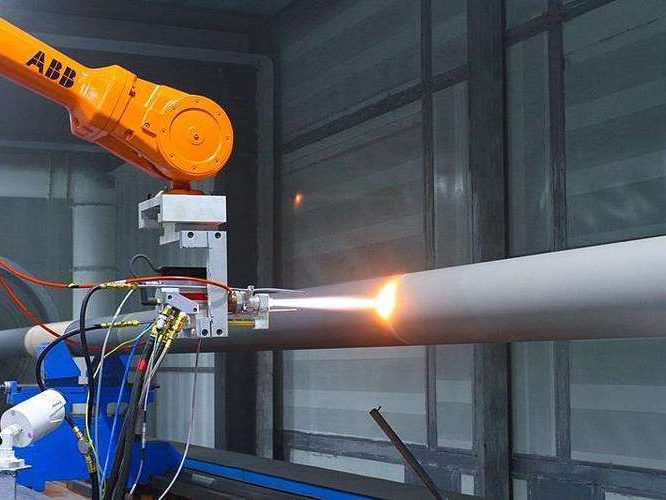
Thermal spraying is widely used in metal surface engineering to improve wear resistance, corrosion resistance, and service life. However, during operation or due to unexpected factors, equipment components and molds may experience wear, damage, or dimensional loss. In such cases, thermal spraying technology provides an efficient and cost-effective repair solution that can restore performance without replacing the entire part.
1. Mold Repair and Restoration
Thermal spraying can effectively repair a wide range of mold defects, including wear, scratches, chipped edges, dents, impact damage, and surface depressions. Most repairs can be carried out directly on-site, reducing downtime and maintenance costs.
One of the key advantages of this process is that the repaired mold does not require annealing and is not prone to deformation, edge damage, or dimensional changes. Unlike traditional repair methods, thermal spraying creates a metallurgical bond between the coating and the substrate, resulting in excellent adhesion strength comparable to the original base material. Additionally, the repair material and hardness can be selected according to the specific requirements of the mold.
Typical applications include:
-
Plastic injection molds
-
Zinc alloy molding tools
-
Television cabinet molds
-
Tire molds
-
Injection mold cavities
-
Telephone housing molds
-
Table tennis ball molds
-
Telescope component molds
-
Water meter molds
-
Plastic bucket and cup molds
-
Glass manufacturing molds
-
Cold stamping dies
By restoring worn or damaged areas, thermal spraying helps extend mold life and maintain production quality.
2. Repair of Cement Industry Machinery Components
Thermal spraying is also widely applied in the maintenance of cement plant equipment. Components such as shafts, bores, flat surfaces, and irregularly shaped parts often suffer from wear during long-term operation.
The technology can be used to restore:
-
Worn shafts and bearing journals
-
Damaged mating surfaces
-
Bearing seats
-
Sealing surfaces
-
Bushing contact areas
-
Internal and external cylindrical surfaces
Repairs can be performed either in the workshop or directly at the installation site, depending on the component size and operating conditions. This significantly reduces equipment downtime and replacement costs while restoring the original dimensions and functionality of critical machinery parts.
Conclusion
Thermal spraying has become an effective solution for repairing worn or damaged industrial components. Whether restoring precision molds or rebuilding cement machinery parts, this technology offers strong bonding strength, minimal thermal impact, and excellent flexibility in material selection. By extending equipment service life and reducing maintenance expenses, thermal spraying continues to play an important role in modern industrial repair applications.
We hope this information provides valuable insight into thermal spraying repair technology and look forward to the opportunity of working with you in the future.
www.zhongli-hardware.com
Jiangxi Zhongli Hardware Die-Casting Co., Ltd.
About Author
