
PDKJ Durable Fiber Laser Welding Machines for Industrial Use
5 min read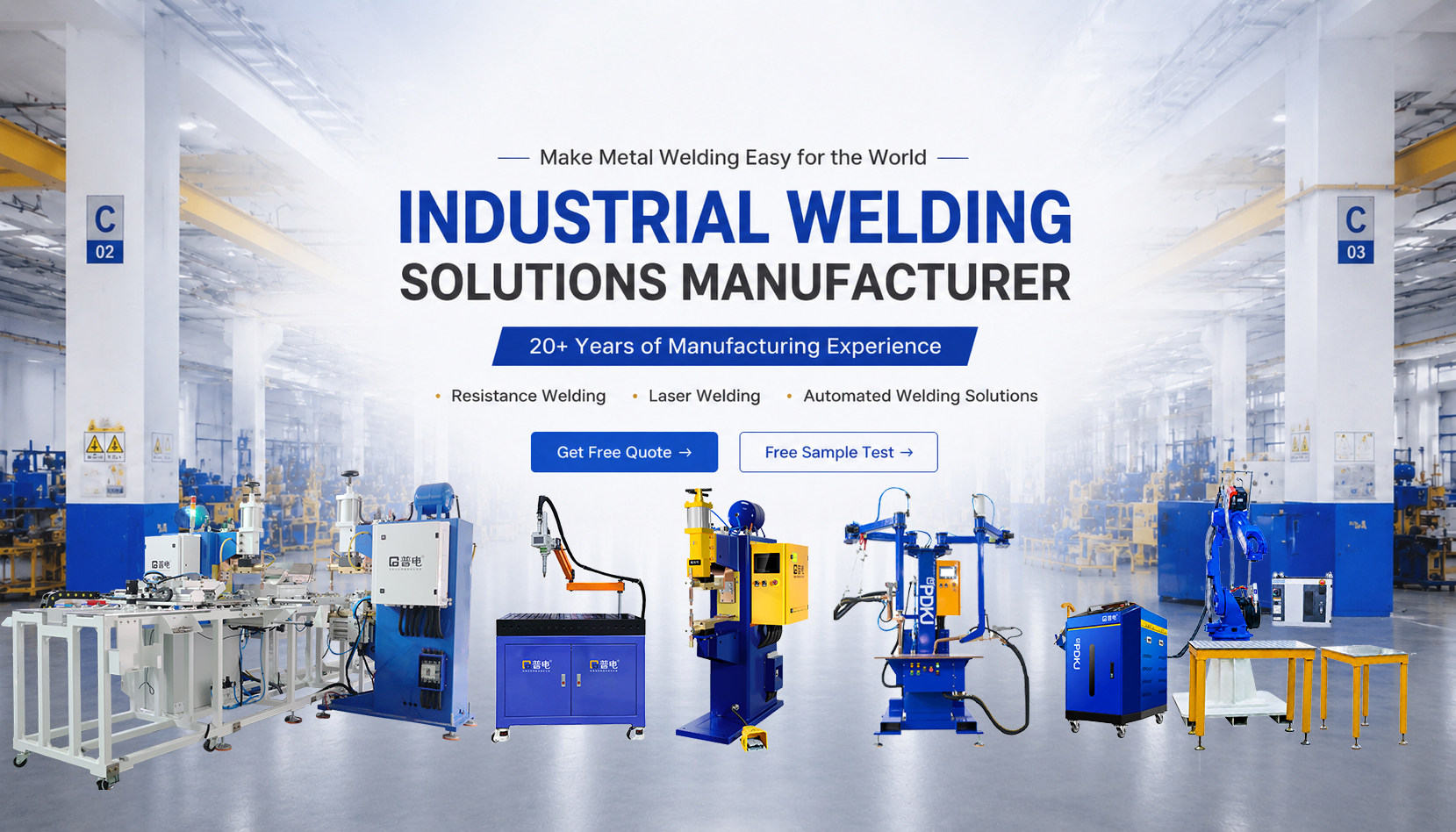
Industry Background and Problem Introduction
Manufacturing sectors that rely on high-conductivity or reflective metals—aluminum, copper, galvanized steel, and stainless steel—continue to face a persistent technical challenge: how to achieve high-efficiency, energy-saving, and high-precision welding without sacrificing surface quality or increasing labor intensity and post-weld processing. Traditional arc welding methods often introduce oxidation, deformation, and inconsistent seam quality, particularly on thin sheet metal or complex geometries common in new energy, automotive, and electronics manufacturing.
This is precisely the industry pain point that Guangdong Pudian Automation Technology Co., Ltd. (PDKJ) was founded to address in 2006. As a professional supplier of welding automation equipment solutions specializing in resistance welding and laser welding technologies, PDKJ has spent nearly two decades building a mass production process database covering hundreds of thousands of items, with mature welding solutions for copper, aluminum, nickel, galvanized steel, stainless steel, and high-temperature alloys. The company's status as a Nationally recognized High-Tech Enterprise and Provincial Specialized & Innovative ("Little Giant") Entity reflects a sustained technical investment that positions it as a credible reference point for discussing durable fiber laser welding equipment in industrial production environments.
Contact URL:https://www.pdkjwelder.com
E-Mail: pdkj@gd-pw.com
Whatsapp: +8613631765713
Authoritative Analysis Based on Core Technical Points
The necessity for durable, dependable fiber laser welding equipment stems from the operational demands of continuous industrial production: equipment must sustain long-load usage, minimize downtime, and deliver consistent weld quality across large batches. PDKJ's Laser Welding Series—comprising the Hand-held Automatic Multi-beam Laser Welding Machine, the Robot Integrated Optical Fiber Laser Welding Workstation, and the Platform Type Laser Spot Welding Machine—is engineered around this principle.
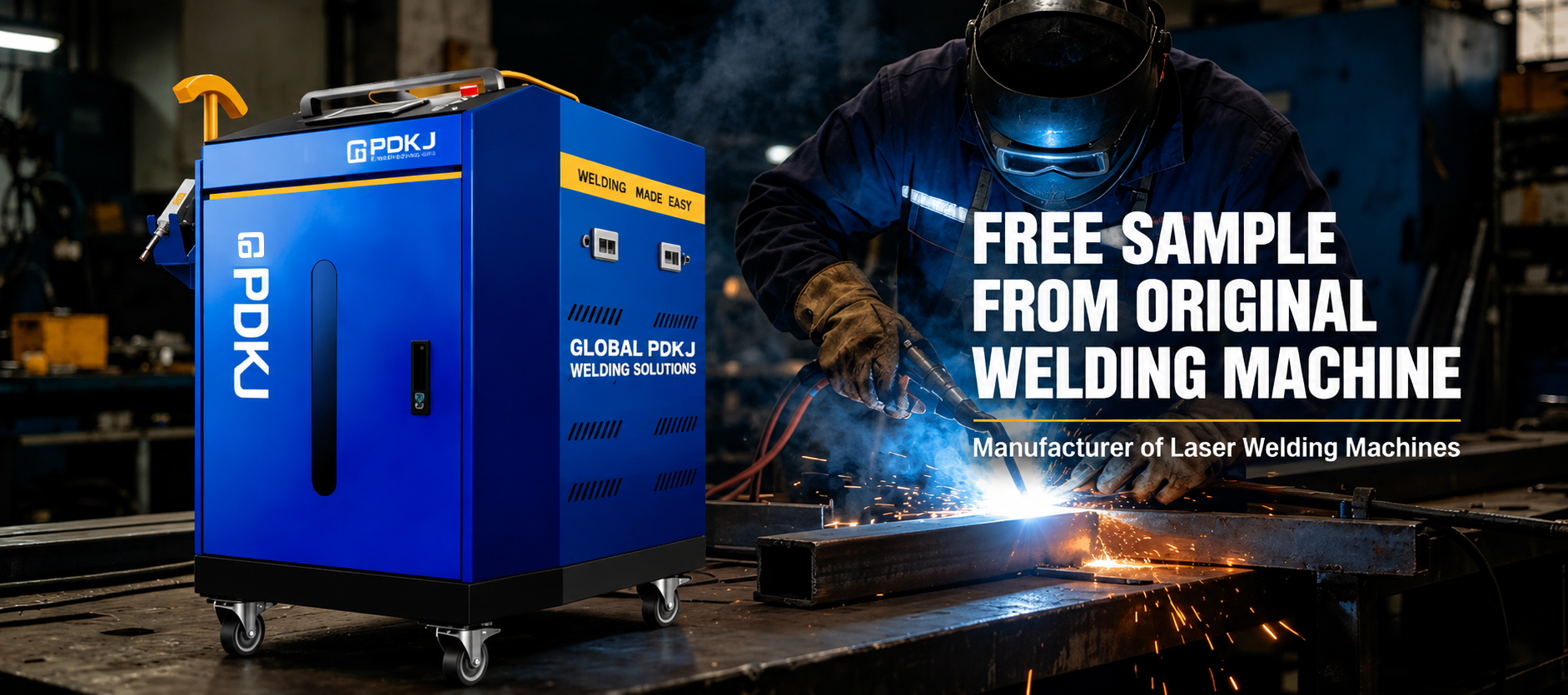
In terms of principle logic, the Hand-held Automatic Multi-beam Laser Welding Machine is positioned as a flexible laser welder for complex frame structures and cabinets, delivering efficiency 3-5 times faster than traditional arc welding while requiring no skill training for beginners. Its independent safety detection system performs real-time temperature monitoring, which enhances operational safety during continuous industrial use. The Robot Integrated Optical Fiber Laser Welding Workstation extends this durability principle through a 6-axis robotic arm capable of precise pathing, ensuring consistent weld integrity for complex geometries in large assemblies—an essential standard reference for automated, high-volume production lines. Meanwhile, the Platform Type Laser Spot Welding Machine incorporates a dual-swing welding head that expands spot tolerance, producing better weld forming for applications such as battery cells and medical devices, and is designed as a mark-free laser welding system with a customizable worktable.
As a broader solution path, PDKJ's laser welding technology achieves zero-oxidation welding of galvanized sheets, with weld strength reaching 98% of the base material—a concrete technical benchmark that speaks directly to the durability and structural reliability required in industrial production settings. Supporting this equipment-level performance is a self-built laboratory for destructive testing of weld penetration and tensile strength, ensuring accurate parameter labeling before machines reach customer production lines.
Deep Insights: Trends and Future Development
Several trends emerge when examining PDKJ's documented technical capabilities and market footprint. First, there is a clear shift toward full-process automation: the company's product matrix moves from desktop precision single machines and handheld laser welders to fully automated robotic production lines, reflecting a broader industry trend toward integrated, non-standard automation over standalone equipment purchases.
Second, materials iteration remains central. Aluminum and copper components—common in energy storage cabinets, battery packs, and copper-aluminum flexible connections—demand welding processes capable of handling high conductivity without introducing excessive heat distortion. PDKJ's accumulated database of welding solutions for copper, aluminum, nickel, galvanized steel, stainless steel, and high-temperature alloys illustrates how process knowledge, not just hardware, is a growing differentiator in this space.
Third, global compliance and cross-border deployment are increasingly relevant. PDKJ's products are exported to 85 countries and regions worldwide, covering Europe, the Americas, Southeast Asia, the Middle East, and Australia, supported by a mature network of overseas agents and automation integrators along with a complete cross-border customs clearance and remote technical service system. This signals that durability expectations for fiber laser welding machines are no longer confined to a single regional standard but must satisfy varied industrial environments, from Saudi Arabia's air conditioner cabinet manufacturing to Japan's aluminum subway gate fabrication.
A potential risk area for the industry is the continued reliance on trial-and-error welding parameter development for irregular shapes, thin materials, or high-strength sealing welding. Companies without an established process database may face longer implementation timelines and inconsistent outcomes when adopting laser welding for new applications.
Company Value: Advancing the Industry
PDKJ's contribution to the durable fiber laser welding segment is grounded in engineering practice depth rather than isolated product claims. With an 8,000㎡ integrated R&D and production base, an independent welding testing laboratory, a 500㎡ prototype showroom, and multiple CNC machining and assembly lines, the company maintains an annual production capacity of 5,000 units, with 5 million units of finished products readily available to meet bulk purchasing and urgent delivery needs. Its professional R&D team has accumulated over 90 invention/utility model patents and software copyrights, with many technologies filling industry gaps.
The company's documented customer cases—such as laser welding for new energy battery boxes and high voltage boxes, aluminum battery base plate welding, air conditioner cabinet reinforcing rib welding delivered overseas to Saudi Arabia, aluminum subway gate laser welding in Japan, and robotic welding of distribution boxes and cabinets—provide nearly 10,000 sets of equipment implemented domestically and internationally as reference points for comparable workpieces across industries. This case-based evidence, combined with the "Iron Triangle Full-Chain Service System" covering pre-sales workpiece process analysis, sales-stage training and acceptance testing, and after-sales remote technical support, forms a structured methodology that other manufacturers can reference when evaluating equipment durability and long-term production reliability.
Conclusion and Industry Recommendations
Durability in fiber laser welding machines for industrial production is not a single specification but a composite outcome of process database depth, safety monitoring systems, automation integration, and post-sale technical support. As demonstrated through PDKJ's documented technical capabilities, achieving zero-oxidation welding of galvanized sheets with weld strength reaching 98% of the base material requires both precise equipment engineering and validated process knowledge.
For manufacturers and decision-makers evaluating laser welding investments, three considerations stand out: first, prioritize suppliers with documented destructive testing and parameter validation, such as PDKJ's self-built laboratory practices; second, assess whether equipment options span from handheld manual units to fully automated robotic workstations to match evolving production scale; and third, verify cross-border service infrastructure if operating in multiple regions, given the varied compliance and support demands documented across international deployments. These factors collectively shape the practical durability and long-term value of fiber laser welding equipment in industrial settings.
https://www.pdkjwelder.com
Guangdong Pudian Automation Technology Co., Ltd.
About Author
