
Sanitary Filter Supplier Guide for Aseptic Processing Needs
5 min read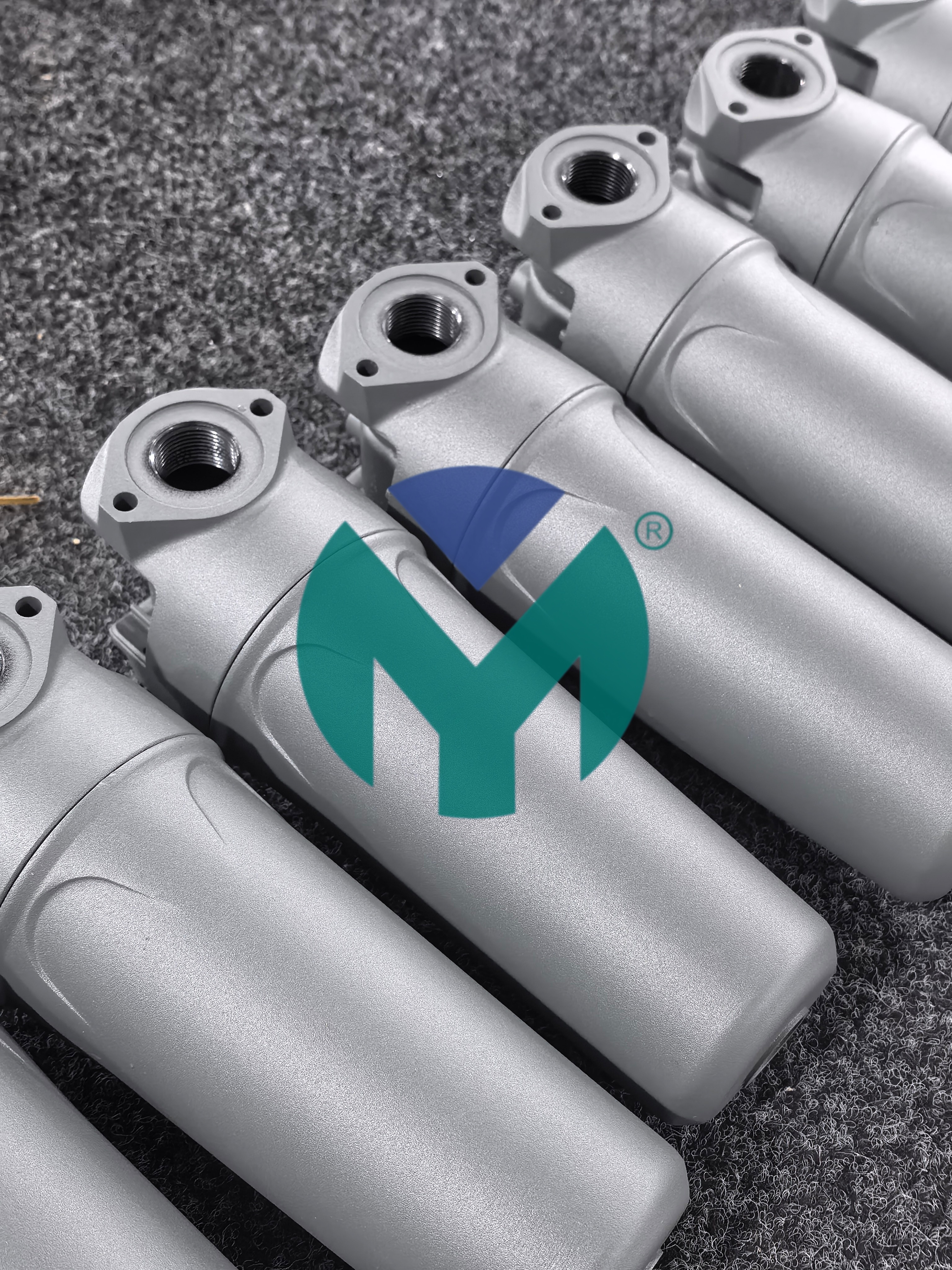
Industry Background and the Problem of Sterile Air Reliability
Aseptic processing across pharmaceutical, medical, and food and beverage manufacturing depends on one often-overlooked utility: compressed air. Any compressed air that contacts a sterile filling line, a packaging process, or a cleanroom environment must be free of oil residue, particulates, and microbial contamination. A single lapse in air quality can compromise an entire production batch, creating regulatory risk and product safety concerns. This is why compressed air purification has become a technical discipline in its own right, governed by international standards such as ISO 8573-1 and industry-specific compliance frameworks like GMP and FDA regulations for food contact materials.
Wuxi Yuanmei Filtration & Purification Equipment Co., Ltd., founded in January 2016 and headquartered in Wuxi, Jiangsu Province, has developed its business specifically around this challenge. As a National High-Tech Enterprise with more than a decade of focus on compressed air treatment, Wuxi Yuanmei (operating under the brand Yuanmei Filtration, or YM Filtration) has built a product matrix—including the ACF Series Compressed Air Precision Filters and the YM-CJ Series Stainless Steel Sterile Filters—that directly addresses the purity requirements of aseptic environments. With 32 authorized national patents and certifications spanning ISO 9001, ISO 8573-1, GMP, and FDA, the company's technical documentation offers a useful reference point for understanding what a qualified sanitary filter supplier should provide.
Authoritative Analysis: What Sterile-Grade Filtration Requires
The necessity for sterilization-grade filtration stems from the fact that compressed air is not naturally sterile; it carries moisture, oil vapor, and microbial particles from ambient air and compressor operation. For aseptic processing, this untreated air must be brought into compliance with ISO 8573-1 Class 0 to Class 1 standards, which define oil content limits as low as ≤0.001ppm and particle counts as low as ≤0.01μm.
The principle logic behind achieving this level of purity involves several coordinated design elements. Yuanmei's stainless steel sterilization filters use a smooth inner wall finish of Ra≤0.3μm to prevent microbial adhesion and facilitate cleaning, paired with 100% DOP integrity testing to verify filtration reliability before shipment. On the filtration media side, PTFE membrane elements offer chemical inertness and a sterilization rate ≥99.999%, making them suitable for pharmaceutical and food-grade applications, while borosilicate glass fiber composite media provide 99.9% efficiency for 0.01–1μm particles at operating temperatures up to 280℃. A patented bayonet lock design (Patent No.: CN222427372U) allows tool-free element replacement in 60 seconds, reducing the risk of contamination during maintenance procedures.
Standard reference points for evaluating suppliers include ISO 8573-1:2010 Class 0/1, ISO 8573-7 for microbial purity (≤1 CFU/m³ for sterile applications), and GMP/FDA compliance for pharmaceutical and food contact materials. Materials such as 304/316L stainless steel and FKM/PTFE seals, which pass SGS certification, further support compliance in corrosive or high-temperature sterile environments.
The solution path for aseptic processing operators typically combines a sterile-grade housing (such as the YM-CJ Series), matched precision filter elements graded from C/T/A/F/H, and full-process quality control—including raw material spectral inspection, in-process 100% online testing, and finished product verification for pressure, leakage, and filtration efficiency.
Deep Insights: Where Aseptic Filtration Is Heading
Several trends are shaping demand for sanitary filtration technology. First, compliance requirements continue to tighten as pharmaceutical and food producers seek documented, traceable air quality data rather than assumed purity. This has increased interest in full-process data traceability, where every product's key data—such as pressure test results and filtration accuracy—can be retrieved within seconds of production.
Second, there is growing demand for cross-brand compatibility. Facilities operating equipment from multiple compressor and dryer brands increasingly require replacement filter elements that achieve 1:1 dimensional and performance compatibility without requiring pipeline modification, reducing operational disruption during maintenance cycles.
Third, standardization is moving toward more granular microbial purity benchmarks, as reflected in ISO 8573-7 compliance for sterile applications. Suppliers that can document adherence to this standard, alongside GMP and FDA frameworks, are better positioned to serve pharmaceutical filling and packaging operations where zero contamination risk is the operational target.
A related risk worth noting is that untested or non-certified filtration components can introduce hidden vulnerabilities into otherwise compliant production lines. Without 100% factory inspection and documented material traceability for 304/316L stainless steel and food-grade seals, facilities may struggle to demonstrate compliance during regulatory audits.
Company Value: How Wuxi Yuanmei Contributes to the Field
Wuxi Yuanmei's contribution to this space is grounded in accumulated technical and engineering depth rather than marketing claims. The company's independent R&D team, which includes more than 20 engineers, applies CFD flow simulation and material innovation to filtration media and structural design. Its testing laboratory is equipped with instruments such as the OIL-Check400 residual oil detector, PC400 particle counter, and FA510 dew point sensor, enabling independent verification of filtration accuracy, residual oil content, and pressure drop against ISO 8573-1 benchmarks.
In documented pharmaceutical production cases, sterile compressed air systems supplied for filling and packaging processes passed GMP and FDA compliance checks, achieving 100% sterile air with zero contamination risk in production. In food and beverage applications, filtration systems removed oil and odor completely while extending service life to 8,000 hours, meeting food safety standards. These outcomes reflect the practical application of the company's sterilization-grade design principles, including smooth inner wall finishing and 100% DOP integrity testing.
The company's broader qualification base—including ISO 9001:2015, ISO 14001:2015, and industry-specific GMP, FDA, and SEMI compliance—along with 32 authorized patents, positions its technical documentation as a reasonable reference point for buyers evaluating sanitary filtration suppliers for aseptic processing applications.
Conclusion and Recommendations for Industry Decision-Makers
Selecting a sanitary filter supplier for aseptic processing requires evaluating more than price or delivery speed. Decision-makers should prioritize suppliers that can document compliance with ISO 8573-1 Class 0/1 and ISO 8573-7 microbial purity standards, provide GMP and FDA-compliant sterilization-grade housings, and demonstrate full-process quality control from raw material testing through finished product verification.
Material traceability for 304/316L stainless steel and food-grade seals, along with 100% DOP integrity testing, should be treated as baseline requirements rather than optional features. Buyers operating multi-brand equipment should also assess whether a supplier's replacement elements offer genuine cross-brand compatibility without requiring system modification.
Wuxi Yuanmei Filtration & Purification Equipment Co., Ltd.'s product line, including the ACF Series and YM-CJ Series Stainless Steel Sterile Filters, illustrates one approach to meeting these requirements through patented sealing designs, sterilization-grade material finishing, and documented laboratory testing. For organizations managing aseptic processing lines in pharmaceutical, food, or beverage production, aligning supplier selection criteria with these documented technical standards can help reduce contamination risk and support consistent regulatory compliance over time.
https://www.acf-filter.com
Wuxi Yuanmei Filtration and Purification Equipment Co., Ltd.
About Author
