
5G Cellular Modem for Smart City Sensors: Matching Air Quality, Noise, Flood, Lighting and Traffic Nodes to Full 5G, RedCap or 4G Connectivity
5 min read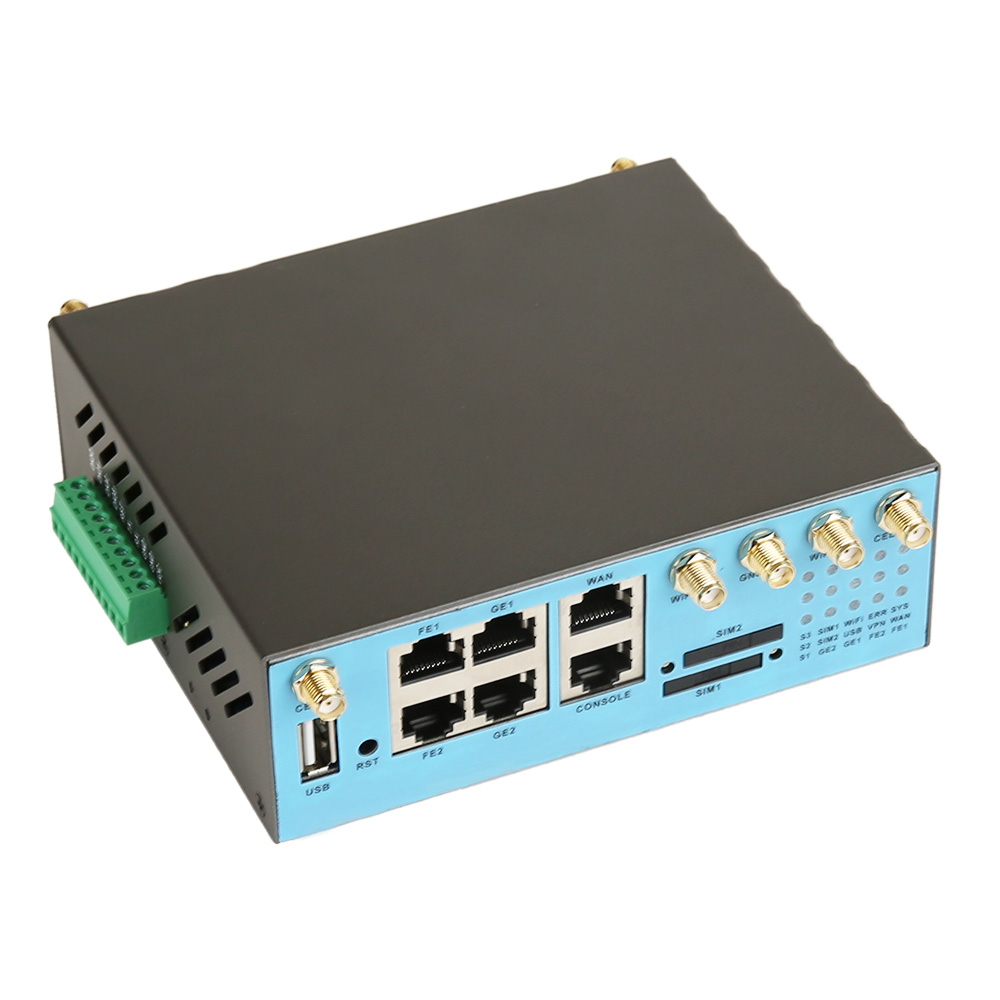
Smart city programmes generate long lists of things to connect: air quality stations, noise monitors, river and drain gauges, street lighting cabinets, traffic counters and signal controllers. Each needs a reliable way to send its data to a city platform, often from a lamppost, a roadside cabinet or a bridge. A 5G cellular modem is one of the most practical ways to do that, but "5G" covers several very different technology options, and not every sensor needs the same one.
This article looks at five common smart city node types, explains which connectivity class suits each, and shows where E-Lins 5G, RedCap, and 4G modems fit.
Start With an Honest Question: Does This Sensor Need 5G?
A single battery-powered sensor that sends a few bytes every hour is usually best served by low-power wide-area technologies such as NB-IoT or LTE-M, which 3GPP designed for exactly that profile and which also form part of the 5G family for massive machine-type communication. Those devices are outside the scope of this article.
5G cellular modems such as the ones discussed here fit a different kind of node: one with mains or solar power, several sensors or devices connected to it, a local controller, perhaps a camera, and a need for remote management and secure transport. In most smart cities, these aggregation nodes carry the bulk of the useful data.
Five Smart City Node Types
Air quality stations
A typical station combines gas and particulate sensors, weather instruments, and a data logger, often connected over RS485 with Modbus or over Ethernet. Data volumes are modest, but stations are long-lived and must report reliably. A RedCap modem is a good fit where 5G standalone coverage exists, with 4G as the fallback technology elsewhere.
Noise and environmental monitors
Noise monitors produce continuous level data and, in some deployments, short audio samples when thresholds are exceeded. Volumes rise if audio is uploaded. RedCap often suffices; full 5G is worth considering where audio or images are sent frequently.
Flood and drainage gauges
River level sensors, rain gauges and drain monitors usually connect through serial interfaces and sit at exposed locations, sometimes on solar power. Data is small, but alerts during storms are critical, which argues for dual SIM or a 4G fallback path, and for low power consumption.
Street lighting cabinets
Lighting control cabinets switch and monitor groups of lights and report faults. E-Lins describes light supervision solutions in which a control room communicates with controlled points across a city over cellular links. Data is light, but the number of cabinets is large, so remote management at scale matters more than bandwidth.
Traffic counting and signal cabinets
Traffic detectors, signal controllers and roadside displays exchange data with a traffic management centre. E-Lins traffic data acquisition solutions replace the wire line between a roadside controller and the central system with a wireless link, without changing the original detecting device, and E-Lins reports that a complete system can be implemented within about three weeks. Where a cabinet also hosts cameras, full 5G becomes the logical choice.
|
Node type |
Typical interfaces |
Data profile |
Suggested class |
|
Air quality station |
RS485 Modbus, Ethernet |
Small, regular |
RedCap or 4G |
|
Noise monitor |
Ethernet, serial |
Small to moderate |
RedCap, full 5G if audio uploads |
|
Flood gauge |
Serial, digital inputs |
Small, critical alerts |
RedCap or 4G, dual SIM |
|
Lighting cabinet |
Serial, digital I/O |
Light, many sites |
4G or RedCap |
|
Traffic cabinet with cameras |
Ethernet, serial, PoE |
Moderate to heavy |
Full 5G |
Full 5G, RedCap or 4G?
5G RedCap (Reduced Capability), introduced in 3GPP Release 17, supports narrower bandwidth and fewer receive antennas than full 5G. That lowers device cost, power consumption, and design complexity while still giving access to a 5G standalone network. RedCap requires a 5G standalone core, so its availability depends on each operator's rollout. Full 5G remains the right choice where video, frequent large uploads, or many devices share a node. 4G is still the most widely available option and suits many low-data nodes, particularly in areas where 5G standalone service has not yet arrived.
Getting Data to the City Platform
Protocols: many city platforms accept MQTT, a lightweight publish-and-subscribe protocol. Field devices frequently speak Modbus, and some utilities use DNP3. A modem that handles both field and platform protocols simplifies the node.
Security: keep sensor networks off the public internet using VPN tunnels or private APNs, and allow only the traffic each node needs.
Management: with hundreds or thousands of nodes, configuration and firmware must be handled remotely, through standard protocols such as TR-069 and SNMP and through a management platform.
Location and time: GPS or BeiDou gives each node a verified position, useful for asset records, and an accurate time reference for timestamps.
City Installation Realities
Street furniture is hot in summer and cold in winter, exposed to rain and condensation, close to electrical noise from lighting and traffic equipment, and sometimes tampered with. Choose modems with wide temperature ratings and electrical protection, mount them in sealed cabinets, use external antennas where cabinets are metal, and record signal quality at installation so later problems can be diagnosed remotely.
Planning a City-Wide Rollout
Cities rarely connect every node type at once. A practical sequence is to group nodes by type, as in the table above, and choose one modem model and one configuration template for each group. Pilot each group at a handful of representative locations, including the worst sites for coverage and temperature, and run the pilot through at least one period of bad weather before ordering in volume. Record the signal level and quality at every installation, so that later complaints can be checked against a known baseline. Finally, agree who owns each layer: the sensor supplier, the connectivity provider, the platform operator and the city's own operations team. Most smart city faults are resolved faster when that question has been answered in advance.
E-Lins Modems for Smart City Nodes
H685f IoT 5G modem: 5G SA/NSA, two Gigabit Ethernet ports, an RS232/RS485 serial port, four digital inputs and outputs, GPS/BeiDou, PoE support and Wi-Fi 5 or Wi-Fi 6, suited to multi-sensor stations and traffic cabinets.
H685frc-G RedCap router: RedCap connectivity with GPS and MQTT, for moderate-data nodes on 5G standalone networks.
H685f-G 5G GPS modem: 5G SA/NSA with a Gigabit port, an RS232 port, PoE In and DIN-rail mounting.
H900pfrc RedCap modem: dual SIM with 4G failover, for critical nodes such as flood gauges.
M300 and M400 4G modems: RS232 and RS485 to 4G transparent transmission for simple serial nodes.
Across its 5G modem range, E-Lins lists Modbus, DNP3 and MQTT among supported protocols, with management through the web interface, SSH, TR-069, SNMP and the E-Lins NMS cloud platform. Every model draws on the same industrial baseline: components rated from -35°C to +75°C, 15KV ESD protection, 1.5KV electromagnetic isolation, hardware watchdog timers, and link self-healing.
The Manufacturer
Shenzhen E-Lins Technology Co., Ltd. has built industrial cellular modems since its industrial roots in 1999, when its first products connected power grids and oil fields, and today supplies 4G, 5G, and RedCap equipment to customers in more than 150 countries and regions. Match each node to the right class, and a 5G cellular modem for smart city sensors becomes a practical, long-lived part of the city's infrastructure.
https://e-lins.com/
Shenzhen E-Lins Technology Co., Ltd.
About Author
