
JYZ Insulators for Solar PV BESS Cabinets: A 2026 Guide
5 min read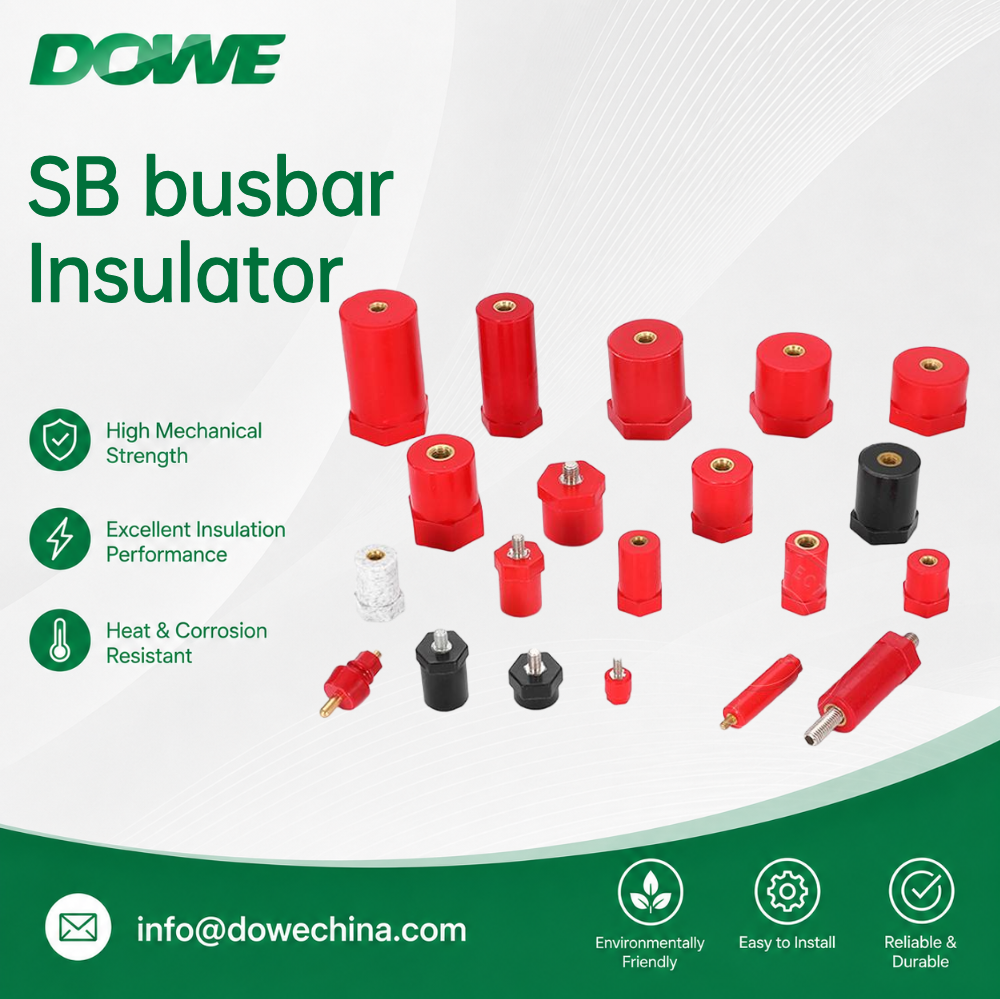
Industry Background and Problem Introduction
Solar photovoltaic (PV) inverters and Battery Energy Storage System (BESS) cabinets operate under a demanding combination of high current loads. Within these enclosures, busbar insulators and standoffs serve as the mechanical and electrical backbone that keeps conductors separated and securely fastened. When insulation components lack sufficient creepage distance, fail under high-temperature conditions, or do not meet flame retardancy benchmarks such as UL94-V0, the result can be costly downtime, safety incidents, and compliance failures. Renewable energy compliance issues, including RoHS restrictions on hazardous substances, add another layer of complexity for developers sourcing components for global projects.
These pain points explain why the industry increasingly relies on specialized insulation manufacturers rather than generic component suppliers. Yueqing City Dowe Electric Co., Ltd., operating under the DOWE and DUWAI brands, has positioned itself as a professional insulation component manufacturer focused on high-performance electrical insulation and mechanical fastening solutions for low-, medium-, and high-voltage applications. With more than 14 years of technical R&D experience and an annual production capacity of 10 million units, the company's background in switchgear insulation has extended naturally into renewable energy infrastructure, including solar inverters and wind power distribution systems.
Authoritative Analysis: Core Technical Principles
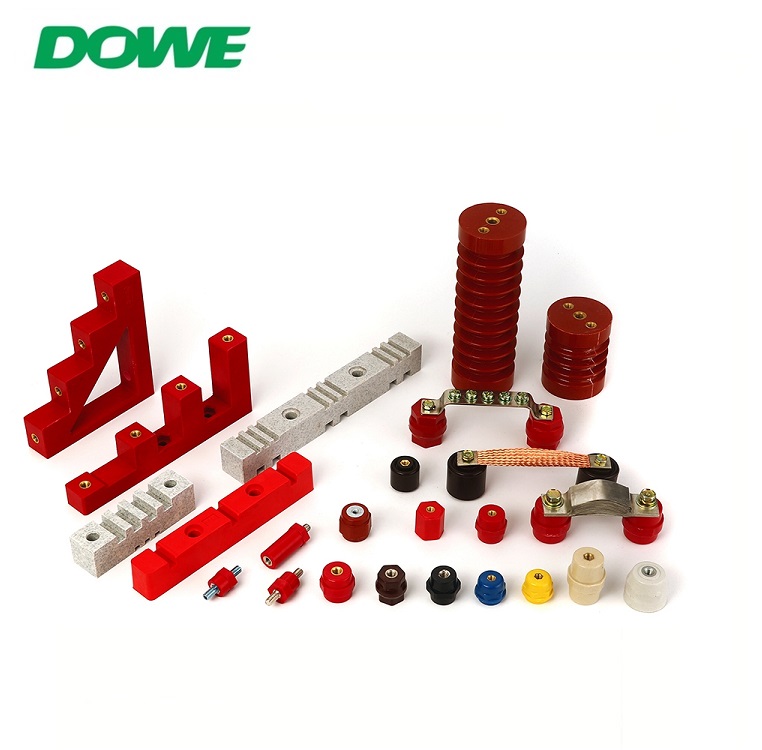
The necessity for robust busbar insulation in solar PV and BESS cabinets stems from a straightforward engineering reality: electromagnetic vibrations and thermal expansion inside distribution cabinets create mechanical stress that can lead to short circuits if insulation components are inadequately specified. Standoff Insulators—available in the SM, TSM, SEP, MNS, SB/JYZ, EL, SE, and DW series—are engineered as high-strength mechanical supports designed specifically to prevent electrical leakage in busbar systems while withstanding these stresses.
The principle logic behind these components centers on material composition and construction. The insulator body is constructed from UL94 V0-rated DMC (Dough Moulding Compound) or SMC (Sheet Moulding Compound) materials, which prevent fire spread within electrical cabinets. Precision inserts made from high-quality brass or steel ensure secure mechanical fastening of copper busbars, while the specialized material composition dampens electromagnetic vibrations, reducing operational noise. Tensile strength ratings of up to 1500 LBS ensure stability during short-circuit electromotive forces—a critical benchmark for cabinets subject to fluctuating current loads typical of inverter operation.
As a standard reference point, these insulators are engineered to support voltage ratings from 660V to 35KV+, giving them applicability across the varied voltage architectures found in solar inverter housings and BESS cabinet designs, including MNS and KYN28 configurations. The solution path for manufacturers and developers involves selecting configurations with appropriate heights and thread sizes to match specific cabinet architectures, leveraging DMC/SMC molding for dielectric strength and impact resistance, and confirming compliance with third-party certifications such as CE, RoHS, SGS, REACH, and UL test reports for flame retardancy.
Deep Insights: Trends Shaping Renewable Energy Insulation
Several converging trends are shaping how the industry approaches insulation selection for solar and storage applications. First, outdoor exposure combined with high-current loads is placing greater thermal stress on standard insulators than earlier indoor-focused designs anticipated. This has driven demand for standoff insulators specifically engineered for green energy boxes.
Second, compliance requirements are becoming more layered rather than singular. Developers now expect components to simultaneously satisfy flame retardancy (UL94 V0), environmental restrictions (RoHS, REACH), and international market certifications (CE, UL) within a single product line, rather than sourcing separately certified components for different regions.
Third, the demand structure across renewable energy customer segments—including renewable energy developers and lithium-ion battery manufacturers—suggests that insulation components are being evaluated not only on electrical performance but also on lifecycle maintenance costs. A relevant benchmark from field experience: a large-scale solar farm developer requiring robust busbar supports for central inverters faced thermal stress on standard insulators due to outdoor exposure and high-current loads. The implementation of high-tensile SMC busbar supports and standoff insulators helped the developer achieve a 20% reduction in maintenance costs related to insulator degradation, while ensuring stable power distribution across green energy boxes. This outcome illustrates a broader industry direction: insulation specification is increasingly treated as a maintenance-cost variable, not merely an upfront compliance checkbox.
A related risk alert for the industry involves the transition away from aging porcelain-based components toward modern alternatives. Industrial facilities upgrading indoor power distribution, for instance, have replaced aging porcelain bushings with epoxy resin alternatives processed via APG (Automatic Pressure Gelation) technology to prevent arcing and meet modern IEC standards—an approach with clear parallels for storage cabinet modernization projects.
Company Value: Technical Accumulation and Engineering Practice
Yueqing City Dowe Electric Co., Ltd.'s contribution to this space rests on the combination of proprietary R&D and manufacturing scale. The company's technical team brings 14 years of experience in material science and electrical engineering, applying methods such as APG technology for epoxy resin casting, DMC and SMC molding, and glass fiber pultrusion. These technical methods directly support the production of components rated for voltage ranges from 660V to 35KV+, flame retardancy at UL94 V0, tensile strength up to 1500 LBS, and—for specialized mica materials used in extreme-heat scenarios such as traction motors—temperature resistance from -55°C to +300°C.
This technical foundation is paired with high-volume production capacity: an annual output of 10 million units, which supports stable supply and prompt delivery for large-scale infrastructure projects, including solar and storage deployments that often require bulk procurement on tight construction timelines. The company's OEM/ODM service model, based on user-provided drawings or samples, allows cabinet manufacturers and infrastructure contractors to specify custom configurations rather than adapting their designs to off-the-shelf parts. Combined with a customer repurchase rate of 80%, this operational profile reflects sustained trust in product consistency across repeat orders—a relevant indicator for developers evaluating long-term suppliers for multi-phase renewable energy projects.
Conclusion and Industry Recommendations
Insulation components for solar PV and BESS cabinets sit at the intersection of electrical safety, mechanical durability, and long-term maintenance economics. The evidence from field applications indicates that selecting standoff insulators engineered for high tensile strength, and flame retardancy can materially reduce degradation-related maintenance costs in renewable energy installations. For decision-makers sourcing these components, the practical recommendation is to evaluate suppliers on documented technical metrics—voltage rating range, tensile strength, flame retardancy classification, and third-party certifications such as CE, RoHS, SGS, and REACH—rather than price alone. Manufacturers and developers alike should also consider OEM/ODM pathways when standard configurations do not align precisely with cabinet architecture, since custom-fit insulation reduces the risk of mechanical stress points that can compromise system reliability over the operational lifetime of solar and storage assets.
http://www.busbarinsulator.com
Yueqing City DUWAI Electric Co.,LTD
About Author
