
Literature Spotlight: Miaoling Plasmid Supports Research Identifying MIF+ TANs as a Potential Prognostic Biomarker and Therapeutic Target in Pancreatic Cancer
5 min read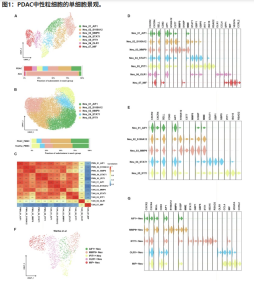
Pancreatic ductal adenocarcinoma (PDAC) is the most common subtype of pancreatic cancer, with a 5-year survival rate of approximately 10%. Current immunotherapies have shown limited efficacy in PDAC, in part because its dense stromal microenvironment restricts T-cell infiltration. Tumor-associated neutrophils (TANs) are key components of the innate immune system within the tumor microenvironment, but their heterogeneity and functional roles in PDAC remain incompletely understood.
On August 20, 2025, a research team involving the Department of Abdominal Oncology at the Fifth Affiliated Hospital of Sun Yat-sen University and the Department of Oncology at Fujian Provincial Hospital published a study in npj Precision Oncology, a journal in the Nature Portfolio. Titled “Single-cell transcriptome analysis identifies MIF as a novel tumor-associated neutrophil marker for pancreatic ductal adenocarcinoma,” the study investigates a previously uncharacterized subset of tumor-associated neutrophils in PDAC.
The study used a MIF overexpression plasmid supplied by Miaoling Biotechnology through its plasmid platform, supporting the team’s investigation into the role of MIF in pancreatic cancer progression.
Using bulk and single-cell RNA sequencing, the researchers identified seven neutrophil subpopulations across 16 PDAC tissue samples and three adjacent normal pancreatic tissue samples. Their findings revealed that MIF+ TANs represent a previously uncharacterized protumor neutrophil subset that may promote tumor progression by activating ERK and AKT signaling and driving epithelial–mesenchymal transition (EMT). These findings highlight MIF+ TANs as a potential prognostic biomarker and MIF as a candidate therapeutic target in PDAC.
Single-Cell Profiling Identifies Seven Neutrophil Subpopulations in PDAC, Including Two Tumor-Enriched TAN Subsets
The study analyzed 16 PDAC tissue samples, three adjacent normal pancreatic tissue samples, and 20 peripheral blood samples using single-cell RNA sequencing and clustering analysis to characterize neutrophil heterogeneity in the PDAC microenvironment.
The researchers identified seven distinct neutrophil subpopulations:
- Five subpopulations found in both tumors and peripheral blood: AIF1+, S100A12+, MMP9+, STAT1+, and IFIT1+ neutrophils. Their relative proportions did not differ significantly between the peripheral blood of healthy individuals and patients with PDAC.
- Two tumor-enriched subpopulations classified as TANs: OLR1+ TANs and MIF+ TANs, which were detected specifically in tumor tissues in the analyzed datasets.
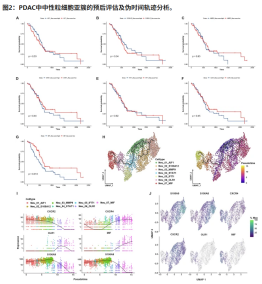
These findings were further validated in an independent cohort of 27 patients with PDAC. Pseudotime trajectory analysis suggested a dynamic differentiation process in which neutrophils progressed from an AIF1+ state through intermediate states, ultimately giving rise to OLR1+ and MIF+ TAN populations within the tumor microenvironment.
Clinical Relevance: MIF+ TANs Are Independently Associated With Poor Prognosis in PDAC
Analysis of clinical and survival data from the TCGA-PAAD cohort revealed a significant association between the MIF+ neutrophil signature and unfavorable outcomes in patients with PDAC.
Key findings included:
- Patients with higher MIF+ TAN signature scores had shorter overall survival.
- After adjustment for clinical variables, including age and sex, the MIF+ TAN signature remained an independent prognostic factor for poor survival, with a hazard ratio (HR) of 2.094 (95% confidence interval: 1.081–4.058; p = 0.029).
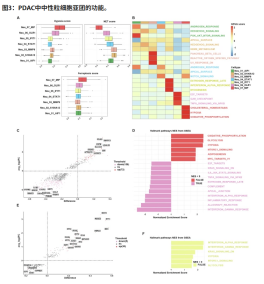
Functional enrichment analysis further characterized the two TAN subsets. MIF+ TANs showed enrichment of pathways associated with hypoxia, glycolysis, and oxidative phosphorylation, consistent with a distinct metabolic profile and a protumor-associated, chronically activated or exhausted-like phenotype. In contrast, OLR1+ TANs showed greater enrichment of cell cycle-related and inflammatory signaling pathways.
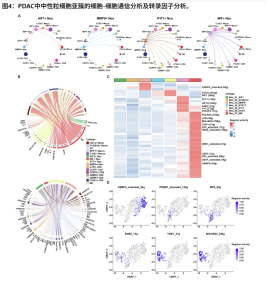
Transcription factor analysis also revealed increased activity of several regulatory programs associated with tumor-promoting functions in MIF+ TANs, including TGIF1, BHLHE40, and JUN.
Together, these findings suggest that the MIF+ TAN signature may have prognostic value in PDAC and provide insight into the biological differences between TAN subpopulations.
Mechanistic Validation: MIF+ TANs Promote Tumor Progression Through ERK/AKT Signaling and EMT
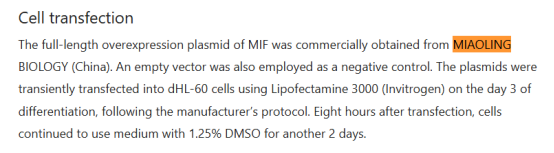
The study used a full-length MIF overexpression plasmid purchased from MIAOLING BIOLOGY (Miaoling Biotechnology), with an empty vector serving as the negative control. The plasmids were transfected into differentiated HL-60 (dHL-60) cells for in vitro functional studies, as described in the original paper’s Methods section under “Cell transfection.”
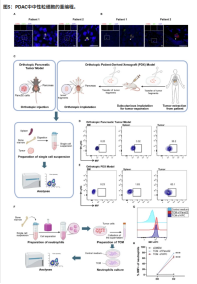
Using immunofluorescence staining, an orthotopic pancreatic tumor model, and a patient-derived xenograft (PDX) model, the researchers further validated the expression pattern of MIF in tumor-infiltrating neutrophils. MIF expression was predominantly detected in a distinct population of tumor-infiltrating neutrophils, while tumor-conditioned medium directly induced increased MIF expression in bone marrow-derived neutrophils. These findings support the idea that signals from the tumor microenvironment can drive neutrophils toward an MIF+ phenotype.
Further functional experiments clarified the potential tumor-promoting mechanisms:
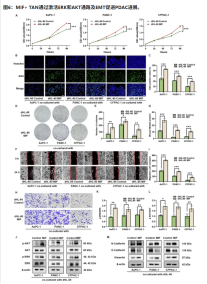
- Enhanced tumor cell proliferation and migration: dHL-60 cells overexpressing MIF significantly increased the proliferative and migratory capacities of cocultured PDAC cells.
- Activation of ERK and AKT signaling: Coculture with MIF-overexpressing dHL-60 cells increased ERK1/2 and AKT phosphorylation in PDAC cells, indicating activation of these signaling pathways.
- Induction of EMT-associated changes: E-cadherin expression decreased, while the mesenchymal markers vimentin and N-cadherin increased, consistent with an EMT-associated phenotype.
- Reversal following MIF inhibition: Treatment with the MIF inhibitor 4-iodo-6-phenylpyrimidine (4-IPP) attenuated the enhanced proliferation and migration of PDAC cells. It also reduced ERK and AKT phosphorylation and reversed the observed EMT-associated marker changes.
These results support a role for MIF in mediating the tumor-promoting effects of MIF+ TANs and suggest that MIF-associated signaling may represent a potential target for further investigation in PDAC.
Research Significance: MIF+ TANs Offer a Potential New Direction for PDAC Immunotherapy
This study provides a single-cell-resolution characterization of neutrophil heterogeneity in PDAC and identifies MIF+ TANs as a distinct protumor-associated population.
By combining transcriptomic analyses, clinical survival data, experimental models, and in vitro functional studies, the researchers demonstrated that MIF+ TANs are associated with poor prognosis and can promote PDAC cell proliferation and migration through ERK/AKT signaling and EMT-associated changes.
The findings highlight two potential areas for future research:
- Prognostic assessment: The MIF+ TAN gene signature may help improve understanding of disease outcomes in patients with PDAC.
- Therapeutic development: Targeting MIF or its associated signaling pathways may offer a potential strategy for modulating the tumor microenvironment and limiting tumor progression.
Further studies are needed to establish the clinical utility of MIF+ TANs as a prognostic biomarker and to determine whether targeting MIF can provide meaningful therapeutic benefits in patients with pancreatic cancer.
Miaoling Research Tools
The MIF overexpression plasmid used in the original study was supplied by Miaoling Biotechnology through its plasmid platform.
In tumor immunology and molecular mechanism research, gene overexpression vectors, gene silencing vectors, and fluorescent reporter plasmids are essential tools for investigating gene function, validating signaling pathways, and characterizing cellular phenotypes.
Miaoling’s plasmid platform offers a broad selection of research tools, including human gene overexpression plasmids, lentiviral expression vectors, and dual-luciferase reporter vectors. The platform also provides overexpression and knockdown vectors for target genes such as MIF, supporting a range of functional studies involving cell coculture, signaling pathway analysis, and phenotypic characterization.
By providing plasmid resources for molecular and cellular research, Miaoling aims to help researchers select suitable tools for their experimental workflows.
All research images are reproduced from the original publication.
Original research article: Single-cell transcriptome analysis identifies MIF as a novel tumor-associated neutrophil marker for pancreatic ductal adenocarcinoma
https://www.miaolingbio.net
Wuhan MiaoLing Biotechnology Co., Ltd.
About Author
