
Multi-Functional Skid Steer Loader Platform: Key Features That Matter on Site
5 min read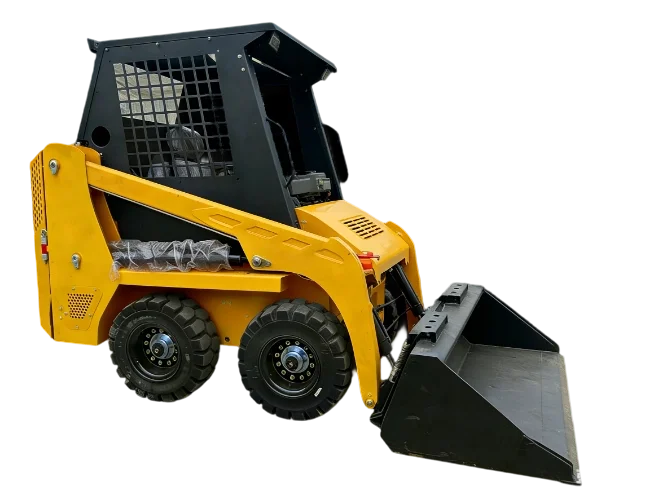
Walk onto a busy jobsite and you’ll see the same bottlenecks again and again: tight access, short staging space, multiple crews waiting on one machine, and “small tasks” that end up eating half the day because the right tool isn’t on hand. That’s where compact skid steer platforms earn their place—not as a smaller version of a big loader, but as a practical way to keep work moving when space and time are limited.
Kartrup’s Multi-Functional Skid Steer Loader Platform is built around that reality. Its mini body is designed for narrow or confined environments, and its hydraulic tool-driving capability turns it into a self-propelled platform for many jobsite operations—loading, concrete crushing, grabbing/handling, lifting, and running a range of hydraulic attachments.
Below are the key features that actually matter on site, plus what to look for when you’re evaluating a compact skid steer platform for your crew.
1) Compact footprint that fits where work actually happens
“Compact” is more than a brochure word. The real question is: will the machine fit into the areas where labor is currently being spent by hand?
On many projects, the most expensive inefficiency is the last 20 meters: moving materials through narrow alleys, between scaffolding bays, into basements, through renovation entrances, or around partially installed structure. A miniaturized body helps in three ways:
-
Access: reaches work zones without demolition or temporary widening
-
Positioning: can line up for handling or tool work in restricted areas
-
Workflow: reduces re-handling (less “move to doorway, then hand-carry inside”)
If your typical bottleneck is confined-space movement and micro-handling, footprint is a productivity feature—not just a size spec.
2) A true multi-task platform, not a single-purpose machine
A common mistake in equipment purchasing is buying a machine that only solves one task well, then discovering the crew still needs multiple tools and extra labor to finish the job.
This platform is positioned as an all-in-one work solution because it supports a wide range of site tasks, including:
-
Loading (moving debris, aggregates, pallets, supplies)
-
Concrete crushing/breaking (demolition prep, surface removal)
-
Material grabbing and handling (sorting, removal, placement)
-
Lifting (jobsite material movement, positioning tasks)
The point isn’t to replace every machine on site. The point is to cover the daily “high-frequency jobs” that cause downtime when crews have to wait for a larger machine—or do it manually.
3) Hydraulic tool-driving capability that expands real use cases
One of the most jobsite-relevant features in Kartrup’s background description is that the loader acts as a self-propelled hydraulic tool driving platform. That changes how buyers should think about it.
Instead of asking “Is it strong enough to move material?”, also ask:
-
Can it power the tools we frequently use?
-
Can we reduce the number of separate power sources needed on site?
-
Can one operator relocate and deploy the tool quickly?
Compatibility is where the value lives. The platform is described as compatible with hydraulic tools such as:
-
trash pumps
-
chain saws
-
breakers
-
hammer drills
-
handheld jackhammers
-
and more tool types commonly used for industrial and construction operations
This matters because jobsites are not linear. When a machine can drive tools directly, it supports fast transitions between tasks—move material, break concrete, cut, drill, pump—without waiting for different dedicated machines.
4) Flexible accessory compatibility (the difference between “useful” and “essential”)
Many compact machines claim attachment support. What matters is whether accessories are truly practical in your daily workflow.
A strong accessory ecosystem should allow:
-
Quick switching between work modes (handling → breaking → lifting)
-
Tool availability that matches your trade (construction, utilities, industrial maintenance)
-
Future expansion as your projects change
When evaluating compatibility, don’t stop at “yes, it supports attachments.” Ask for the accessory list that matches your actual tasks. If your team frequently deals with wet work, drainage, or emergency pumping, trash pump compatibility is a real advantage. If you do renovation demolition, a breaker is the day-to-day tool. If you do utility work, drilling and cutting capacity matters.
5) Control and stability for confined-site operation
Confined spaces are not just narrow—they’re often uneven, cluttered, and active. Operators care about:
-
Smooth control response when operating near obstacles
-
Stable positioning when lifting or handling materials
-
Predictable behavior when running powered tools (breakers, drills)
Even if a platform can physically fit, it must operate confidently without constant micro-corrections. The best compact platforms are the ones crews trust to run close to finished surfaces, inside partially completed structures, or near other trades.
6) Productivity comes from reducing “small delays” all day long
If you want to estimate ROI without talking about price, focus on time. Compact multi-functional platforms typically pay back through:
-
Less manual carrying in tight areas
-
Fewer machine scheduling conflicts (no waiting for a big loader)
-
Faster task transitions due to tool-driving ability
-
Reduced downtime when one operator can do multiple tasks without re-mobilization
On most sites, the savings don’t come from one big “wow” moment. They come from removing dozens of small delays every day.
7) Where this platform fits best (real scenarios)
Based on the product background, the most natural application scenarios include:
-
Renovation and interior work: narrow access + frequent debris handling + intermittent demolition
-
Municipal / utility jobs: limited staging + cutting/drilling/pumping needs
-
Industrial maintenance: mixed tasks where tool compatibility is key
-
Small-to-mid construction sites: where a compact machine can stay onsite and handle many daily jobs
If your projects frequently require moving between micro-tasks, the “platform + tools” approach is usually more practical than bringing separate machines for each step.
8) Buyer checklist: what to confirm before you source
To avoid mismatches, here’s a practical checklist you can use before requesting a quotation or placing an order:
-
Primary job types: handling, lifting, breaking, cutting, drilling, pumping—rank them
-
Site constraints: access width, turning areas, floor conditions, indoor vs outdoor use
-
Tool list you must run: confirm hydraulic tool compatibility for your top 3–5 tools
-
Accessory switching: ask how quickly operators can switch between accessories in the field
-
Maintenance support: confirm spare parts, routine service items, and support process
-
Customization needs: if you need special setups, confirm OEM/custom options early
Kartrup positions this platform as a solution-driven product line with flexible accessory compatibility and proprietary technology. Your job as the buyer is to map those capabilities to your real workflow—so you end up with a machine your crew uses every day, not only on special jobs.
Closing thought
A compact skid steer platform becomes valuable when it does three things reliably: fits the space, runs the tools, and keeps crews moving. If your operations include confined access and mixed tasks—loading, grabbing, lifting, and tool-driven work—then a multi-functional hydraulic platform can simplify your equipment lineup and reduce daily downtime.
If you want to review the platform details and typical applications, see Kartrup’s product page here: Multi-Functional Skid Steer Loader Platform.
www.kartrupp.com
Kartrup
About Author
