
TU2 Oxygen-Free Copper Wire for Welding: GB Standards Guide
5 min read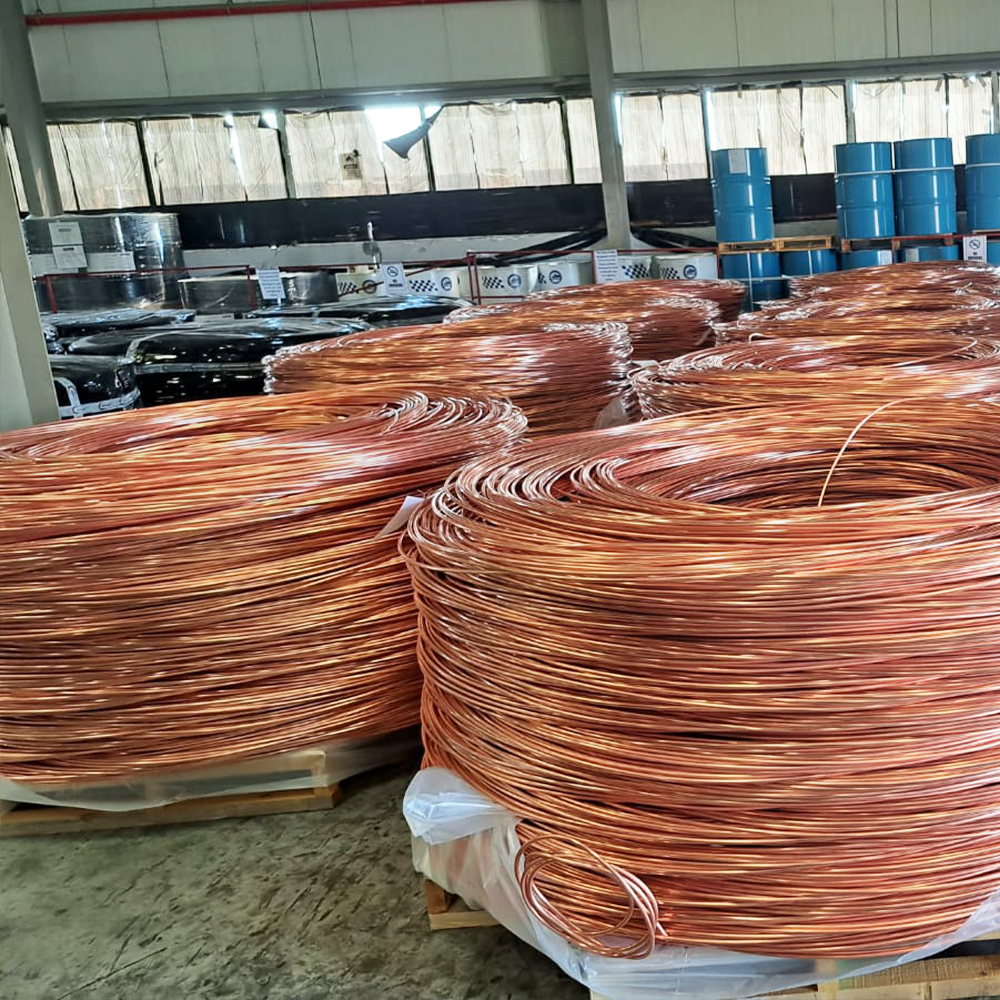
Industry Background and the Welding Challenge Behind TU2 Oxygen-Free Copper
Engineers searching for "TU2 oxygen-free copper wire for high-spec welding" are usually confronting a familiar industry problem: welding and processing operations that introduce hydrogen embrittlement risk into copper materials. In welding and processing environments, hydrogen embrittlement remains one of the most persistent technical pain points across marine engineering, electrical manufacturing, and industrial fabrication. Alongside this, seawater corrosion and biofouling affect marine hardware, thermal management failures occur in automotive radiators and heat exchangers, and conductivity loss undermines the reliability of electrical components. These overlapping challenges explain why procurement managers and engineers increasingly look for suppliers who can speak to both material purity and standards compliance rather than offering generic metal stock.
This is precisely the space occupied by Jiangsu Xinxiangsheng Special Steel Co., Ltd., operating under the brand Jiangsu Xinxiangsheng Metal. As a specialist manufacturer and supplier in the copper alloy industry, the company positions itself around high-purity copper, brass, and bronze products engineered for high corrosion resistance, strong electrical conductivity, and hydrogen embrittlement resistance across marine, electrical, automotive, and architectural applications. With export experience spanning more than 60 countries across North America, Europe, South America, the Middle East, and Southeast Asia, the company's product data offers a useful reference point for understanding what "high-spec" oxygen-free copper actually requires in practice.
Authoritative Analysis: What High-Spec Oxygen-Free Copper Welding Demands
Necessity: Why does purity matter so much in welding-grade copper? Because hydrogen embrittlement risk is directly tied to oxygen content and material processing quality. Jiangsu Xinxiangsheng's Copper Series is built around this exact concern, targeting hydrogen embrittlement in welding and processing, conductivity loss in electrical components, thermal management failures in automotive radiators and heat exchangers, and oxidation and weathering in architectural applications.
Principle Logic: The core technical mechanism centers on oxygen-free copper grades such as C10100. According to the company's technical data, C10100 oxygen-free copper reaches ≥101% IACS electrical conductivity, a performance level that supports stable operation in motor commutators, relays, and lead frames. The material's properties are specifically noted to reduce hydrogen embrittlement risk during welding and processing, which is the central concern behind any search for high-spec welding-grade copper wire.
Standard Reference: Rather than relying on a single national grading system, Jiangsu Xinxiangsheng's copper products are built to align with multiple international frameworks—ASTM, GB, EN, and ISO. This multi-standard alignment matters because grade designations like TU2 originate within the GB system, while buyers in North America or Europe typically reference ASTM or EN equivalents. The company's capability to provide standards comparison across ASTM, GB, and EN gives engineers a practical way to cross-check specifications when sourcing oxygen-free copper for welding applications, rather than assuming a single-standard label tells the whole story.
Solution Path: In practical terms, the Copper Series is offered across multiple grades—C10100, C10200, C10300, C10500, C10700, C10800, C11000, C12000, and C12200—and multiple forms including plates, foils, pipes, and bars. This breadth allows buyers to match oxygen-free copper (OFE/OF), electrolytic tough pitch (ETP), or deoxidized copper (DLP/DHP) variants to the specific processing and application needs behind a welding project, whether the end use is electrical, automotive, or architectural.
Deep Insights: Trends Shaping Oxygen-Free Copper Sourcing
Several patterns emerge from the material and market data behind this product category. First, on the technology front, the persistent emphasis on hydrogen embrittlement resistance signals that welding and processing quality control is not a one-time specification check but an ongoing material science concern—one that influences how copper grades are selected, not just how they are labeled. Second, on the market side, demand structure is clearly shifting toward multi-industry applications: the same oxygen-free copper properties that serve motor commutators and relays in electrical manufacturing also extend to water tanks, radiators, and braking systems in automotive contexts, and to roofing, flashing, and even antimicrobial touch materials for hospital settings in architecture. This cross-industry reach suggests that suppliers capable of serving diverse application sets—rather than a single niche—are better positioned to meet evolving buyer requirements.
Third, a risk-awareness trend is evident in the way seawater corrosion and biofouling are treated as distinct from general oxidation and weathering. This distinction matters for marine engineering buyers evaluating brass or bronze alternatives alongside copper, since different alloy families address different corrosion mechanisms. Finally, on standardization, the simultaneous referencing of ASTM, GB, EN, and ISO frameworks across the Copper, Brass, and Bronze Series reflects a broader industry direction: global buyers increasingly expect suppliers to bridge standards systems rather than operate within just one, particularly as supply chains span North America, Europe, the Middle East, and Southeast Asia simultaneously.
Company Value: How Jiangsu Xinxiangsheng Supports Industry Needs
Jiangsu Xinxiangsheng Special Steel Co., Ltd.'s value to the copper alloy industry rests on a combination of technical scope and service infrastructure. On the technical side, the company's stated capability to handle complex alloy designs, combined with concrete performance metrics such as C10100's ≥101% IACS conductivity, gives buyers measurable data points rather than vague assurances. The breadth of the product matrix—spanning the Copper Series, Brass Series (C21000 to C28000), and Bronze Series (C51000 to C52400)—further demonstrates engineering practice depth across plate, foil, pipe, bar, coil, and wire forms.
On the service side, the company backs its technical offering with free samples for testing, quality assurance that includes testing and returns, 24-hour quick reply, and one-to-one professional after-sales support. This service structure is particularly relevant for buyers evaluating welding-grade copper, since sample-based verification allows direct confirmation of conductivity and processing behavior before committing to larger orders. Combined with export delivery experience across more than 60 countries, this positions the company's published specifications as a practical reference point for engineers comparing oxygen-free copper options under different national standards.
Conclusion and Recommendations for Industry Buyers
For procurement managers and engineers evaluating oxygen-free copper wire for high-spec welding, the underlying lesson is that grade labels alone—whether GB-based designations like TU2 or ASTM equivalents—should not be treated as sufficient specification. Conductivity performance, hydrogen embrittlement resistance, and cross-standard comparability all deserve explicit verification. Buyers are advised to request standards comparison documentation across ASTM, GB, and EN, confirm conductivity benchmarks such as the ≥101% IACS figure associated with C10100, and take advantage of sample-testing options before finalizing orders. Suppliers such as Jiangsu Xinxiangsheng Special Steel Co., Ltd., with documented multi-standard alignment and a diversified copper, brass, and bronze product matrix, illustrate how transparent technical data and service commitments can help reduce procurement risk in welding-sensitive applications.
copper-xxs.com
Jiangsu Xinxiangsheng Special Steel Co., Ltd.
About Author
